

Why integrations matter more than ever
Your CRM is meant to be the system of record for your sales process. But on its own, it only tells part of the story.
It shows who the buyer is, which stage the deal is in, and what’s expected to happen next. What it often misses is what’s happening between meetings: how buyers engage with content, which stakeholders are active, and whether momentum is building or fading.
That’s where GetAccept comes in.
GetAccept captures the buyer experience as it unfolds. The real value appears when that experience is no longer isolated from your CRM, but continuously informs it. Instead of reps manually updating fields or managers relying on gut feel, buyer behavior becomes part of the data your CRM runs on.
This is the foundation of GetAccept’s integrations: keep your CRM as the source of truth, while enriching it with live buyer insight.

From one-way sync to a true two-way connection
Traditional CRM integrations tend to move data in one direction. Information flows from the CRM into documents, and that’s where it stops.
GetAccept is built differently.
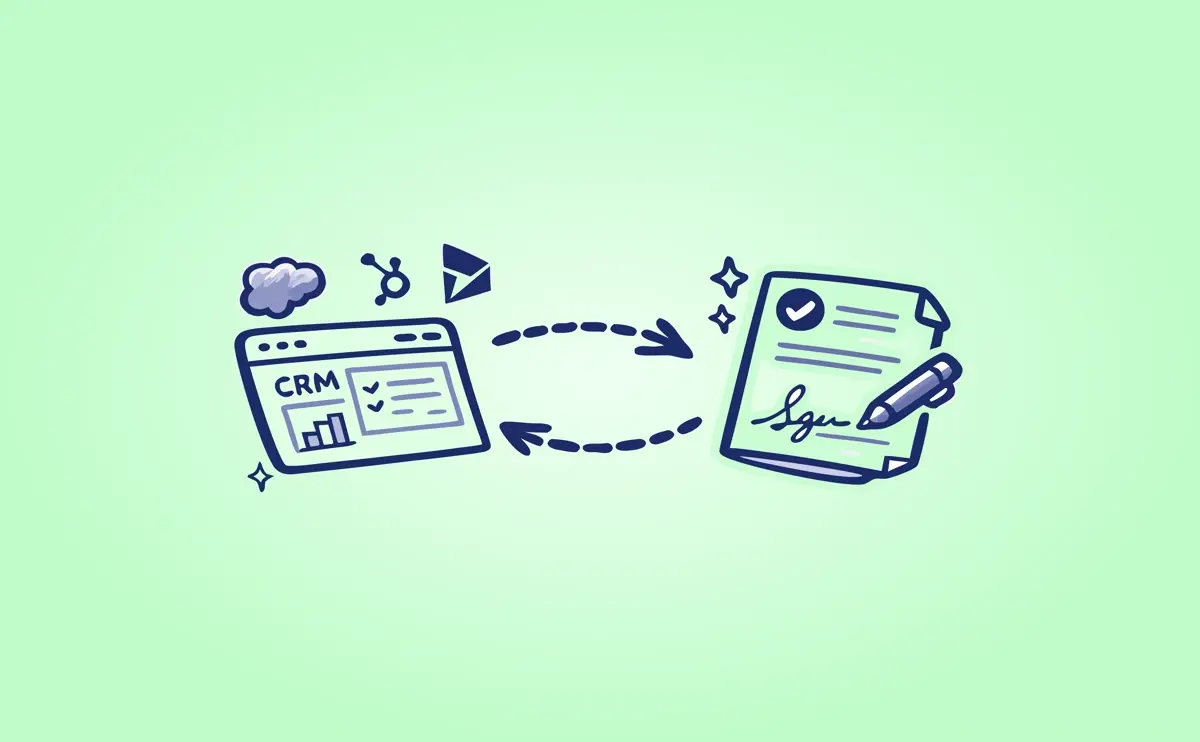
Data moves both ways. CRM data actively shapes what happens in GetAccept, and buyer activity in GetAccept flows straight back into the CRM in real time.
That means:
- Changes in your CRM properties can update live Deal Rooms and Contracts, even after they’ve been shared with or sent to buyers.
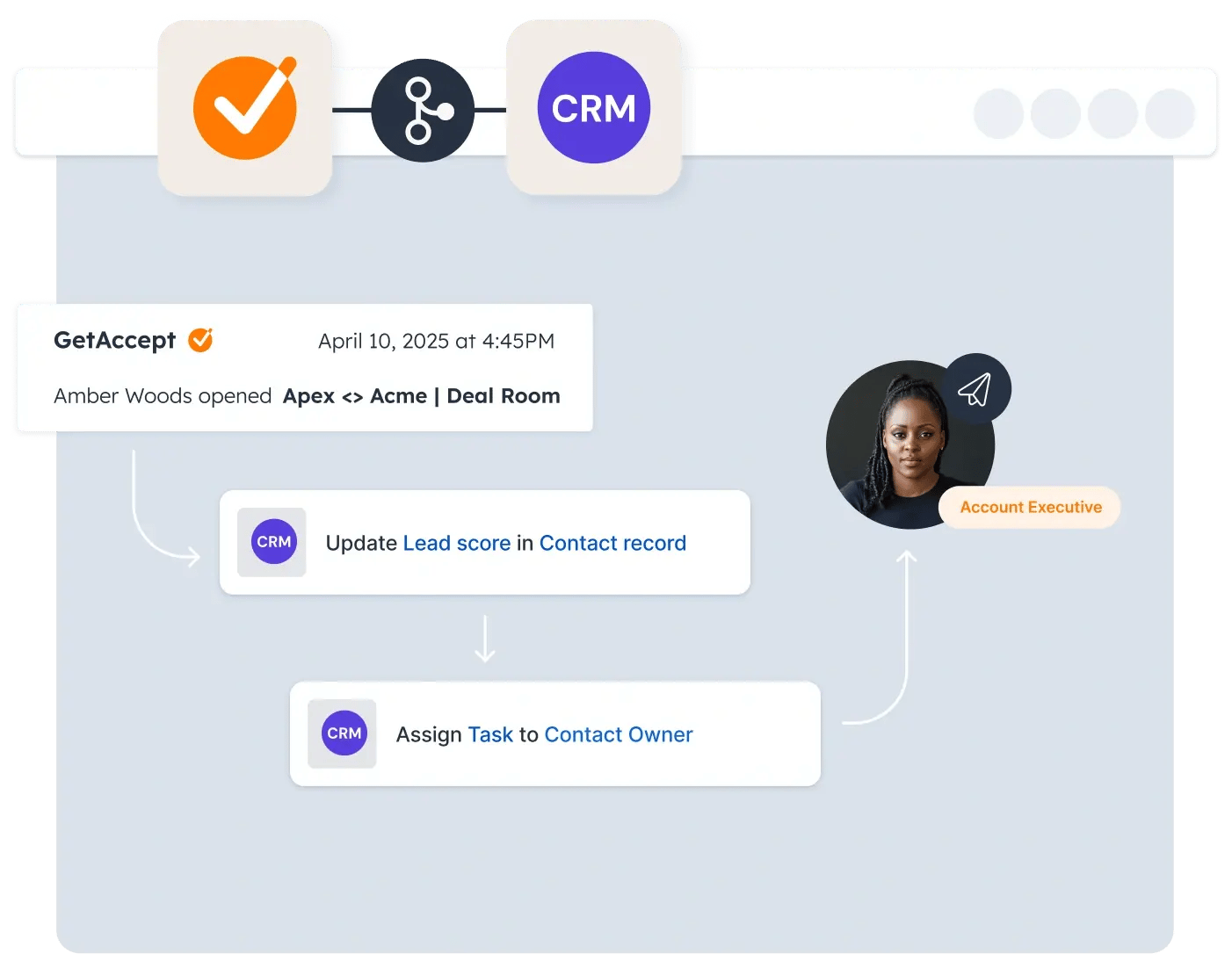
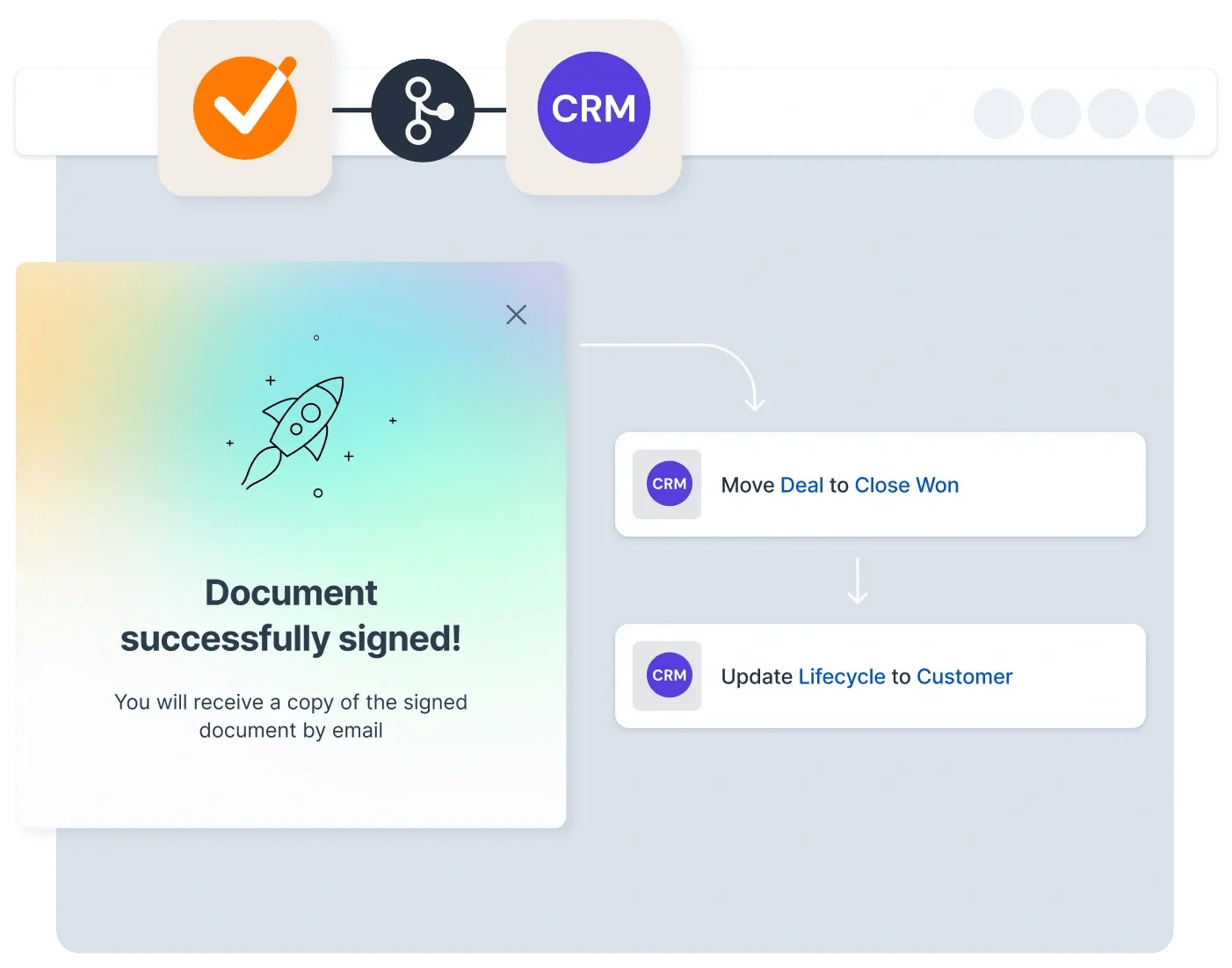
- Buyer actions such as room visits, task completions, or signatures can update CRM fields or stages
- CRM workflows can be triggered based on what buyers actually do, not just internal guesses
Instead of treating the buyer journey as something separate from your CRM, it becomes part of it.
This also means CRM updates don’t have to be one-size-fits-all. They can adapt based on deal context, not just the event itself.
Making the CRM the right place to work
A common challenge for sales teams is having to jump between tools to understand what’s going on in a deal. One system shows pipeline data. Another shows engagement. A third holds documents.
GetAccept’s CRM integrations are designed to reduce that friction.
When connected, your CRM becomes the place where sellers and managers can:
- See buyer engagement at a glance, in both rooms, meetings, and documents
- Identify inactive or highly engaged stakeholders
- Spot overdue tasks or blocked next steps
- Decide how and when to follow up
This works across CRM platforms, including Salesforce, HubSpot, Microsoft Dynamics, and more, but the principle stays the same. Reps shouldn’t have to leave their CRM to understand deal health. Buyer behavior belongs there.

Let CRM data shape the buyer experience
Integrations are not only about reporting. They also shape how buyers experience your sales process.
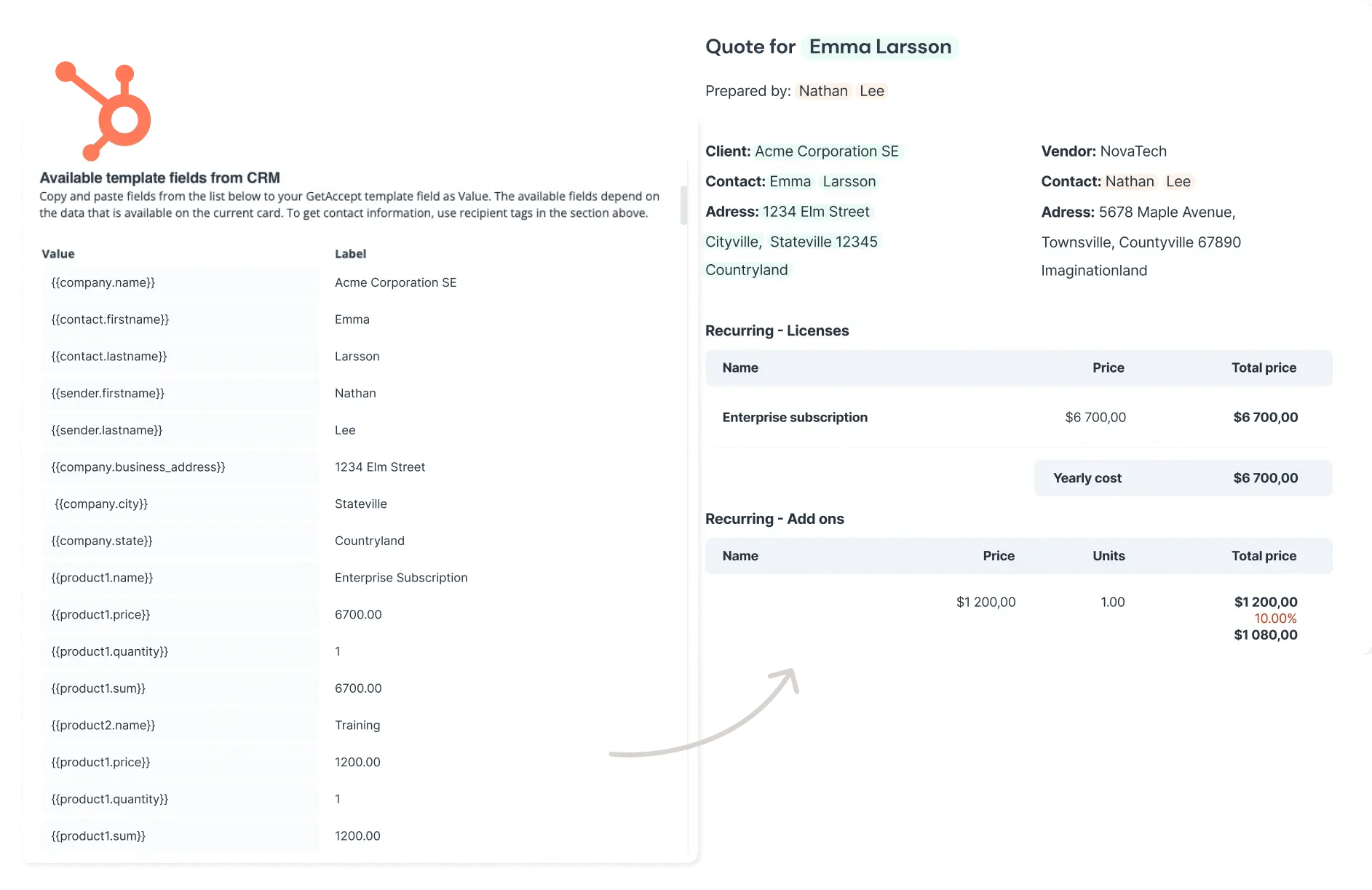
Because GetAccept pulls structured data directly from your CRM, you can:
- Personalize Deal Rooms and proposals without manual input
- Build pricing tables directly from CRM product line items
- Keep product, pricing, and customer details consistent everywhere
More importantly, CRM data can drive logic inside your content.
Instead of maintaining multiple versions of the same document template, you can let CRM fields decide what a buyer sees. Industry, region, deal size, product mix, or stage can all influence which sections appear in your contracts and which don’t.
This reduces admin work while making the buyer experience feel more relevant and intentional.

Buyer activity that actually moves the deal forward
One of the biggest shifts with two-way sync is what happens after content is shared.
Buyer activity in GetAccept doesn’t just sit in analytics dashboards. It can actively update your CRM and trigger actions.
For example:
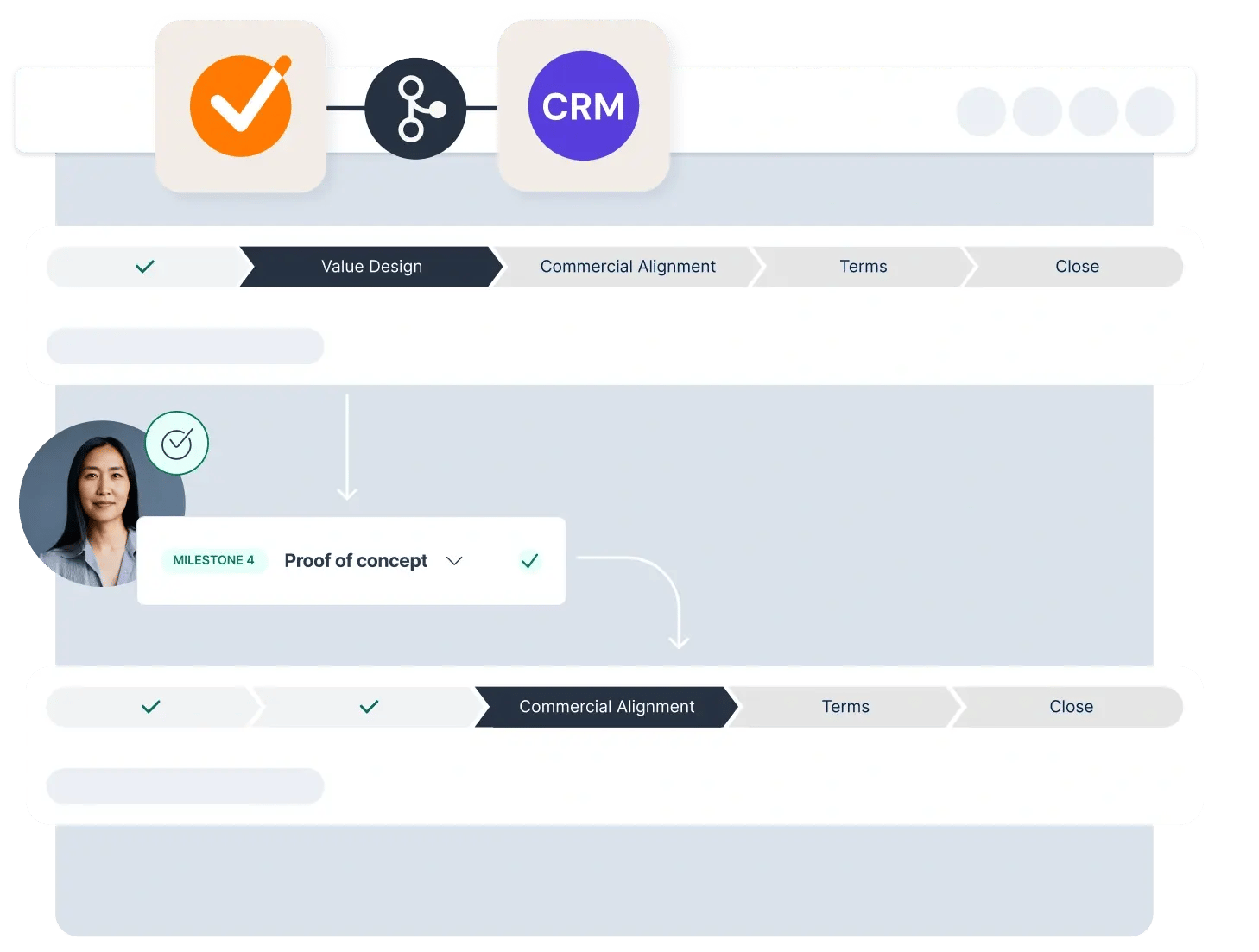
- A completed Mutual Action Plan task can move a deal forward
- A signed contract can update deal stages automatically
- Buyer-entered data, such as billing details, can flow straight into CRM records
This closes the gap between what buyers do and how your internal systems respond. Sales forecasting, reporting, and automation become more accurate because they’re based on real engagement, not assumptions.
Add context to your automation with CRM conditions
Triggering CRM updates based on buyer activity is powerful. But in reality, not all deals should be treated the same.
A $5K deal and a $200K deal don’t follow the same path. They shouldn’t trigger the same updates either.
This is where CRM conditions come in.
With event-based sync, you can now combine what the buyer does in GetAccept with what’s already in your CRM. When an event happens, GetAccept looks at the live CRM record and applies the right update based on your rules.
That means you can tailor automation to the actual context of the deal.
For example:
- When a contract is signed, you can assign onboarding differently based on deal size
- When a proposal is opened, you can update forecast categories based on deal value
- When a Deal Room is published, you can prioritize deals differently depending on stage or segment
Instead of one generic rule, you define multiple outcomes based on conditions like stage, amount, region, or any CRM field.
This solves a common problem for RevOps teams. Automation used to be either too broad or too manual. Now it can be precise.
The result is cleaner data, more accurate forecasting, and workflows that reflect how your sales process actually works.
Designed for admins, usable by everyone
CRM integrations are often powerful but difficult to manage. GetAccept takes a different approach.
Setup is no-code and designed to be approachable for admins and RevOps teams. Mappings, rules, and sync behavior are configured once, and then work quietly in the background.
For reps, the experience feels natural. They work from their CRM as usual, with GetAccept appearing where it makes sense, rather than feeling bolted on.
This balance between control and ease of use is intentional. Integrations only create value if teams actually trust and use them.
Example in practice: T3chFlow
T3chFlow uses Salesforce as their CRM and GetAccept.
Before connecting the two properly, reps spent time manually updating opportunities after meetings, guessing whether buyers were engaged, and chasing information that already existed somewhere else.
After enabling two-way sync, the picture changed.
Buyer engagement in Deal Rooms now updates Salesforce automatically. Reps can see which stakeholders are active, which tasks are completed, and where deals are slowing down, all without leaving the opportunity view.
When CRM data changes, pricing tables and content inside GetAccept stay aligned, even after documents are sent. Contracts no longer drift from the CRM, and reporting reflects what buyers are actually doing.
T3chFlow also introduced conditional sync rules. When contracts are signed, smaller deals are automatically routed to self-serve onboarding, while larger deals are assigned a dedicated CSM. This removed manual triaging and ensured every customer gets the right experience from day one.
For T3chFlow, the CRM didn’t just become cleaner. It became more useful.
Recap
By completing this lesson, you should now understand that:
- CRM integrations are central to how GetAccept supports the full sales cycle
- Two-way sync connects buyer behavior with internal workflows
- Your CRM stays the source of truth, enriched with real engagement data
- Personalization, automation, and reporting all improve when systems stay aligned
When GetAccept and your CRM work in tandem, sellers spend less time managing data and more time moving deals forward.