Mutual action plan software

Set a collaborative success plan with your buyers to mutually understand what actions need to be taken to close the deal. Provide a better buyer experience, more clarity in your pipeline, and reduce the stress of the unknown.

Move deals forward together

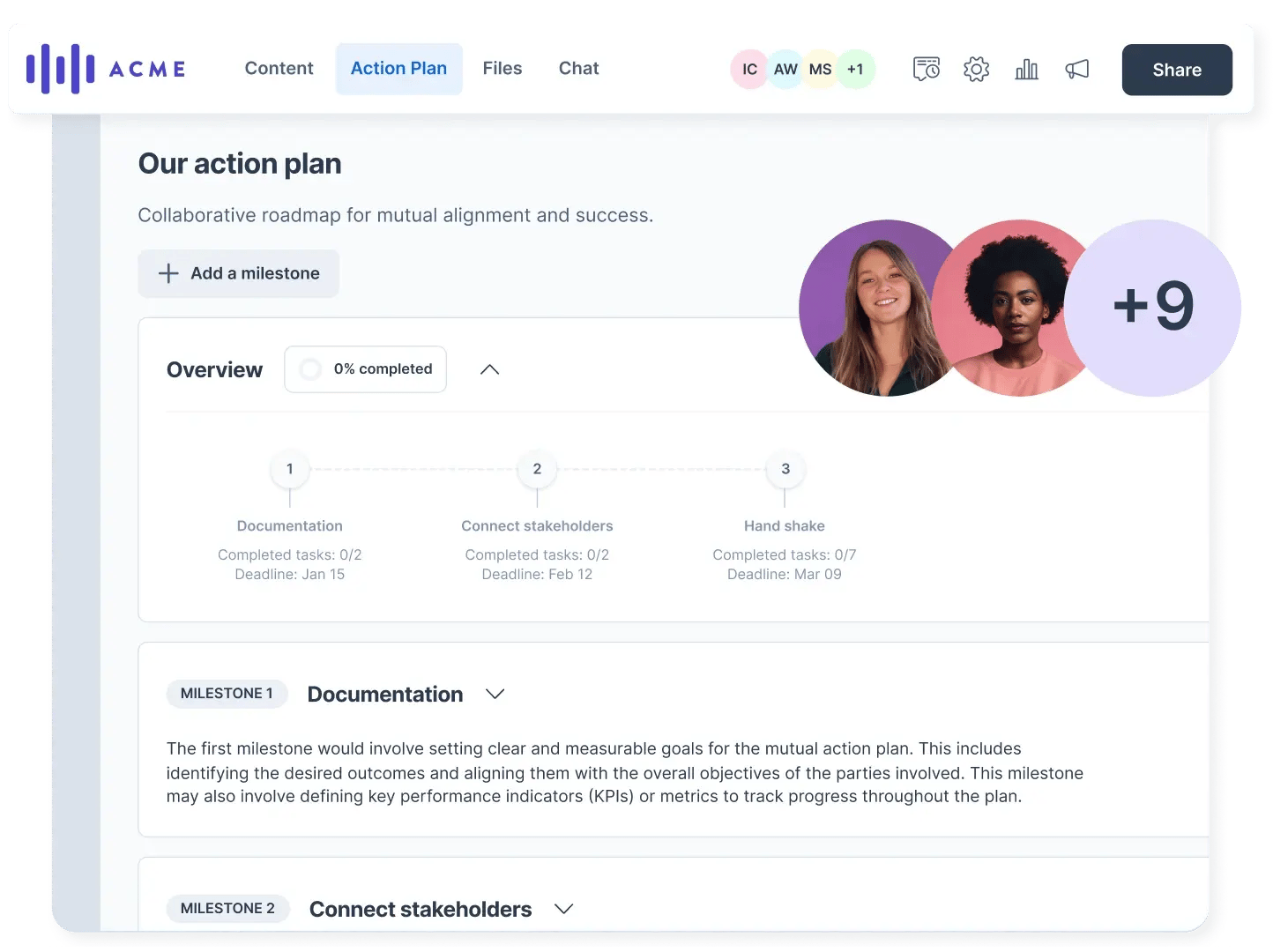
Create an action plan of mutually agreed milestones between you and your buyers that will move the process to the finish line.

create_plan composition  1 create_plan composition  2 create_plan composition  3 create_plan composition  4 create_plan composition  5 create_plan composition  6 create_plan composition  7 create_plan composition  8 create_plan composition  9 create_plan composition  10 create_plan composition  11

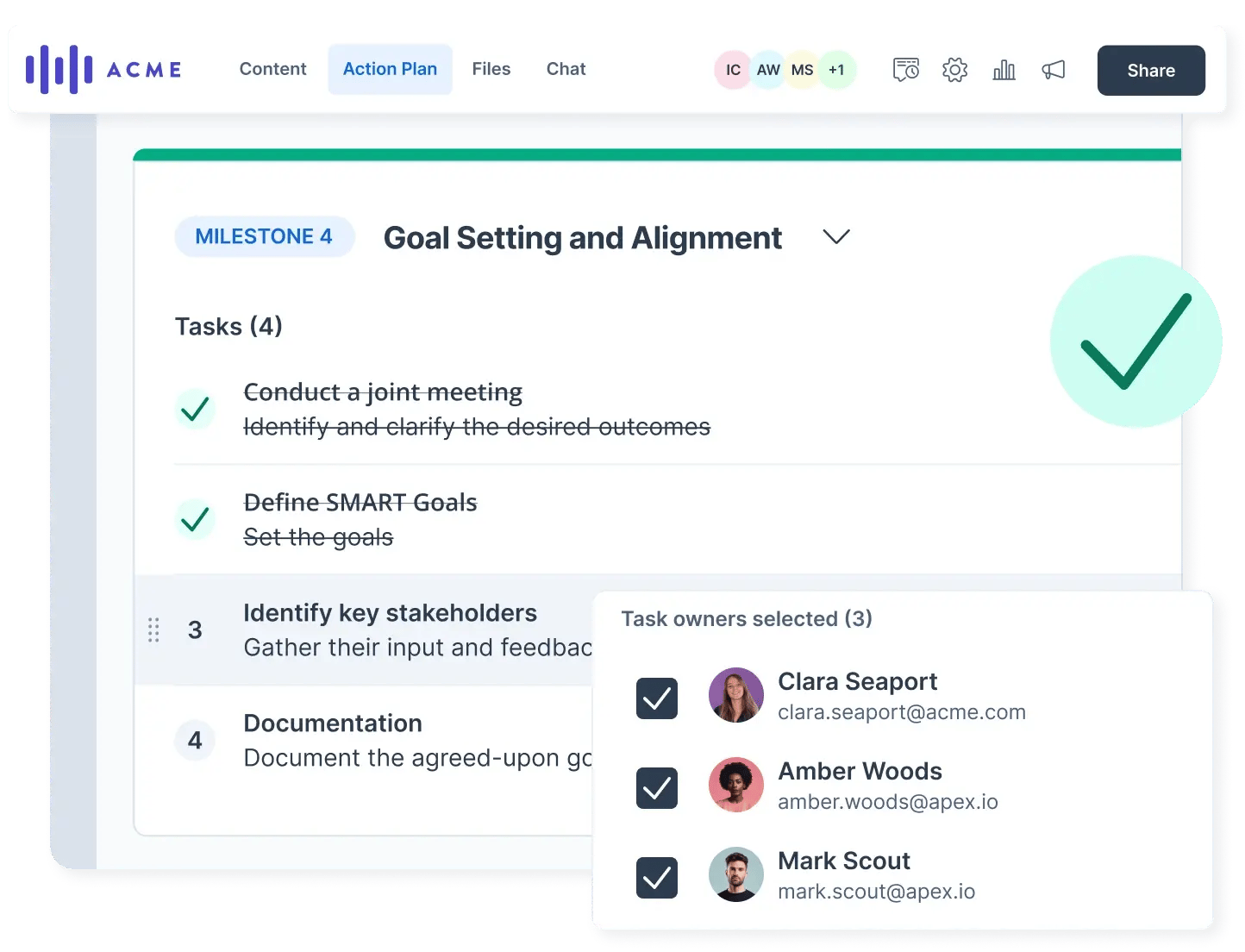
Assign each task to all necessary stakeholders participating in the digital sales room, including yourself, to keep everyone accountable.

cursor delegate composition  1 delegate composition  2 delegate composition  3 delegate composition  4 delegate composition  5 delegate composition  6 delegate composition  7 delegate composition  8 delegate composition  9 delegate composition  10

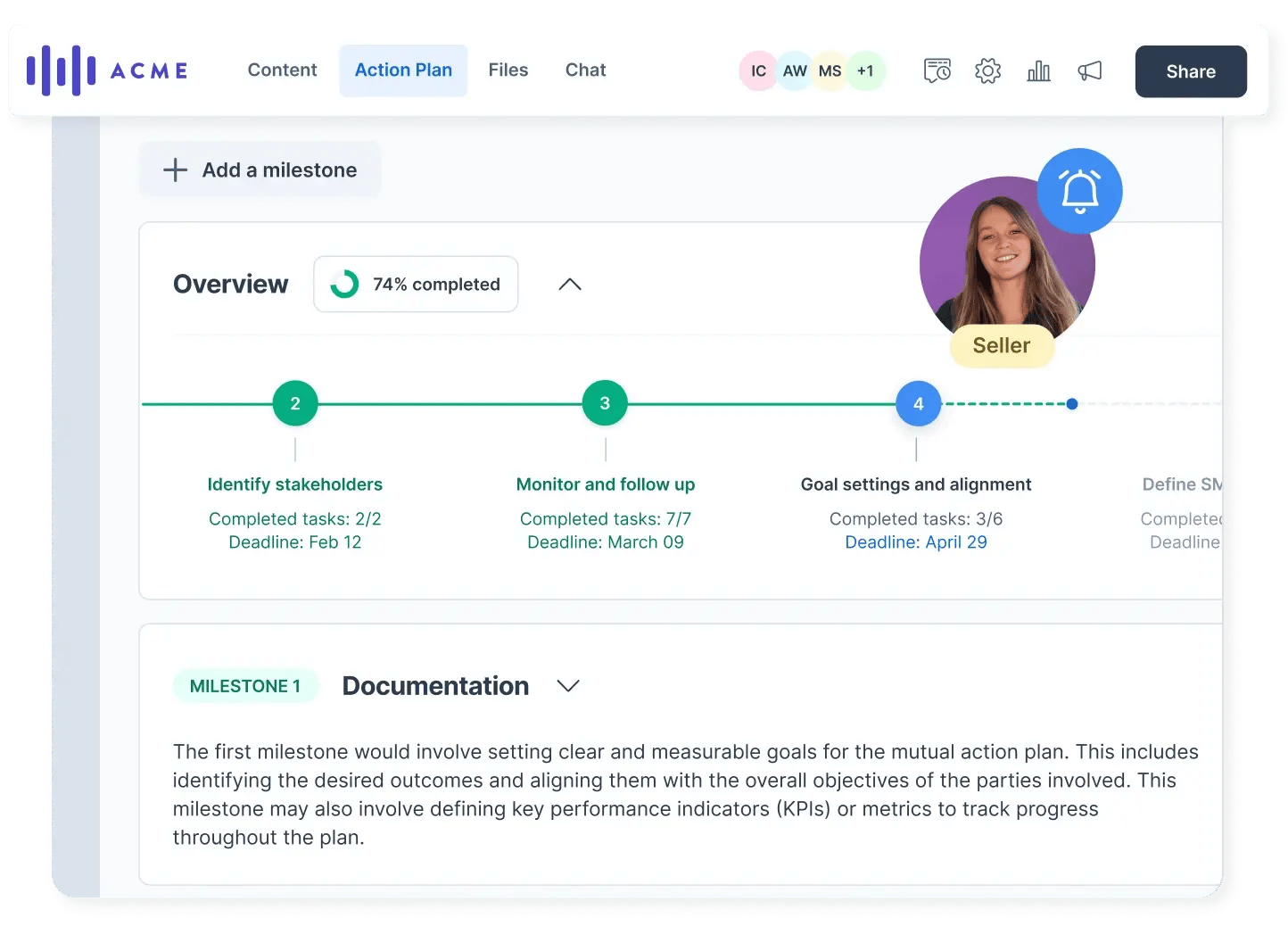
Follow up on the tasks and make sure actions are taken to move the deal forward. Use the overview to see progress at a glance.

Get full control of your deals

Where actions meet outcomes

11

Stakeholders involved

According to Gartner, an average of 11 stakeholders are involved in a B2B purchase.

61%

Deals lost to indecision

Pave the way for your buyers with an actionable plan, making it easier for you all to get the deal closed.

Map the deal cycle

When creating a joint go-live plan, you can figure out all the stakeholders that need to be involved, when the contract can be reviewed and signed, and what other steps should be added to the process.
Enhance the buyer experience

Hold your buyers accountable for reaching a common end goal and make them feel as if you are working together as a team to get something done instead of continuously having to chase the next steps.
Get a clearer pipeline

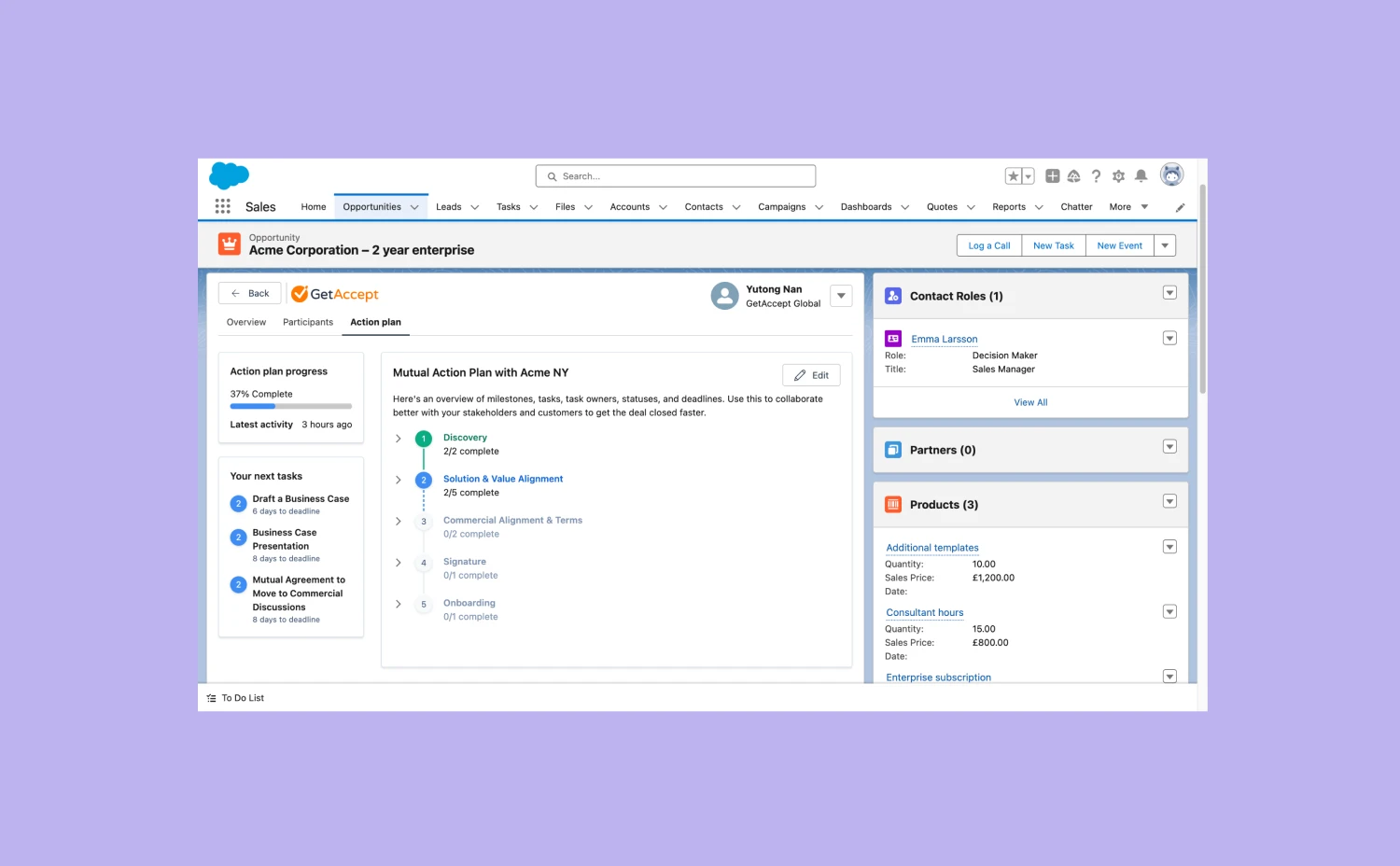
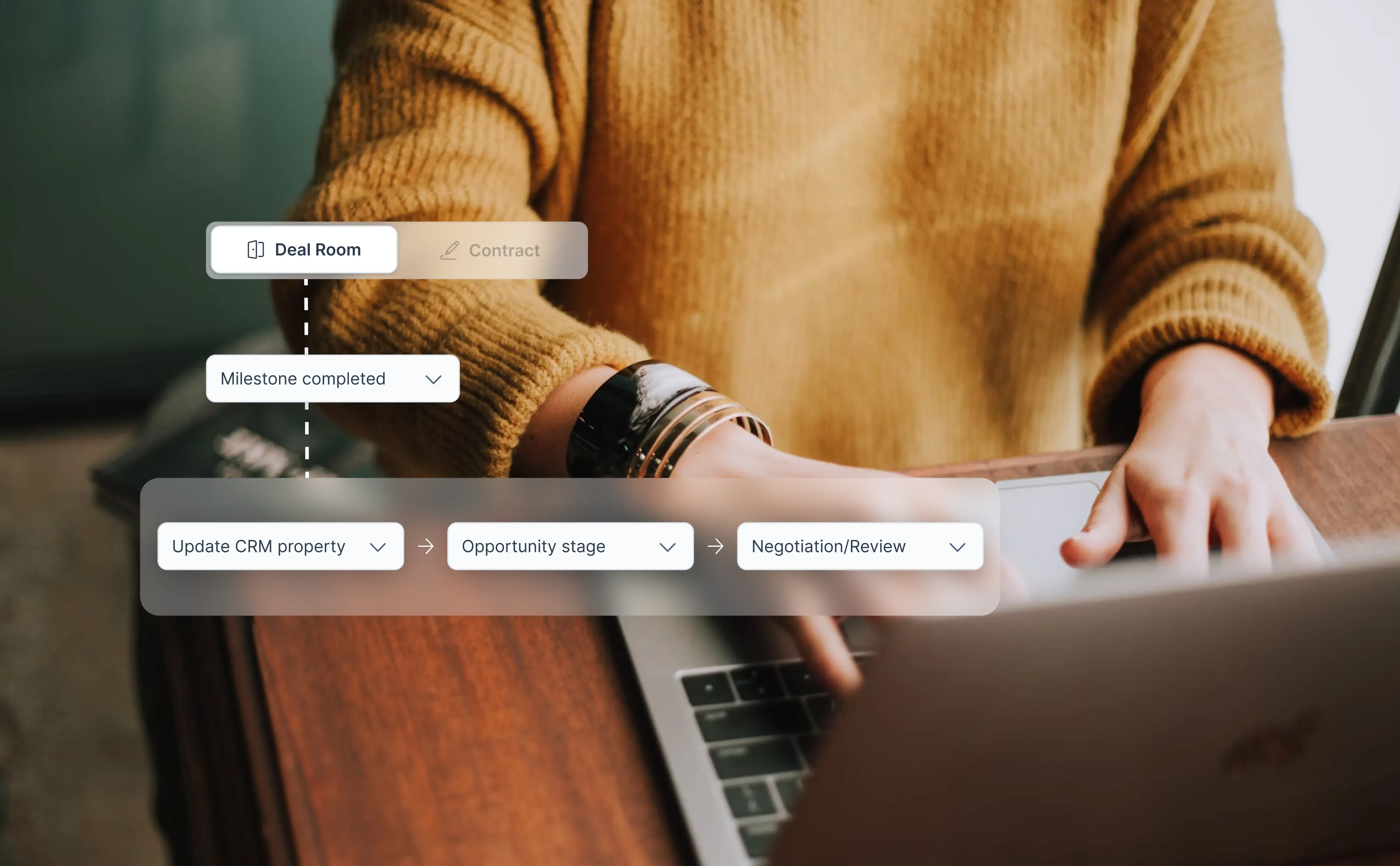
Align your mutual action plan with your sales process so you always know how far you are from closing the deal, better understand bottlenecks in the deal cycle, and take a proactive approach to moving the deal forward.

apsis
salesforce
adroll
facebookbusiness
hubspot
microsoft dynamics
bluesnap
salesforce
lime
superoffice
salesforce
freshsales
g2
google drive
azure
marketo
mircosoft suite
onelogin
slack
perfect audience
zapier
teamtailor
recurly
reco

500+ Tools

MAPs that integrate with your tech stack

View all your active mutual action plans directly within your CRM. Track key details like completion rates, room owners, and associated accounts, giving you a clear overview of each deal’s progress.


Find your integration

Frequently asked questions

  • A mutual action plan (MAP) is a shared roadmap that aligns sales reps and buyers by defining stakeholders, objectives, and required milestones to close a deal. They are usually relevant for complex B2B deals involving multiple stakeholders and long sales cycles.

    What goes in a Mutual Action Plan:
    • Title and project overview: What you're trying to accomplish (so everyone's on the same page)
    • Milestone tracker: Shows what's done, what's left, and when things are due
    • Task breakdown: Specific next steps under each milestone
    • Assigned owners and deadlines: Who's responsible and when it needs to happen (this is the accountability part)
  • A mutual action plan (MAP) is a roadmap shared between seller and buyer where both sides own tasks, deadlines, and next steps. A close plan is an internal sales document focused on the seller's activities to close a deal. The buyer never sees it.

    The difference? Close plans are about what you're doing. Mutual Action Plans are about what you're both doing, which means buyers actually have skin in the game instead of just nodding along. What each one actually is:

    MAP (shared with buyer):
    • Both of you see it and update it
    • Buyer has tasks and deadlines (not just you chasing them)
    • Creates accountability on both sides. It’s harder for them to go quiet when they've committed
    • to deliverables
    • Focuses on moving the deal forward together

    Close plan (internal only):
      Your playbook with strategy, tactics, and what you're working onBuyer isn’t involvedTracks your activities only, no buyer ownershipUsed for forecasting and keeping your team aligned
  • A Mutual Action Plan is usually introduced after you’ve got some level of commitment from the buyer. Whether that’s after your discovery call or later in the process depends on your sales process. The key is using it to align on next steps and get them bought into how you'll move forward together.

    Get buyer commitment by co-creating the plan together, assigning them specific tasks with deadlines, and positioning it as their roadmap to success rather than just as your sales process.

    How to get buyers committed:
    • Build it together during the call, don't send pre-built templates
    • Give them actual work. Internal presentation to their CFO, technical eval with their IT team, stakeholder interviews, things that proves they're serious
    • Call it their project plan (because it is). This is how they get budget approved and make a decision, not just how you close deals

    How to keep it from going stale:
    • Weekly check-ins on task completion
    • Use completion rates to qualify deal health
    • Make next meetings contingent on task completion
  • A use case for mapping stakeholders is to ask your initial stakeholder, while developing the mutual action plan, who else needs to be involved throughout the sales cycle. Set a task in your action plan to involve more relevant stakeholders, and delegate it to your prospect. They will be able to invite missing stakeholders to participate in your digital sales room, and you will get notified of all new stakeholders added so you can map the full decision making unit.
  • A good Mutual Action Plan needs clear stakeholders with roles, milestones with deadlines, tasks assigned to both sides, and a way to track progress. This keeps everyone accountable, eliminates miscommunication, and keeps complex B2B deals moving forward systematically.

    What needs to be in there:
    • Title and objective: What you're trying to accomplish and what success looks like
    • Milestone breakdown: Major phases like evaluation, approval, implementation. The big steps to get this done
    • Task assignments: Who owns what, when it's due, what "done" actually means
    • Progress tracker: Shows what's finished, what's overdue, and what's coming up, so you're not guessing where things stand
  • Getting prospects to stick to mutual action plans means building it with them, not dropping it on them after the call. Set clear deadlines, assign real tasks, and check in consistently so it doesn’t become just another doc they ignore.

    How to make it collaborative:
    • Build it together during the meeting: Share screen, add tasks live, and get their input
    • Let them set deadlines: They know their approval process better than you do. Let them commit to dates that are actually realistic
    • Make their people task owners: CFO needs to approve budget? Put their name on it

    How to keep them accountable:
    • Specific owners and due dates on every task: "Legal review" with no name or date means it’s less likely to happen
    • Track completion rates: 3 out of 10 tasks done means the deal's stalling, even if they say everything's fine

Start wowing buyers
and hitting quotas now

book_a_demo_screen_1.5x
Remi

Remi Morken

Senior Vice President of Sales

"This is a way for you to control the narrative. To make sure your reps are sticking to the process, adopting the principles you’ve set, and helping your customers to experience value instead of just product pitching."

See GetAccept in action

During your personalized live demo, we’ll show you how to boost your win rates and wow your customers with the best digital sales experience.

1

Fill out the form

2

Schedule a time

3

Attend the demo