

Why the “handoff to contract” is where deals often slow down
In many sales processes, the buying experience is smooth until it hits a familiar point: the contract step.
Suddenly the buyer is sent to a new link, a new document, and a new interface. New stakeholders join late and ask questions that were already answered in discovery. The sales team starts repeating context, chasing approvals, and managing multiple threads.
This is exactly where GetAccept’s connected workflow helps.
When Deal Rooms and Contracts are tied together, contracting becomes a continuation of the same conversation, in the same space, with the same context. Buyers stay grounded, sellers stay focused, and the deal keeps moving.

The full journey: collaboration first, contract when the buyer is ready
A strong Deal Room doesn’t replace your contract (and your contract shouldn’t try to do the job of a Deal Room). It prepares for it.
GetAccept is designed around a simple idea: collaboration comes first, commitment follows naturally. Here’s how that journey typically unfolds:
1) Early stage: set the room as the deal’s home base
From the very beginning, the Deal Room should feel like the place buyers return to after every interaction.
In practice, this usually means:
- Introducing the room early, ideally during a live meeting
- Keeping first-visit content focused so it’s easy to understand
- Using the room as the shared space for questions, updates, and next steps
When buyers get used to returning to the Deal Room, they build a mental model: this is where the deal lives. That familiarity matters later, when contracts enter the picture. The room already contains the context a reviewer will need.
2) Mid-stage: build alignment that makes closing easier
This is where deals are really won or lost – often long before a contract is drafted.
As the deal progresses, the room should clearly show:
- What the buyer is trying to achieve
- What you’ve learned during discovery
- What the proposed solution looks like
- What needs to happen next, and who owns it
This structure becomes especially valuable as more stakeholders get involved. When someone new joins (legal, finance, security, leadership) they can catch up without you resending materials or retelling the story.
A well-run room creates a sense of progress and shared ownership. That’s what makes contracting feel like a step forward, not a restart.
3) Late stage: make contracting part of the room flow
Historically, sales teams have had to switch into a separate contracting space at the exact moment focus matters most.
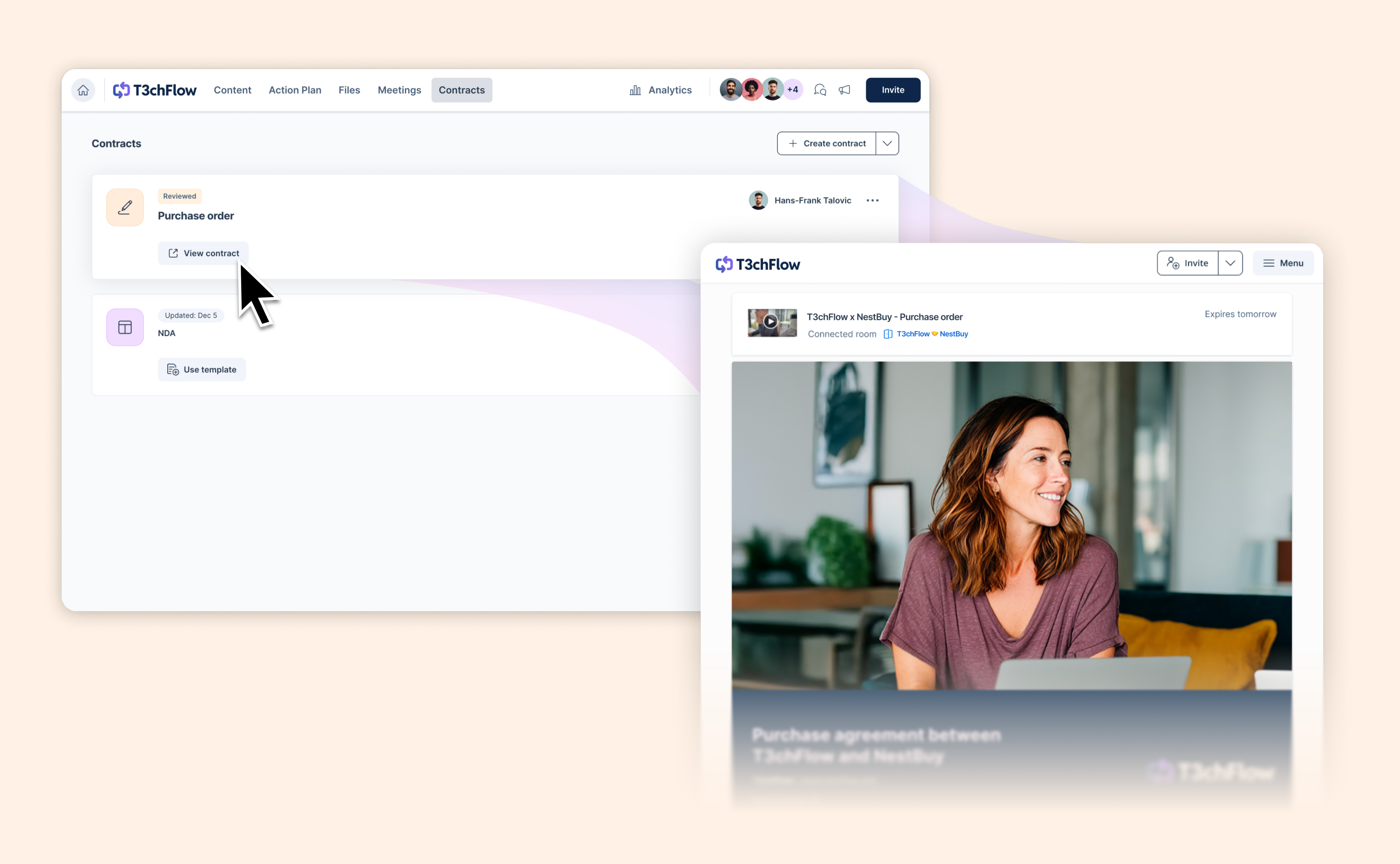
With GetAccept, contracts can now be created, connected, and managed directly from the Deal Room. That changes the rhythm of closing.
In practice, this means:
- Sellers can move into the contract step without breaking focus or leaving the room
- Buyers don’t have to jump between disconnected links to understand what they’re signing
- Late-stage stakeholders can review the contract while still having the full deal context one click away
The goal isn’t to make contracts feel casual. It’s to make the path to signing feel clear and well-supported.
The missing link: keeping the Deal Room thread intact inside your CRM
For most sales teams, the CRM is still where deals are managed day to day. That’s where stages move, forecasts are reviewed, and managers look for clarity.
In longer or more complex deals, a common problem emerges.
The buyer experience (Deal Room) and the closing workflow (Contracts) drift away from the CRM workflow. The room is where the deal is happening, but the CRM is where the deal is tracked.
That disconnect creates friction.
By extending the Deal Room ↔ Contract connection into the CRM, GetAccept keeps those threads aligned:
- Sellers can see which contracts belong to which Deal Room without guessing
- Contracts created in the CRM stay anchored to the same buyer journey
- Deal Rooms remain the single shared space for buyers, while the CRM stays the system of record for sellers
The goal isn’t to replace your CRM. It’s to make sure your CRM reflects the real work happening between meetings, all the way through signature.
What “connected” really means for buyers and sellers
Contracts stay linked back to the Deal Room
When a buyer opens a contract, they can see a clear link back to the connected room. That sounds simple, but it solves a common late-stage problem: stakeholders reviewing a contract without the surrounding context.
Instead of asking the rep to resend materials, a reviewer can jump back to the room to find:
- the business case
- meeting summaries
- Q&A and clarifications
- shared files
- the action plan and timeline
For sellers, the same connection works in reverse. You can jump between the room and the contract without losing your place in the deal.
The Contracts tab stays relevant to each stakeholder
Not everyone involved in a Deal Room needs to see contract details.
In GetAccept, the Contracts tab is only visible to participants who have a role in the contract workflow. Early-stage stakeholders stay focused on collaboration, while signers and reviewers see exactly what they need. No more, no less.
How the connected flow shows up in your CRM
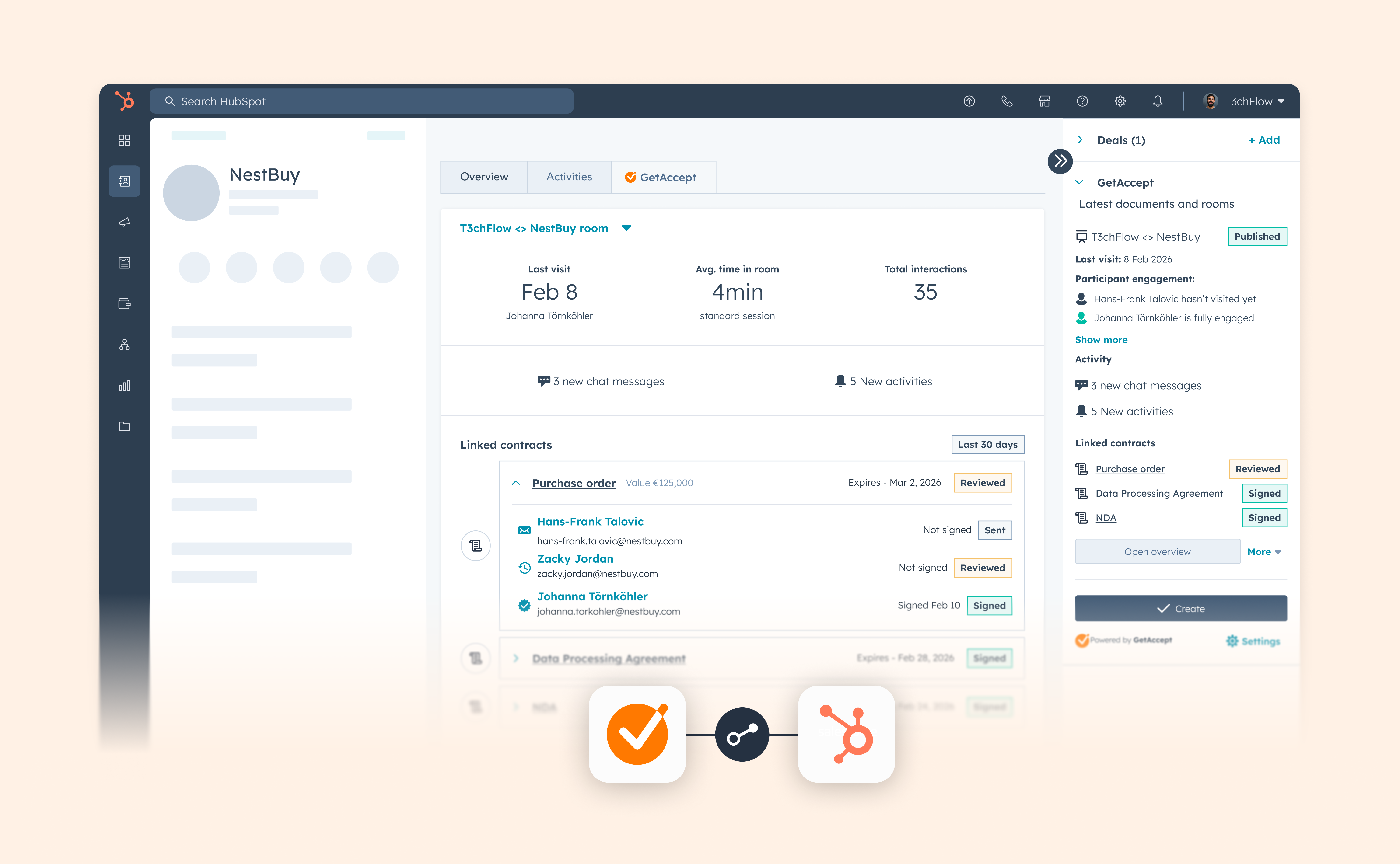
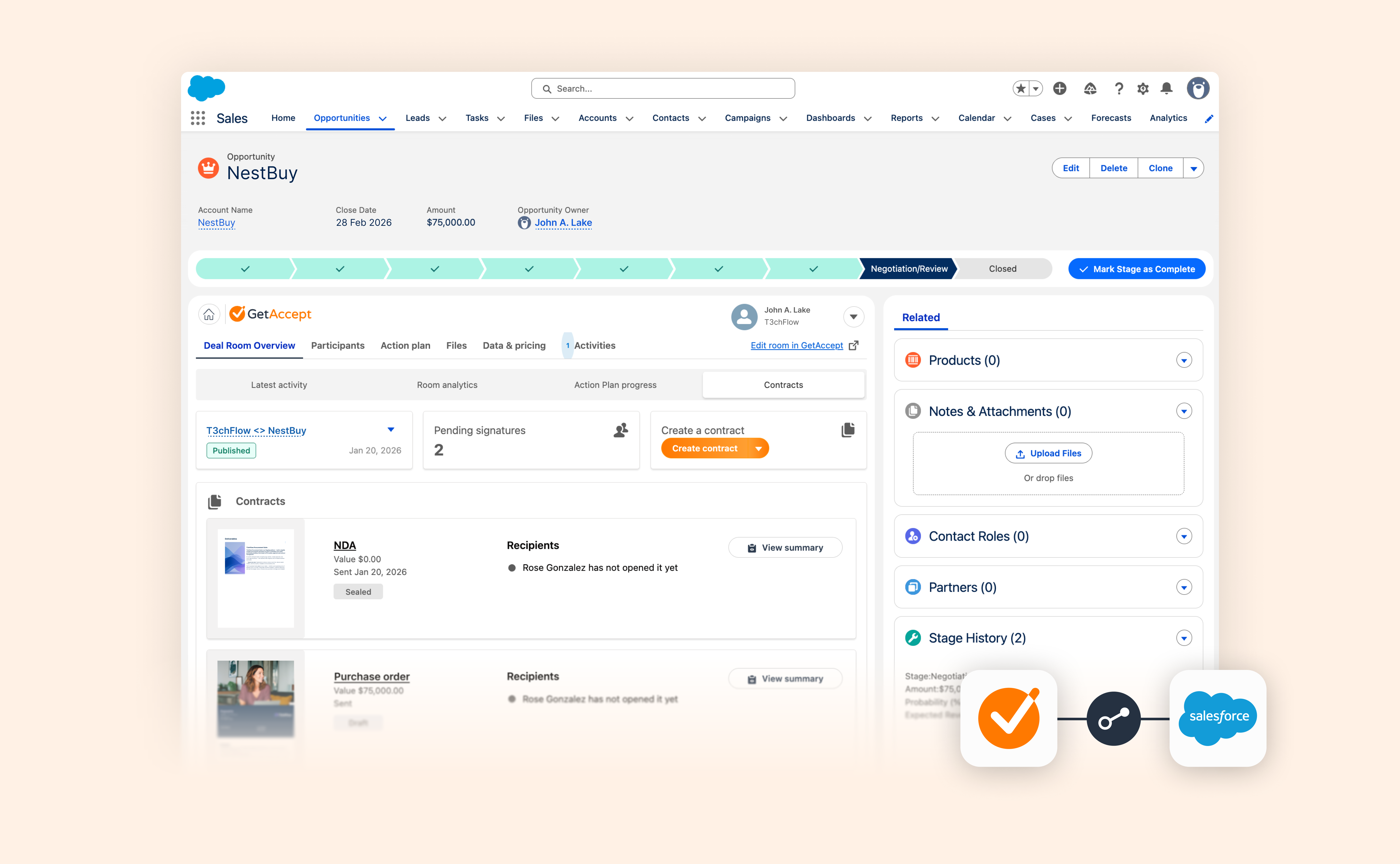
When your CRM is integrated with GetAccept, the Deal Room ↔ Contract relationship becomes visible where sales teams already spend their time.
Depending on your CRM, this connected workflow allows teams to:
- Link a contract to the Deal Room directly from the CRM
Useful when a document is created from a CRM-driven workflow or needs to be tied back to the room later. - See CRM-linked contracts appear automatically inside the Deal Room
Once linked, the contract shows up in the Deal Room’s Contracts tab alongside the rest of the deal context.
In other words: it stops being a “Did we create this in the CRM or in GetAccept?” situation. The contract belongs to the deal, and the Deal Room is the deal’s shared workspace – regardless of where the document was initiated.
Best practices for a smooth Deal Room → Contract transition
Introduce the room as the deal’s shared workspace early
The biggest mistake teams make is treating the Deal Room as a copy of the seller’s website or as a static repository of sales content.
It works much better when the room is positioned from day one as the shared hub for the deal. That’s what creates continuity later when contracting begins.
Use the room to prevent late-stage rework
If you expect legal or finance to join later, design the room so they can self-serve context:
- keep a clear executive summary
- capture key decisions and assumptions
- publish meeting summaries and next steps after each call
This reduces last-minute confusion and shortens the “getting up to speed” cycle.

Treat the contract as the final step of an already-aligned decision
The contract shouldn’t introduce new information. It should formalize what the buyer has already agreed to.
When the Deal Room has done its job, contract review becomes focused and efficient, because stakeholders already understand:
- the why
- the scope
- the path forward
Keep your CRM aligned
If your team sells from the CRM, a few habits help keep things clean:
- Treat the Deal Room as the buyer-facing hub
Even if a GetAccept contract is created from the CRM, anchor it back to the room where meetings, next steps, and context live. - Keep one room per deal, and link every relevant document to it
NDAs, DPAs, order forms… Multiple documents are normal. What matters is that they all tie back to the same Deal Room thread. - Be explicit about ownership inside the CRM
Make it easy for reps and managers to see: “Which room is connected?” and “Which contracts are connected?” without relying on naming conventions.
Example in practice: T3chFlow
T3chFlow already used Deal Rooms to collaborate during the sales process. After each meeting, reps added recaps, clarified questions in chat, and kept a Mutual Action Plan up to date with the buyer.
But when the deal reached the closing stage, the flow broke.
The rep had to switch to the Contracts module to create the agreement. A finance stakeholder joined late, received a contract link, and immediately lacked context. They hadn’t seen the earlier discussions, the business case, or the agreed next steps.
With Deal Rooms and Contracts working together, the closing stage became a continuation of the same process.
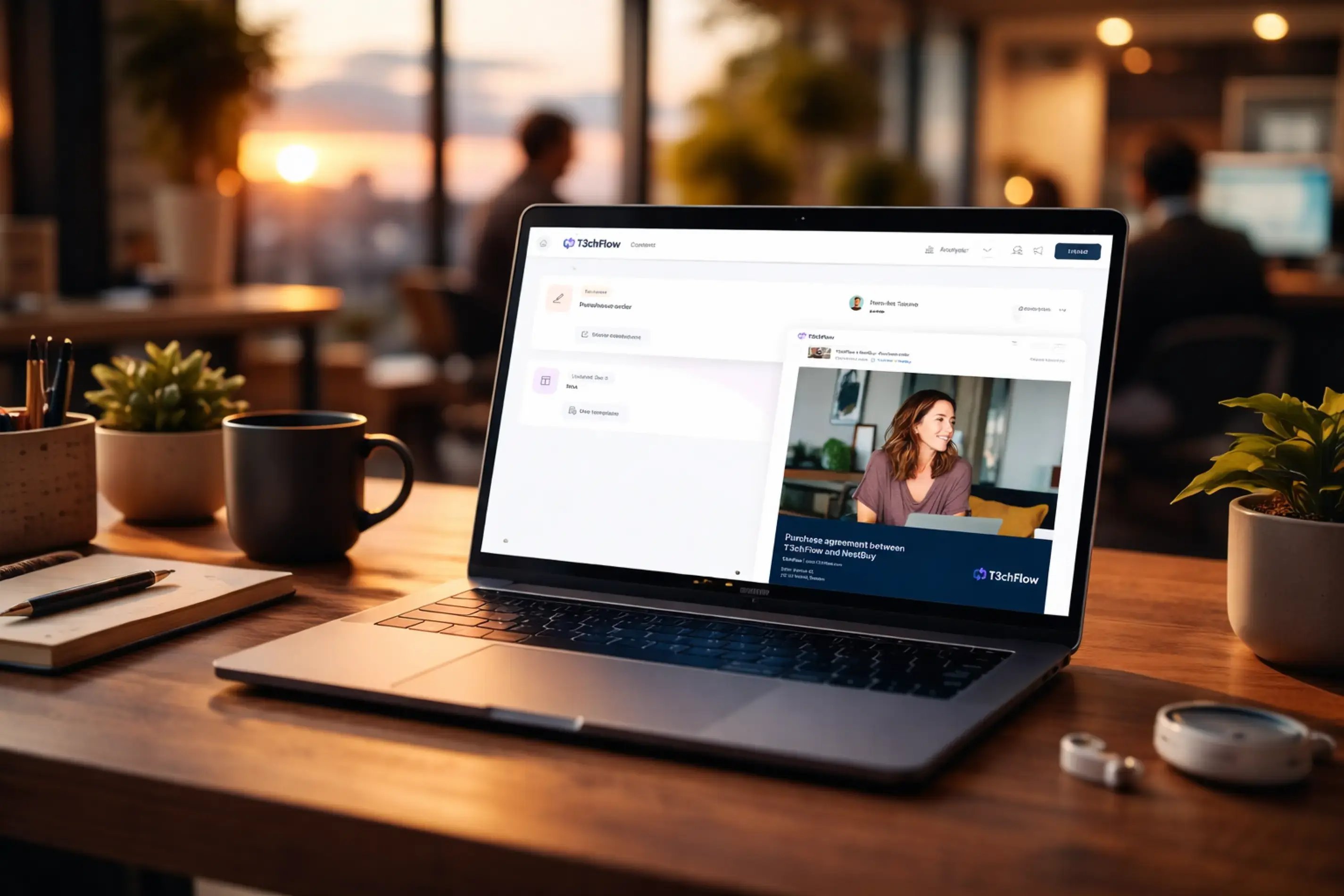
When the deal was ready to move forward, the rep created the contract directly from the Deal Room. When the finance stakeholder in the buyer’s organization joined and opened the contract, they could instantly jump back to the connected room, where they found business cases, meeting recaps and the Mutual Action Plan.
Instead of starting a new email thread or asking for context, the stakeholder got oriented in minutes. The rep didn’t have to resend material or retell the story.
Recap
By completing this lesson, you should now understand how GetAccept supports the full buying journey from collaboration to signature:
- Deal Rooms create alignment, shared context, and momentum throughout the deal
- Contracts work best when they feel like a continuation of that same flow
- Connected rooms and documents reduce late-stage confusion and repeated questions
- Stakeholders can move between contract and deal context without hunting for information
- The workflow supports a more consistent process that fits naturally alongside your CRM
If your Deal Room tells a clear story and keeps the deal organized, moving into contract becomes much simpler. It feels like the next step in a process the buyer already trusts.