







The scattered starting point
“It used to take our team four hours to build a room with another provider. The more complex ones took upwards of eight hours. If that's the case, we won't use anything.”
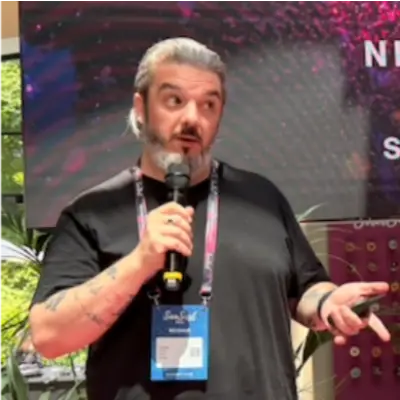
Before GetAccept, N.Rich's sales workflow was fragmented across half a dozen tools with no shared playbook.
AEs assembled their own decks with Claude. Content sat in Google Drive, unstructured and hard to find. There was a persistent disconnect between the content marketing produced and what reps needed in the moment.
Once a discovery call ended, there was no mechanism to keep a prospect engaged before the next meeting.
And the committee problem got worse the bigger the deal got. A €150,000 evaluation pulls in performance marketing, marketing ops, IT, procurement, and legal. Over email and LinkedIn, each of those people got a different thread, a different attachment, and a different version of the story. Nothing was shared, nothing was current, and the champion carried the whole thing alone.
N.Rich had already tried to fix this once. They ran Aligned, another digital sales room, and it did not stick. Not because of the concept, but because nobody could get a template into it in a good manner, and every room started from a blank page.
Reps stopped building rooms, and the tool's purpose died.
Finding the right platform
“I never managed to get templates into Aligned, which is also why I ended up not buying it. I asked about the CS process, and there didn't seem to be a lot of CS processes.”
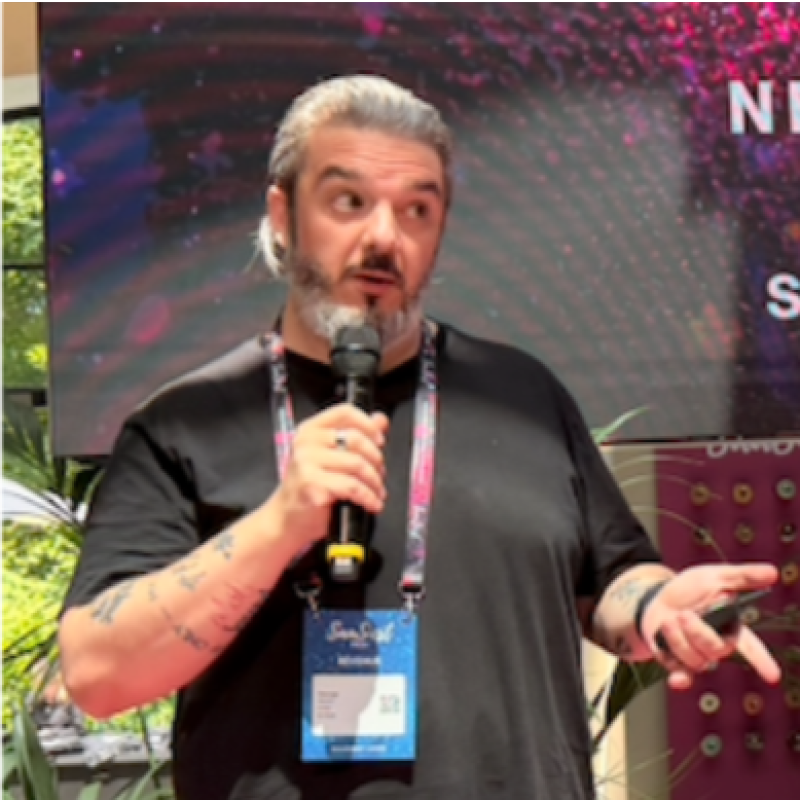
Two things tipped the decision toward GetAccept.
First, CS support. George wanted a baseline template built for the team from day one, not a self-serve setup. He had just watched a competing tool fail on exactly this point.
GetAccept's CS team delivered what he asked for: entity-level prompt configuration, template setup, and a structured rollout.
Second, e-signing was included in the licence, which let N.Rich start consolidating contract steps into the same platform instead of a separate tool.
Rolling out in stages
Getting from the first vendor conversation in May 2025 to a kicked-off sales team took about seven months, including the sales process. The onboarding went a lot faster and smoother.
-
Trial before commit. George wanted hands-on proof before signing, specifically a working example built around one of N.Rich's real deals. GetAccept's team set up a pre-built room mapped to that live case, which gave him something concrete to judge instead of a generic demo. The trial entity went live on 7 November 2025, and the first template-built room was in front of a prospect four days later.
-
Template-led onboarding. Instead of a blank page, the first deal room template was built around a format the team already used, so reps had something familiar and ready on day one.
-
Admin-led rollout. George and Sara were onboarded as admins first and owned the template strategy. Sara built the room templates and content widgets, configured the prompts at the entity level, and then ran the platform demo for the wider sales team herself so nobody inherited a blank page.
-
Mandated, not offered. The AE team was formally kicked off on 10 December 2025. Ten weeks later, George audited usage and found a 50-50 split, half of the team using it daily and half of the team barely touching it. The fix was not a feature. It was removing the choice.
GetAccept became part of standard new-AE onboarding, project rooms became the required container for every net-new deal, and managers stopped accepting deals run over email. By spring 2026, usage had spread past sales into customer success, solutions engineering, and marketing, with more than twenty people across five functions.
Ten minutes to a live room
“This is how the EMEA team updates their deal rooms now. That's all they have to do. We have to review very rarely, because the prompting works excellently. This is why the meeting recorder is so important. When the teams have new meetings, they just push the transcript in, and they can update everything in the room off the back of the last meeting.”

The practical core of the workflow runs on two integrations: HubSpot and Fathom.
Rooms are created directly from the HubSpot deal card using the native GetAccept integration. The rep picks a template, and the room pre-populates with contact names, deal value, and product line items. Visit counts and time spent surface back inside HubSpot without opening GetAccept separately.
Every customer meeting is recorded in Fathom. After a discovery call, the transcript goes into the GetAccept meetings tab, and the AI picks it up alongside HubSpot CRM data and existing room content to generate structured output: executive summaries, business cases, discovery summaries.
GetAccept ships four pre-built prompts for these, and N.Rich's custom prompts are saved at the entity level so every rep produces the same structure without re-prompting.
The result is a complete, populated, customer-ready room in about ten minutes. In the previous tool, the same room took four to eight hours, which is why it never got built.
The team also stages the rooms deliberately. The business case section stays hidden until after the second meeting, when there is enough discovery data to populate it properly.
Early-stage rooms stay simple; depth comes as the deal progresses. This habit that makes it work sits upstream of GetAccept.
The framing shift
“We train every rep to say the same line: I'm going to create a digital project room for us. I'll share documentation, case studies, and relevant content. If we continue the conversation, we'll keep it alive there. That has really increased engagement. People feel like we're doing a project together, so they go in and start engaging. We also tell the team to nudge prospects in there by answering their email only in the project room chat.”
Changing when and how deal rooms were introduced to the prospects made a huge difference in driving engagement. It involved making the room part of the sales process from discovery onward, positioning it as the shared project workspace.
This language positions deal rooms as something being built together rather than something being sold at them.
The play is standardised across the team. The rep sends the link by email immediately after the call rather than relying on automated notifications alone, then pings the prospect in the room chat to welcome them. If they have not entered by the next day, the rep follows up directly, with GetAccept's reminders landing a few days later. Reps also call and remind prospects who still have not gone in. Urgency is everything in deals.
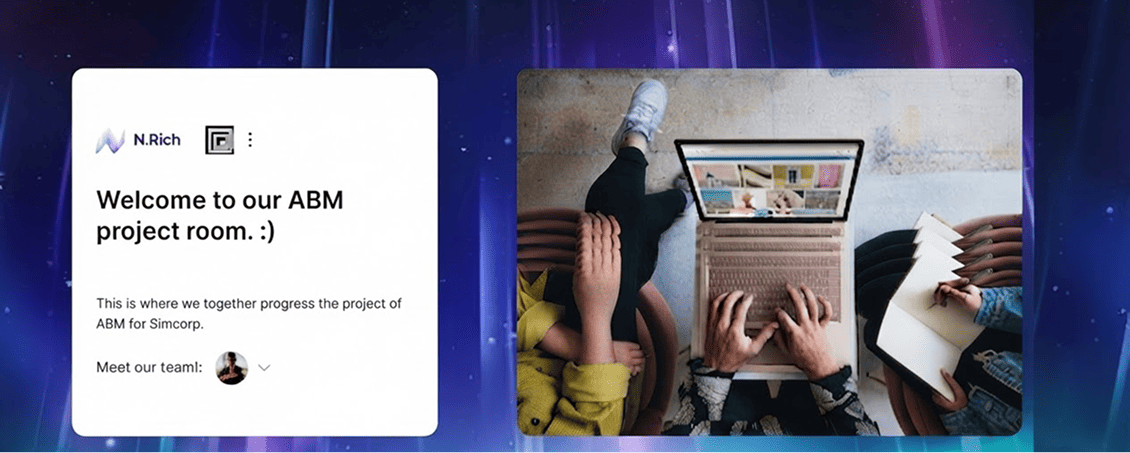
The immediate chat is deliberate. It gives the prospect a direct line to the rep and the team behind the rep, and it gets them talking while the discovery call is still fresh.
On one of the first deals, the rep's champion joined the room, and the rep started asking questions in a private chat on the spot. The champion poured in where they were in the process, who the competitors were, and what she knew about them, which led straight to a meeting with her manager.
That account signed for €80K+ in May 2026.
N.Rich also ran the inverse experiment without meaning to. The five rooms with the lowest activity were the ones where reps skipped one of two things: the project-room line in the meeting or the welcome ping message in the chat.
Two further lessons on low engagement. Always send the project room link in the rep's own follow-up email; do not rely on the prospect noticing the notification from GetAccept.
And if you do not give them something to engage with, why would they?
Deals that live in the room
The room wasn't supposed to become the primary communication channel across sales, marketing, CS, and solutions engineering, but it did.
Across the life of a deal, N.Rich averages 355 messages inside a project room, spread across a dozen or more parallel threads: the champion in one, IT in another, procurement and legal in their own. Private threads let the rep run champion-only conversations alongside the group without the rest of the committee seeing them.
Bringing N.Rich's marketing people, solutions engineers, and CS into the room before the deal closes leads to a better handover, spreads the load off one rep's shoulders, and shows the prospect how the team actually works together before they have to trust it.
That volume changes what the CRM is worth.
Video is part of it. Rather than attaching a recording to an email that one person opens, reps drop video into the room when they do updates, where the whole committee sees it. That pulls in the people who never attended the call.
The hardest test came from a prospect N.Rich started the sales process with in February. It was a three-vendor evaluation to replace 6sense, running through a single project room. In May, the prospect went through a 25% global layoff and a regionalisation reorg.
The head of performance marketing, who had run the technical evaluation, was gone. So was half of the demand gen team, and so was their manager. Their CMO had already stepped down. A new decision-maker inherited an evaluation she had not been part of.
Everything she needed was in the room: every meeting summary, every document, the full thread history. She caught up in days rather than restarting the process.
The deal was re-scoped and signed on 24 June for €100K+, a 6sense displacement that survived losing three of its four original stakeholders. The champion who carried it through had been in the room since day one.
What made the difference
-
Setup stopped being a barrier. Ten minutes instead of four to eight hours means rooms actually get built. The prompts are configured once at the entity level, so every rep produces consistent, structured output from their first deal.
-
The whole committee is reachable. 355 messages per deal, across a dozen threads, with video and documents in one place. The champion is no longer a bottleneck, and eight to fifteen people can all see the same current version of the deal.
-
The view of the deal is always up to date. New stakeholders self-serve. Nobody has to be re-briefed, and nobody works off a three-week-old attachment.
-
Correct deal room framing changes the dynamic. One sentence at the end of a discovery call positioning rooms as a shared workspace shifted it from seller-to-buyer to a shared project. The rooms introduced like that had the highest engagement.
-
It was mandated. Adoption did not come from enthusiasm. It came from removing the option.
What Sara would tell another sales leader
“Don't let sales choose if and how much they use it. This is not a rep-by-rep decision. If you leave it optional, half your team will use it, half won't, and you will never get the data or the habit. Make it the container every deal runs in, or don't bother buying it. This is true about any sales software, by the way. The second thing: the room is not the product; the sentence is. 'I'm going to create a project room for us' at the end of a discovery call is what makes people actually go in. The five rooms where my reps skipped that line are the ones with the least activity in them. And record every customer meeting. The AI is only as good as what you feed it.”





.webp?width=48&height=48&name=ezgif.com-jpg-to-webp-converter%20(1).webp)


