-1.jpg?width=48&height=48&name=55f40cc2763590699ea313bb5c9f08b5%20(chosen)-1.jpg)

Think about the best salesperson you've ever worked with.
Odds are it wasn't the one with the most tools open.
It was the one who never lost the thread. The one who knew, off the top of their head, where every deal stood, what the buyer cared about, what was said on the last call, and what needed to happen next.
The problem isn't access. It's that no one holds the whole picture
That kind of memory is rare, because the knowledge a deal generates is scattered everywhere. Some of it's in Salesforce. Some in the Deal Room. Some in a meeting transcript, a contract, an email nobody re-reads. No single person – and definitely no single tool – holds the whole picture. So reps spend their day reassembling it: clicking between records, hunting for the right tab, trying to remember where they left things.
What if something did hold the whole picture? And what if it lived in the one place you're already working – Salesforce?
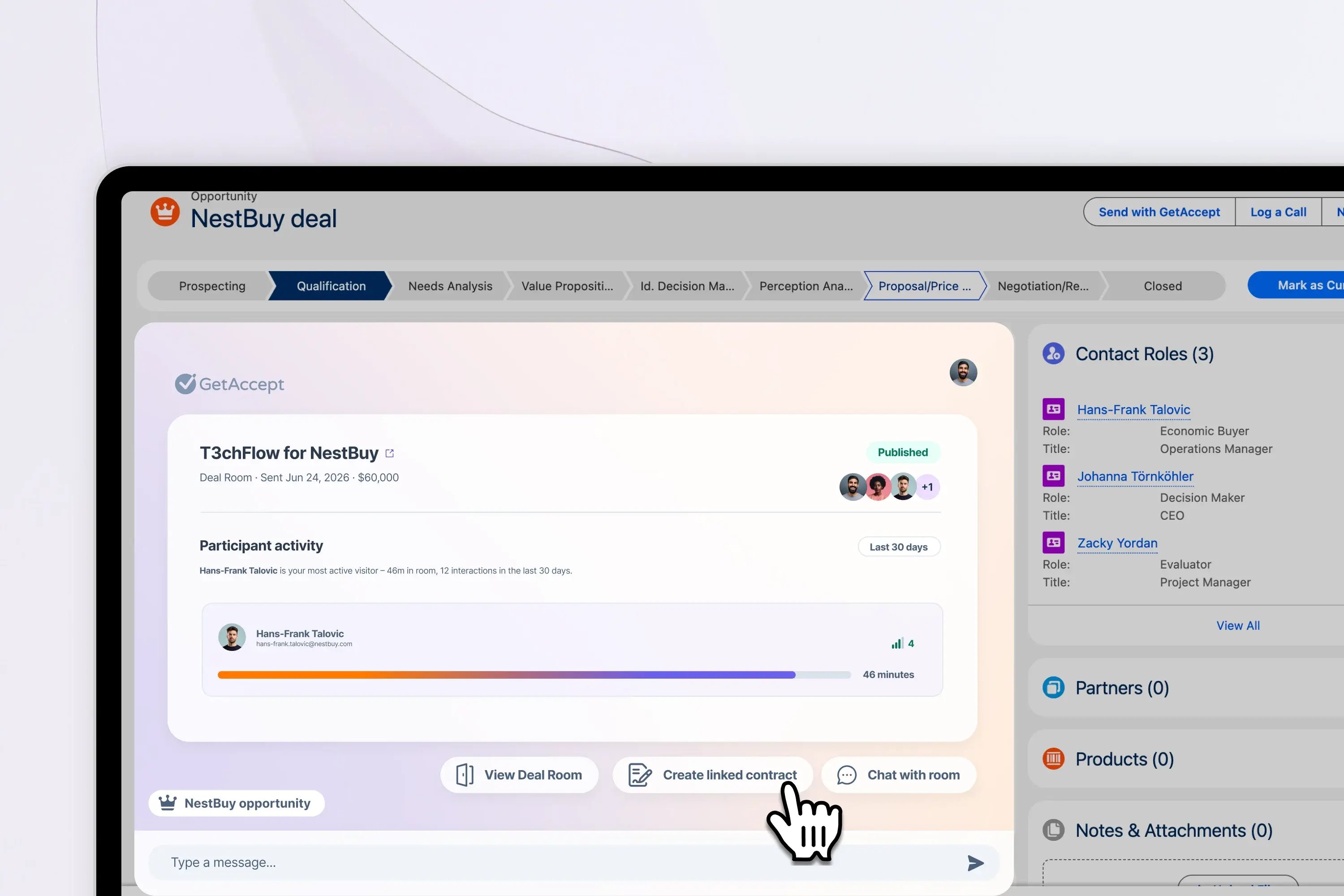
A partner that already knows your deals
That's the idea behind bringing GetAccept AI into Salesforce. Not another tool to learn, but a partner that already knows your deals, and can act on them with you.
It knows what's happening because it can see it all: the engagement inside your Deal Rooms, the status of every contract, what a buyer looked at and when they went quiet.
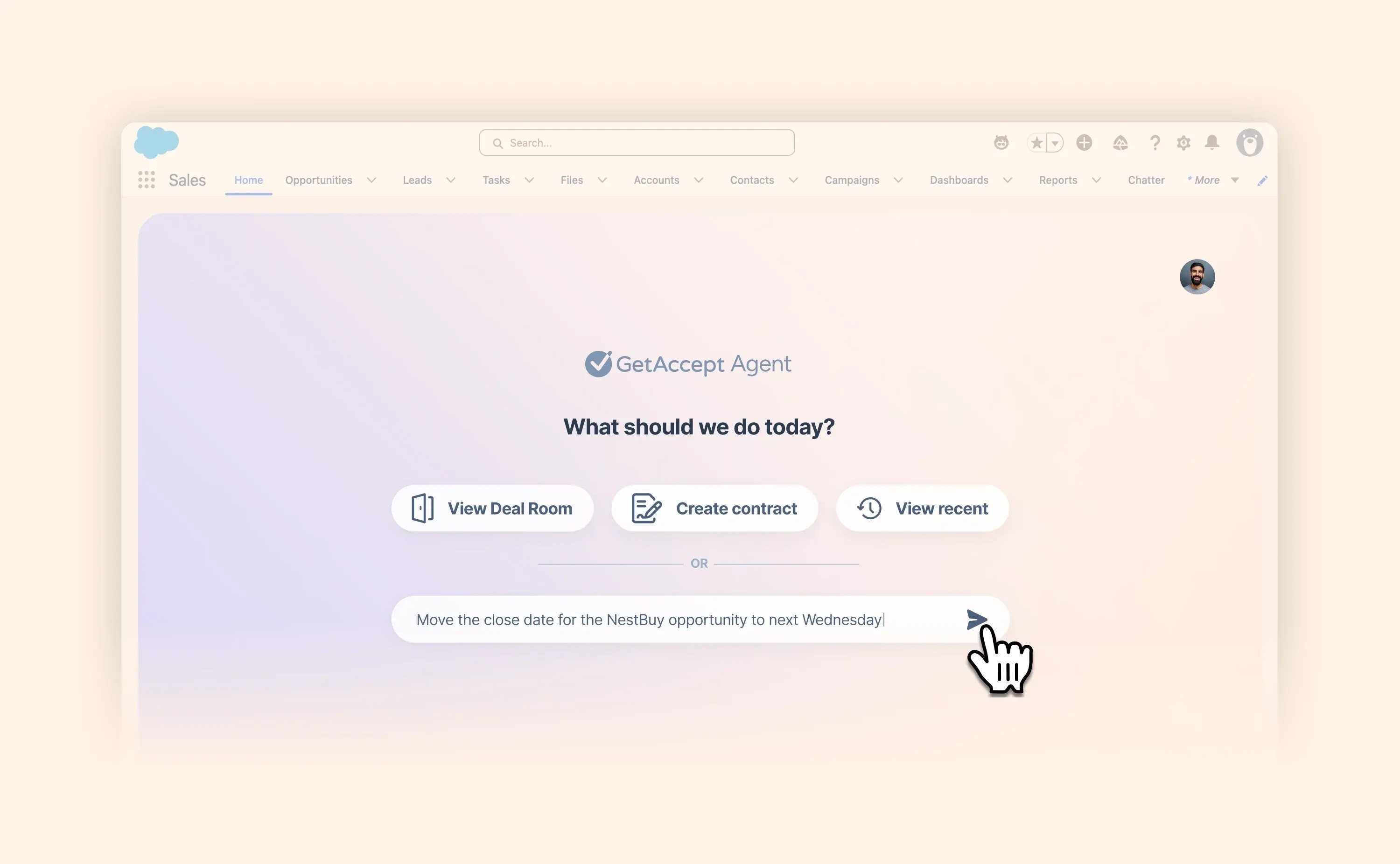
And here's what makes it truly useful: it works across your Salesforce records, not only your GetAccept content. Ask "show me all my opportunities closing in September" and get an interactive chart you can explore. Say "move the NestBuy close date to next Wednesday" and the record updates on the spot. Line up your qualified deals and spin up a Deal Room for each, all from one surface, without opening records one by one. For managers, that means asking broad questions across the whole pipeline instead of clicking into deals one at a time.
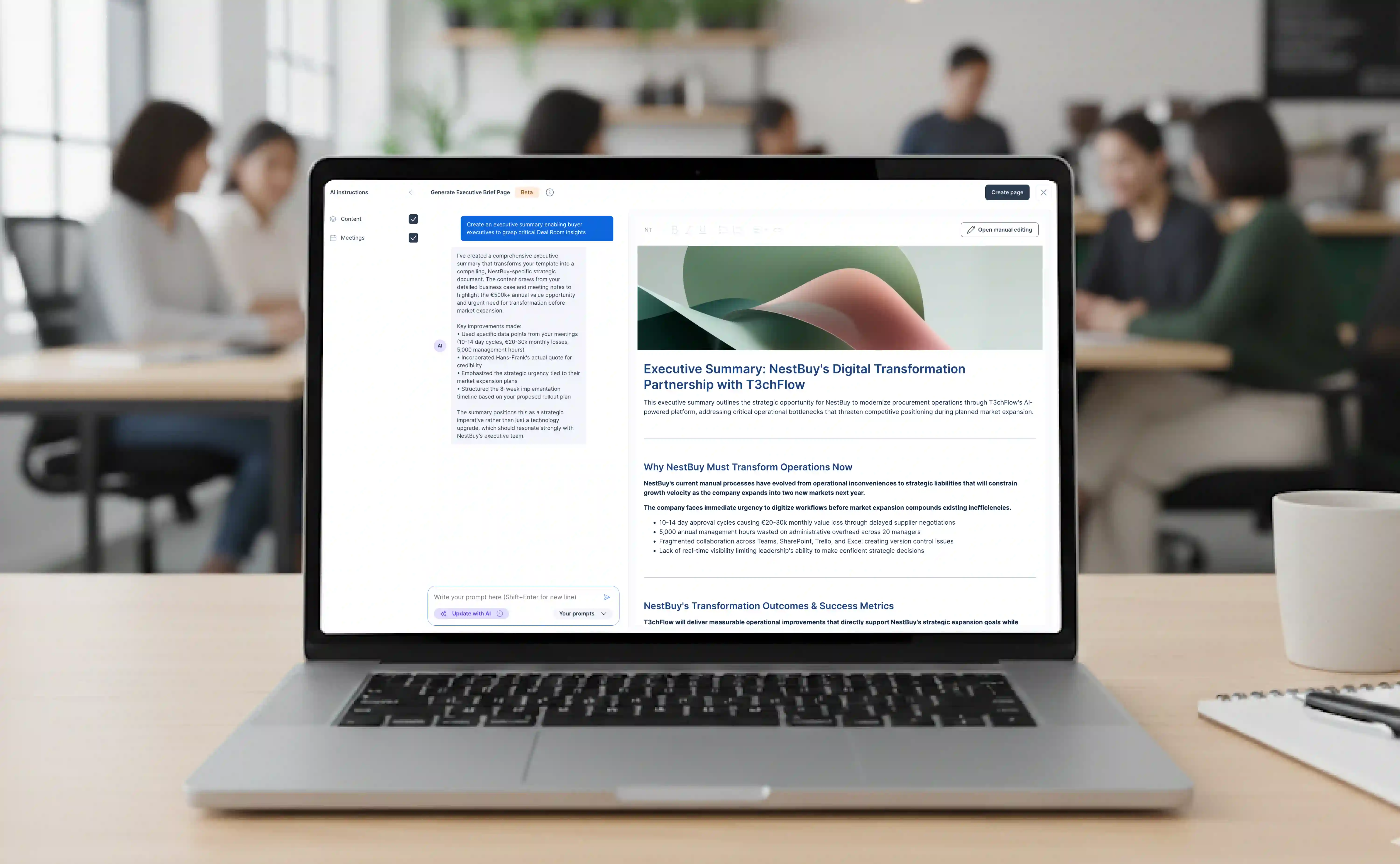
It doesn't stop at answering questions and surfacing information, either. Ask it to draft a contract for an opportunity and it walks you through a guided flow, then sends it for signature without you leaving the record. Ask what happened on this morning's call and it turns the meeting transcript into a follow-up event on your Salesforce calendar. Ask what got signed this week and it pulls recent activity across your Deal Rooms, so nothing slips through the cracks.
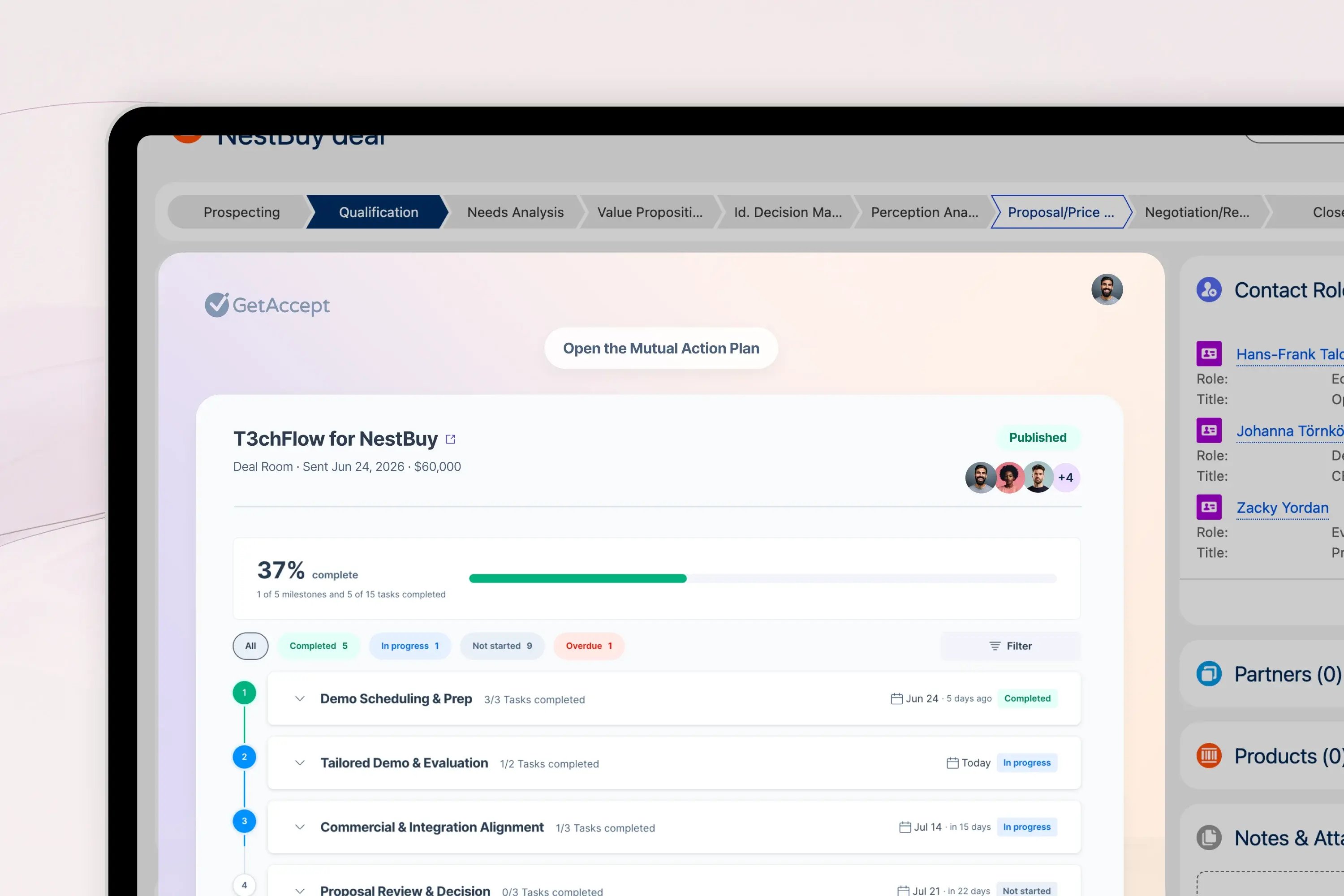
Talk to it like you'd talk to a colleague
You talk to it the way you'd talk to a sharp colleague. "Create a Deal Room for this opportunity." "Draft and send the contract." "Summarize the last call and book a follow-up." "Which of my deals have gone quiet this week?" "Line up my qualified deals and spin one up for each." "Show me the action plan for this opportunity." It understands where you are and what matters right now, proposes the next move, and, this part matters, shows you every action before it takes it. You stay in control; it handles the busywork.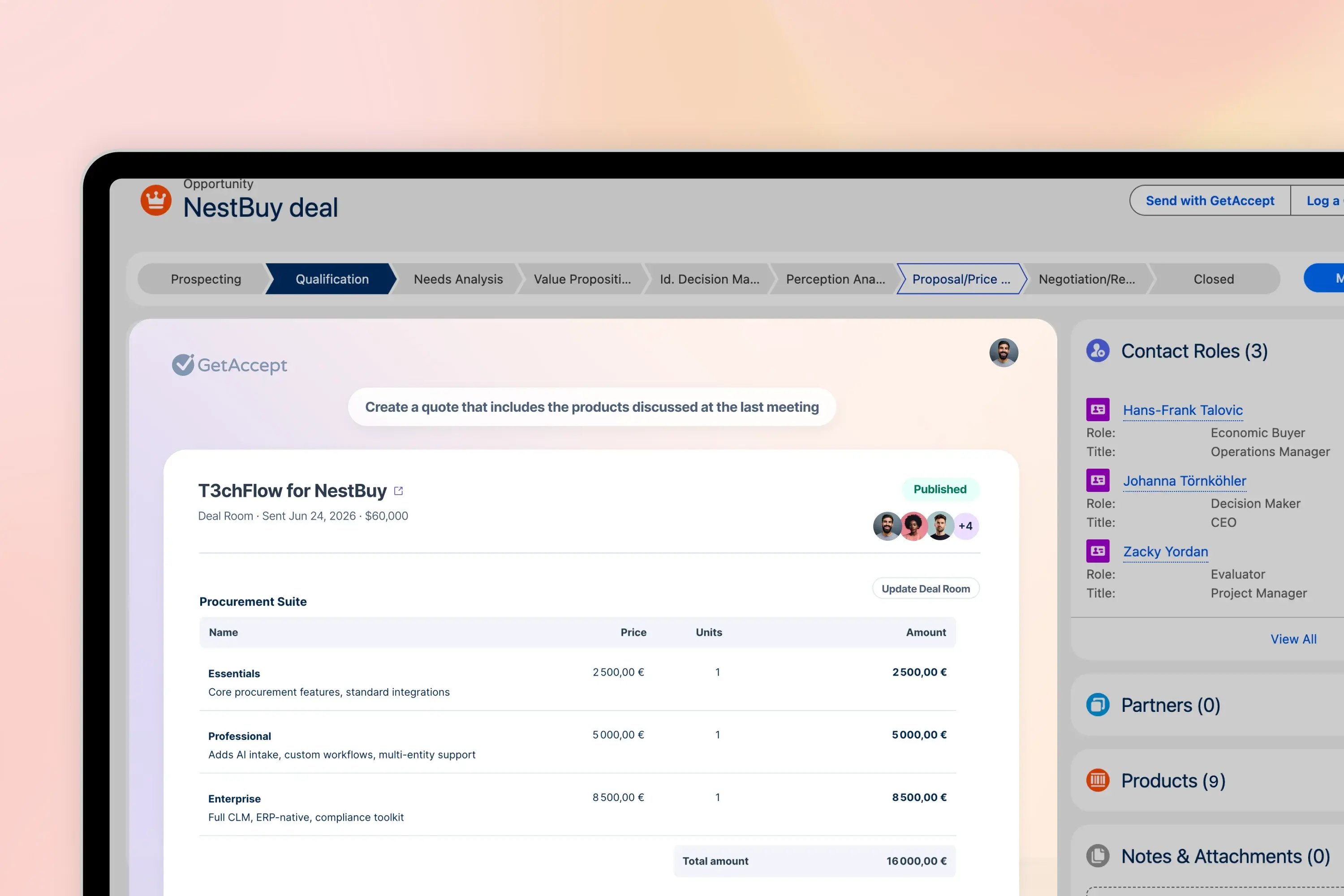
More time moving deals, less time reconstructing them
The result isn't a flashier CRM. It's the feeling of having someone in your corner who never forgets a detail, never loses a thread, and is always a step ahead, so you spend less time reconstructing your deals and more time moving them forward.
That's what an AI partner inside Salesforce looks like. And it's only the beginning of what happens when your deals finally have someone who knows them inside out.
-1.jpg)


.png)