-1.jpg?width=48&height=48&name=55f40cc2763590699ea313bb5c9f08b5%20(chosen)-1.jpg)
2025 has been a massive year for our CRM integrations.
A year where we doubled down on one vision: bring every part of the buyer–seller relationship straight into your CRM, so you can focus more on what moves deals forward, and less on admin.
You told us the back-and-forth between GetAccept and your CRM made it too easy to miss buyer signals or lose momentum midsale.
So we rebuilt the CRM integrations with one clear goal: put real buyer activity in the place where you already spend your day: your CRM.
Instead of asking, “How do we better connect GetAccept to CRMs?” we asked a better question:
How do we bring real buyer behavior into the CRM, and let CRM data actively shape the buyer experience in return?
That question guided everything we shipped this year.
We rebuilt around one idea: buyer activity belongs in the CRM
Here’s the quiet truth about CRMs:
They’re great at telling you who your buyer is, what products they’re evaluating and which stage the deal is in. However, they’re not as good at telling you how your buyer is engaging once the deal is in motion.
What’s happening between meetings?
Who’s actually engaging?
Where is momentum building (or stalling)?
This year, across our CRM integrations, we focused on closing that gap.
By making buyer activity flow into the CRM — automatically, in real time, and without extra work.
With the new GetAccept App cards, HubSpot users can now see GetAccept Deal Room activity directly on deal, company or contact records — without leaving HubSpot. Room visits, task completions and signatures don’t live “somewhere else” anymore. They live where reps already work.
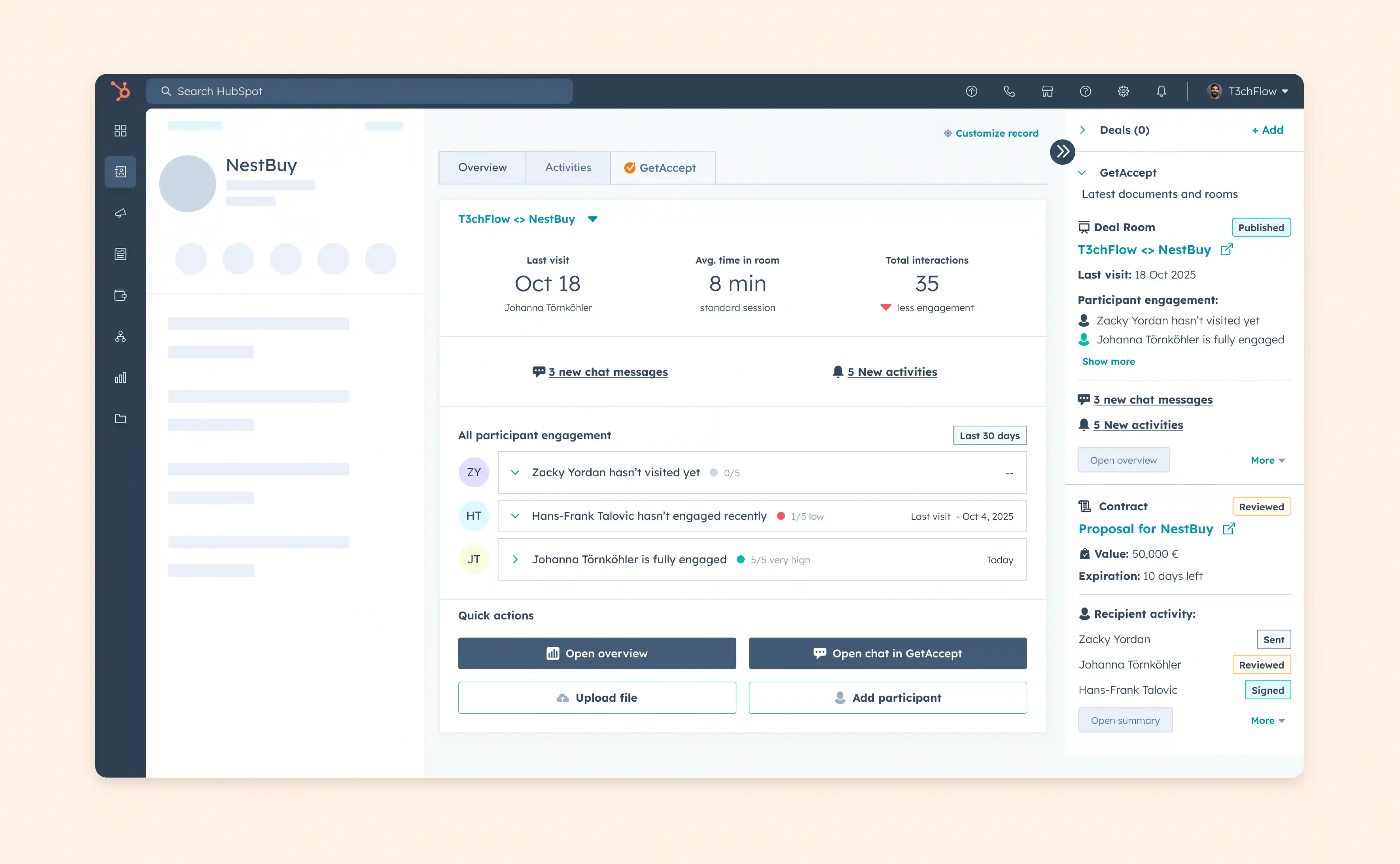
And Salesforce users now get a clear Deal Room overview directly inside the opportunity, showing who’s active, which stakeholders are silent, what’s overdue and what needs attention.
Two-way sync became the foundation, not a nice-to-have
Early CRM integrations were mostly one-directional: push data out, hope it stays accurate, manually clean things up when it doesn’t.
That doesn’t work in real deals.
This year, we made true two-way sync the default for GetAccept’s CRM integrations.
What that means in practice:
-
Buyer activity in GetAccept – such as room visits, comments, chat messages, task completions, and signatures – flows back to the CRM and can update CRM fields automatically, and
-
Updates in the CRM can trigger automations and refresh live content, i.e., contracts and Digital Sales Rooms, even after they’ve been sent.
Salesforce users saw this clearly with the ability to update sent contracts using Salesforce-driven data — buyer info, product details, even entire formatted sections — without creating a new version.
HubSpot users saw the same principle applied when CRM updates synced straight back into live Deal Rooms and Contracts, keeping everything aligned with HubSpot as the source of truth.
Post-send is no longer where deals go to die
One of the most consistent frustrations we heard this year was about what happens after something is sent.
Pricing changes.
Stakeholders change.
Legal needs an update.
Details need to be corrected.
Traditionally, that meant friction.
This year, we focused heavily on removing it.
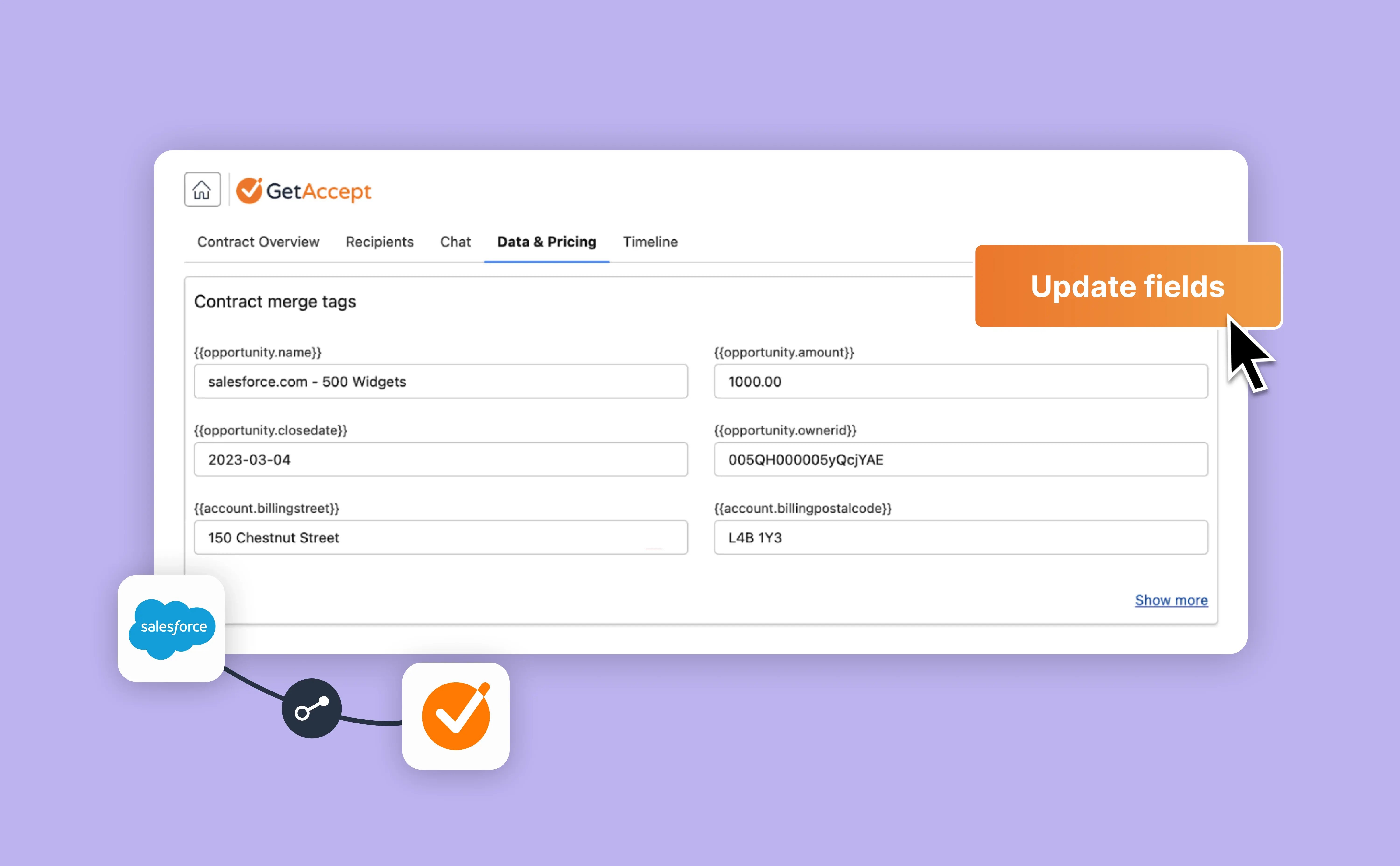
Now, when something changes in your CRM, GetAccept can update live buyer-facing content, without creating new versions or forcing buyers to re-review everything.
That includes:
-
Pricing tables synced from CRM product line items
-
Buyer-entered data, like billing details or VAT numbers
-
Entire content sections driven by CRM fields
From the seller’s side, everything stays clean, and from the buyer’s side, everything stays current. No more guessing which version is correct.
The result is simple: deals keep moving, even when things change.
Buyer activity became CRM signals — and AI finally had something real to work with
Another important shift this year wasn’t just where data flows, but how it’s used.
Once buyer activity lives in the CRM, it stops being “interesting analytics” and starts becoming usable signals.
AI can’t help if the data is static. It needs real-time buyer behavior data. This year, GetAccept became a consistent source of that data.
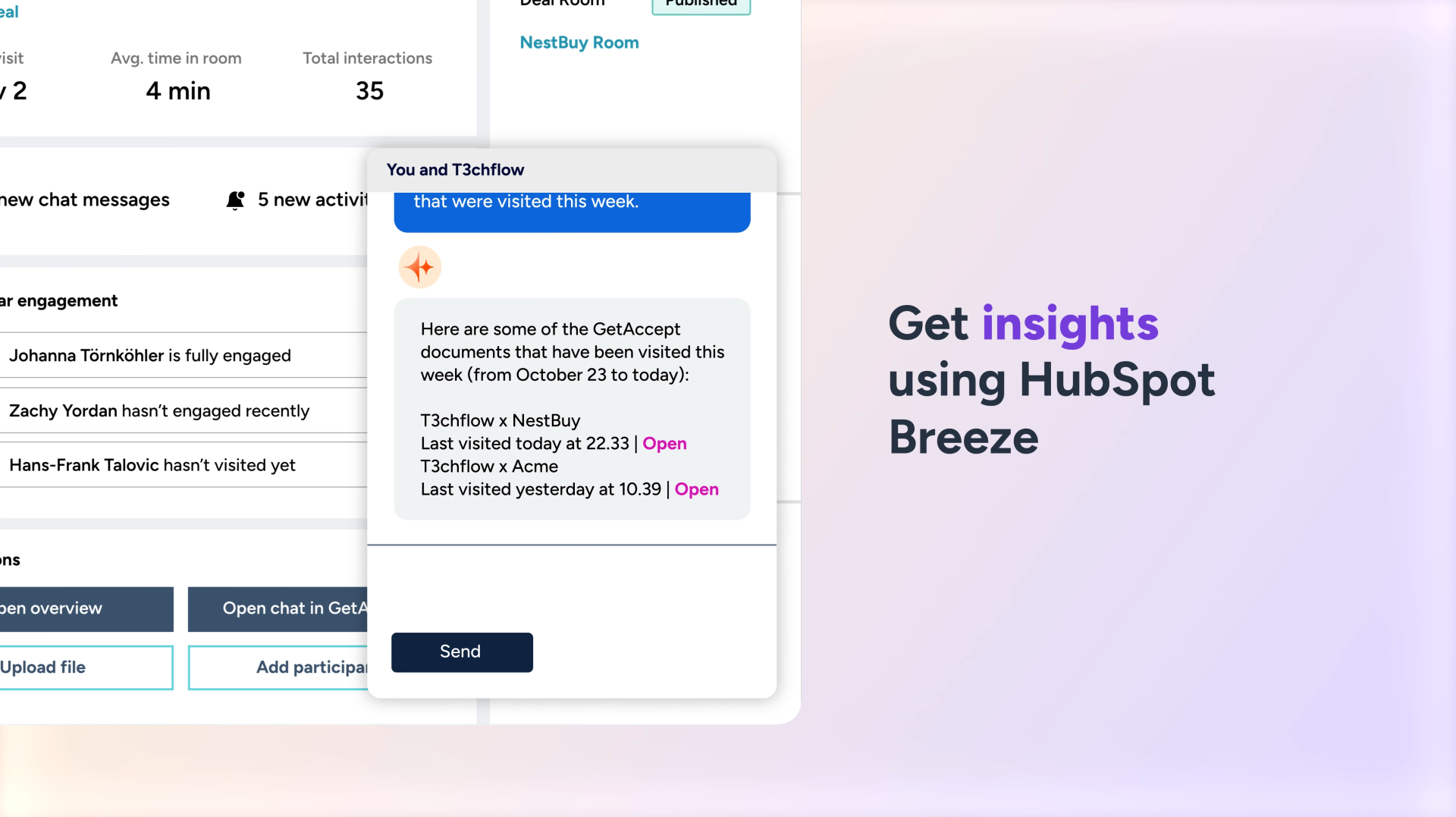
In HubSpot, buyer activity flowing in from GetAccept now powers better reporting, clearer deal health and even CRM AI use cases. HubSpot’s Breeze AI Copilot can now answer prompts like:
-
“Which Deal Rooms had activity this week and are set to close this month?”
-
“Show me deals closing soon with no recent buyer engagement.”
-
“Who’s the most active decision-maker in this account?”
In Salesforce, surfacing engagement directly inside opportunities gives managers and reps a faster read on deal risk without digging through tabs or tools.
This is where CRM AI starts to matter.
CRM data stopped being internal-only and started shaping the buyer experience

CRMs already hold everything needed to personalize deals: products, regions, deal types, and more.
For years, that data helped sellers, but buyers never saw the benefit.
This year, we changed that.
With CRM-driven conditional logic, teams can now:
-
Maintain one smart template instead of dozens
-
Show or hide content based on deal context
-
Keep pricing, terms and messaging aligned automatically
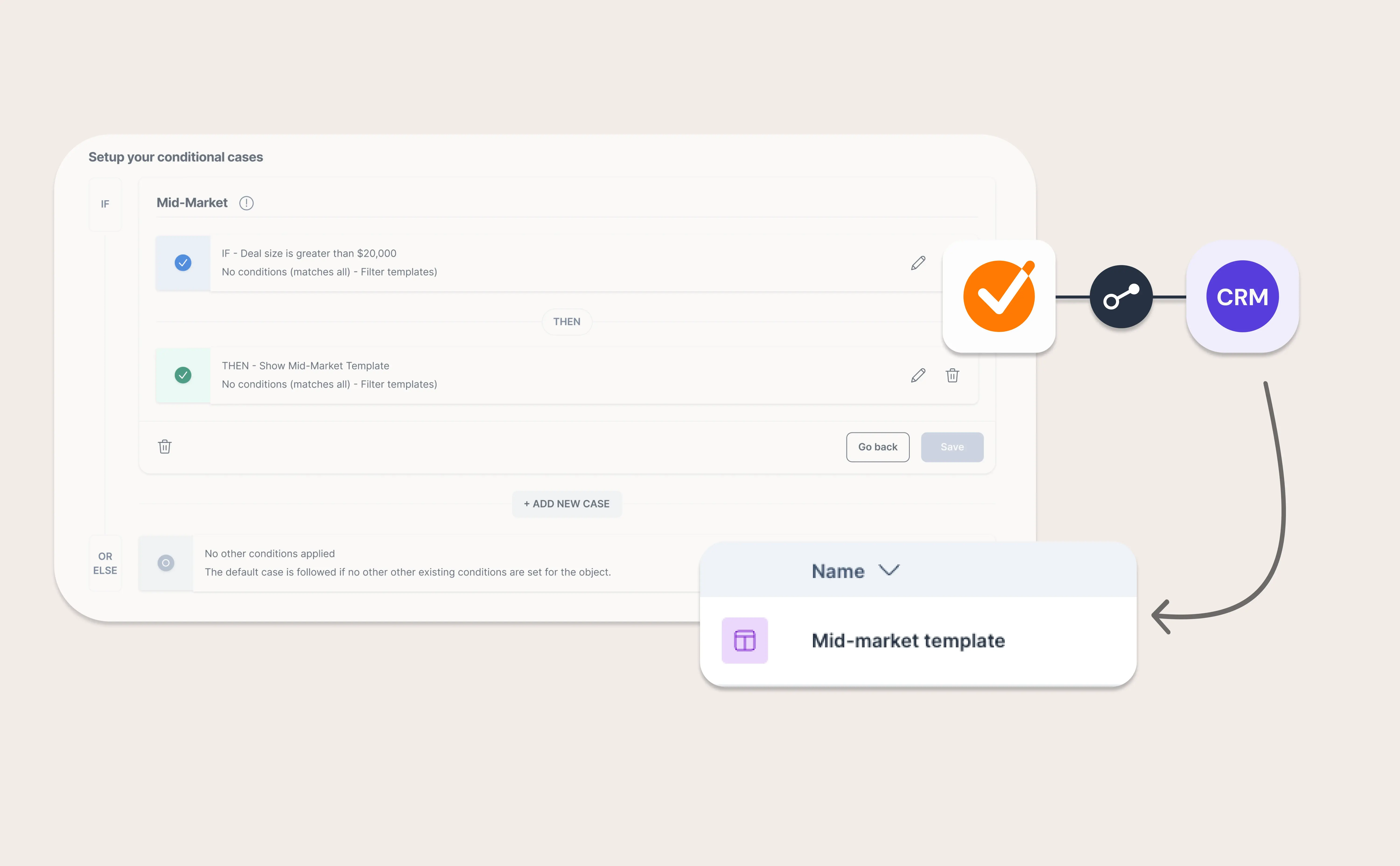
Instead of maintaining endless template variations, CRM users can manage one smart template that automatically adapts to each buyer. Contracts automatically show or hide sections based on CRM properties.
Think industry-specific customer cases, region-specific terms and dynamic warranty clauses. All powered by the CRM data you already maintain.
You can even set up rules that automatically pick the right document template, based on deal stage, industry, company size, product line items or other CRM properties. Admins configure it all from the refreshed GetAccept settings, now simpler and easier to use.
The result is fewer templates, less manual work and buyer experiences that stay relevant as deals evolve.
Pricing tables were just the starting point
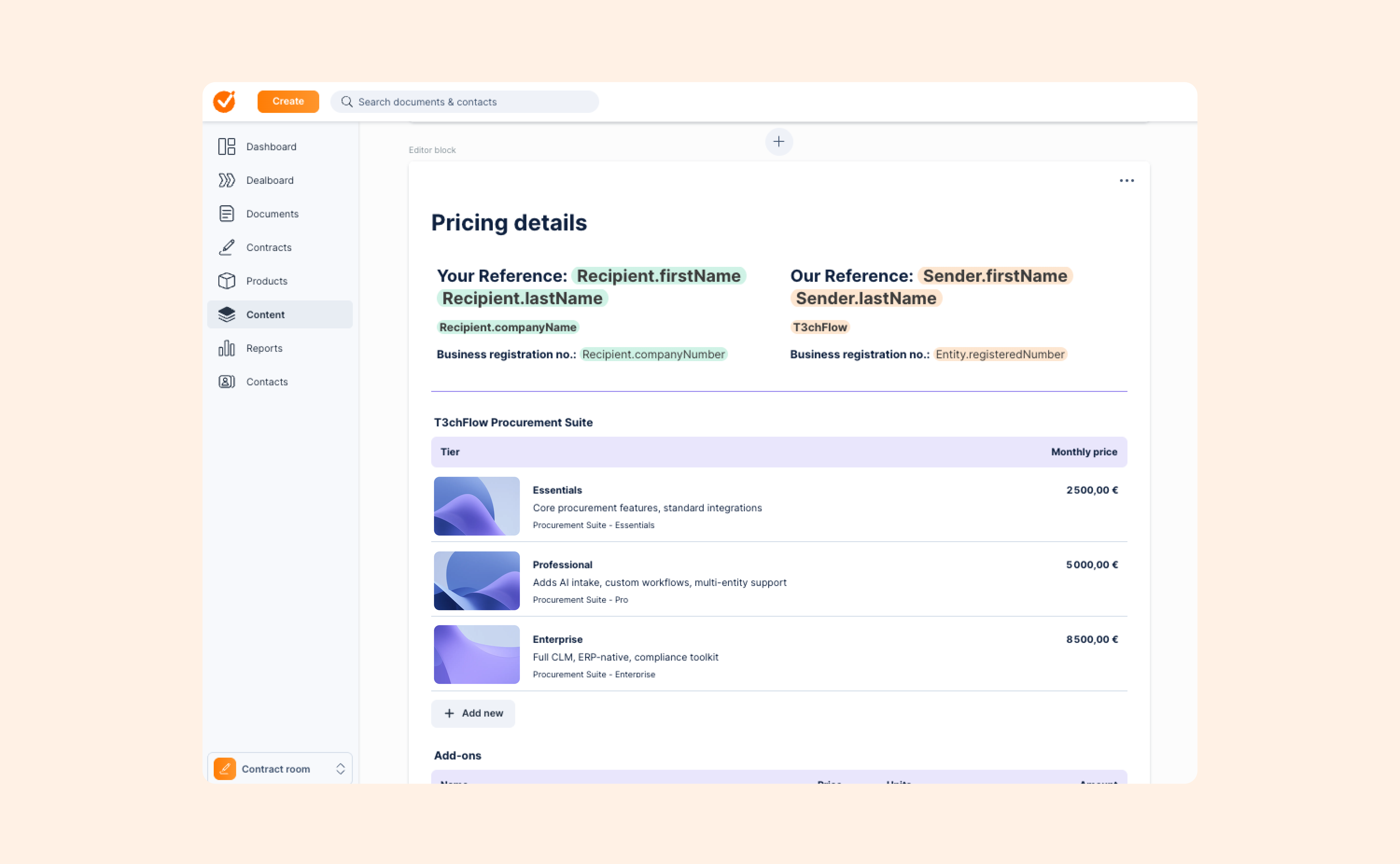
Syncing pricing tables with CRM product line items is one of the most visible examples of modern CRM–Digital Sales Room sync.
Yes, it removes manual entry.
Yes, it reduces errors.
But more importantly, it demonstrates something bigger: CRM data can stay authoritative while buyer-facing content stays flexible.
That balance is what modern sales teams need.
This year was about foundations. What’s next goes further.
This year, we focused on getting the fundamentals right:
-
Real two-way sync that keeps everything in lockstep
-
Buyer behavior visible in the CRM
-
CRM data actively shaping buyer-facing content
-
AI-ready signals grounded in real engagement
That foundation is now in place.
What comes next builds on it, and we’re already working on the next chapter for our CRM integrations.
In 2026, you’ll see deeper connections with CRM AI capabilities, smarter ways to work with CRM product line items for even better quoting, and new GetAccept intelligence to help you move deals forward faster – just to name a few.
All with the same mission in mind: help you do more of the work that wins deals, and less of the work that slows you down.
-1.jpg)



.png)