-1.jpg?width=48&height=48&name=55f40cc2763590699ea313bb5c9f08b5%20(chosen)-1.jpg)

Here is a small moment that happens in almost every deal. You send a proposal, the buyer likes it, but they want to make it their own.
They drop an add-on they do not need. They bump the seat count from twenty-five to forty. They pick the annual plan instead of monthly.
Good. That is a buyer leaning in. The trouble starts back in your CRM, where someone now has to remember to open the opportunity and fix the line items so the forecast is not built on a quote the buyer already moved past.
Until they do, your sales room and your system of record are quietly telling two different stories about the same deal.
That gap is exactly what optional and variable products close. What your buyer does in GetAccept, your CRM already knows. When a buyer includes, removes, or re-quantifies a product in the pricing table, the linked opportunity updates on its own, so the deal and the record stay in sync without anyone touching a thing.
When the quote changes, the record should change too
Picture how this usually goes without it. A buyer emails to say they will pass on the premium onboarding and only need forty seats. Your rep builds a new quote, sends it, and then, if they remember, opens the CRM to correct the line items.
Multiply that across a full pipeline and you get constant, low-grade drift between what your CRM says and what buyers actually agreed to. Forecasts wobble, finance asks questions no one can answer quickly, and reps lose evenings to admin they never signed up for. The fix is not more discipline. It is removing the manual step altogether.
Optional products: let buyers choose what is in
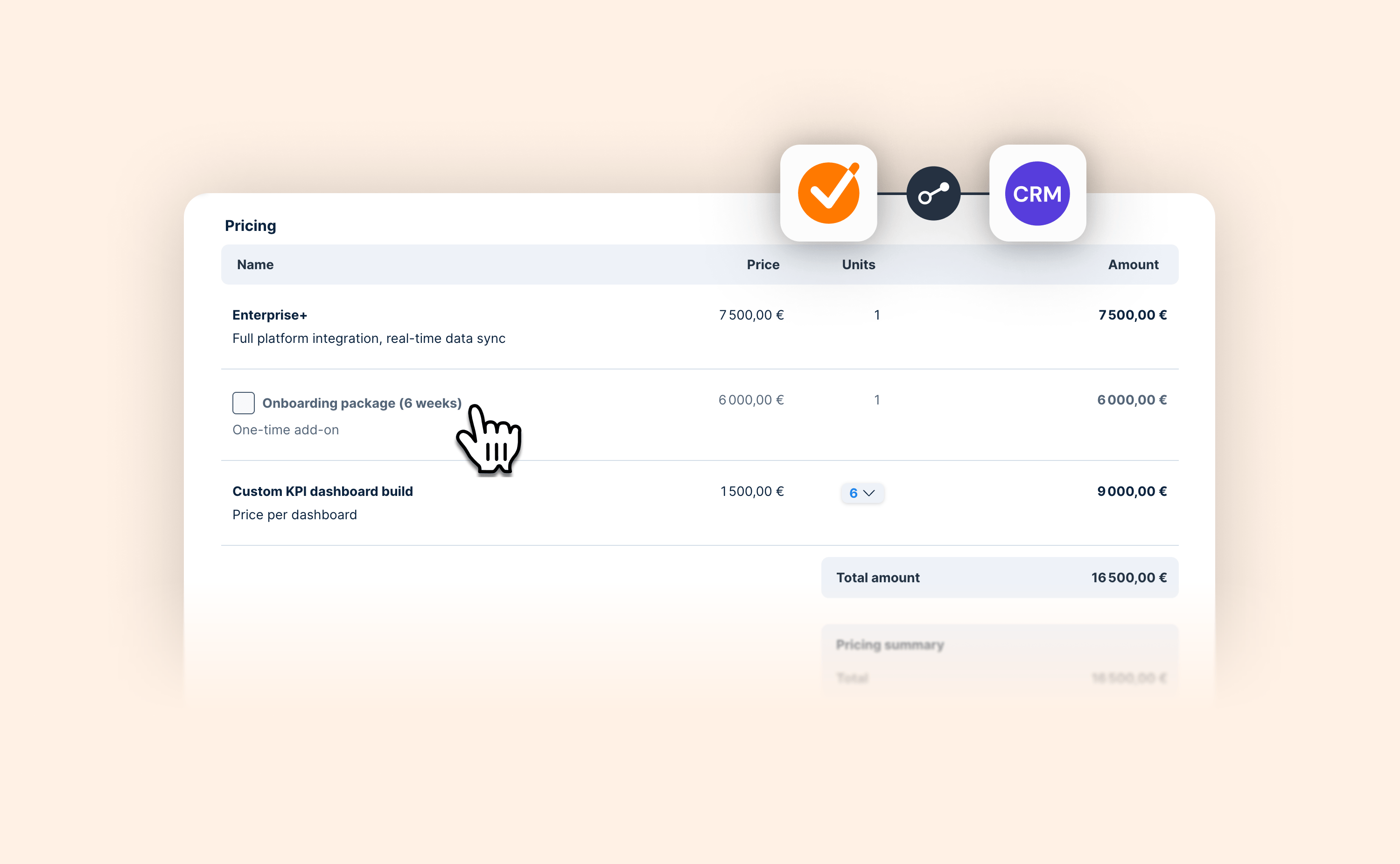
Mark a product as optional and the buyer decides whether it belongs in the deal.
In the pricing table they simply include or exclude it, and when they deselect it, the product comes off the linked opportunity in your CRM automatically.
That premium onboarding they passed on is gone from the quote and gone from the record, with no cleanup.
Your reps can present a fuller menu of add-ons with confidence, knowing the CRM will only ever reflect what the buyer actually kept.
Variable products: let buyers set the quantity
Some products are not in or out, they are how many.
For those, mark them as variable and let the buyer set the quantity right in the document. Move from twenty-five seats to forty and the opportunity updates to forty. It is the natural way to handle seat-based licensing, usage tiers, and any deal where the number itself is part of the negotiation, and it keeps the buyer in control of the detail they care about most.
Whatever they land on is exactly what your CRM shows.
Why an always-in-sync CRM matters
A CRM that always matches the signed deal is worth far more than a tidy database. Forecasts get more reliable because they rest on real buyer decisions rather than last week's quote. Renewals and expansions start from an accurate baseline. And your reps get their time back, because the reconciling step simply disappears.
There is a bigger payoff too. When buyer choices flow into the CRM as real, structured data, everything downstream gets sharper. Reporting reflects what buyers actually do, and the AI you run on top of your CRM finally has something true to work with, because it is reading the deal as it really is, not a stale snapshot. This is the same capability GetAccept already offers across our other CRM integrations, now extended so more teams get one connected story from proposal to pipeline.
If your team runs configurable or expansion deals, this is worth turning on. Open a pricing table profile, flag a few products as optional or variable, and send a test proposal to watch the changes flow straight back into your CRM.
-1.jpg)


.png)