-1.jpg?width=48&height=48&name=55f40cc2763590699ea313bb5c9f08b5%20(chosen)-1.jpg)

You had a meeting with your prospect. They said they'd loop in legal. That was two weeks ago.
You've sent the follow-up. You've tried the friendly nudge. But the deal that felt close is now just sitting there, and you're not entirely sure what's blocking it – or whether anyone on their side is even thinking about it.
This is what happens when next steps live in your head instead of somewhere both sides can see. It's not a pipeline problem. It's a visibility problem.
The gap between a good meeting and a closed deal
Most sales conversations end with some version of "I'll get back to you." Someone needs to check with procurement. Someone needs to review the security docs. Someone needs to get sign-off internally. These are real steps. But without a shared plan, they're invisible. The buyer doesn't have a clear picture of what needs to happen. The seller doesn't know what's actually moving and what's stuck.
So the deal drifts. Not because either side lost interest. Because there was never a shared map of where things were going.
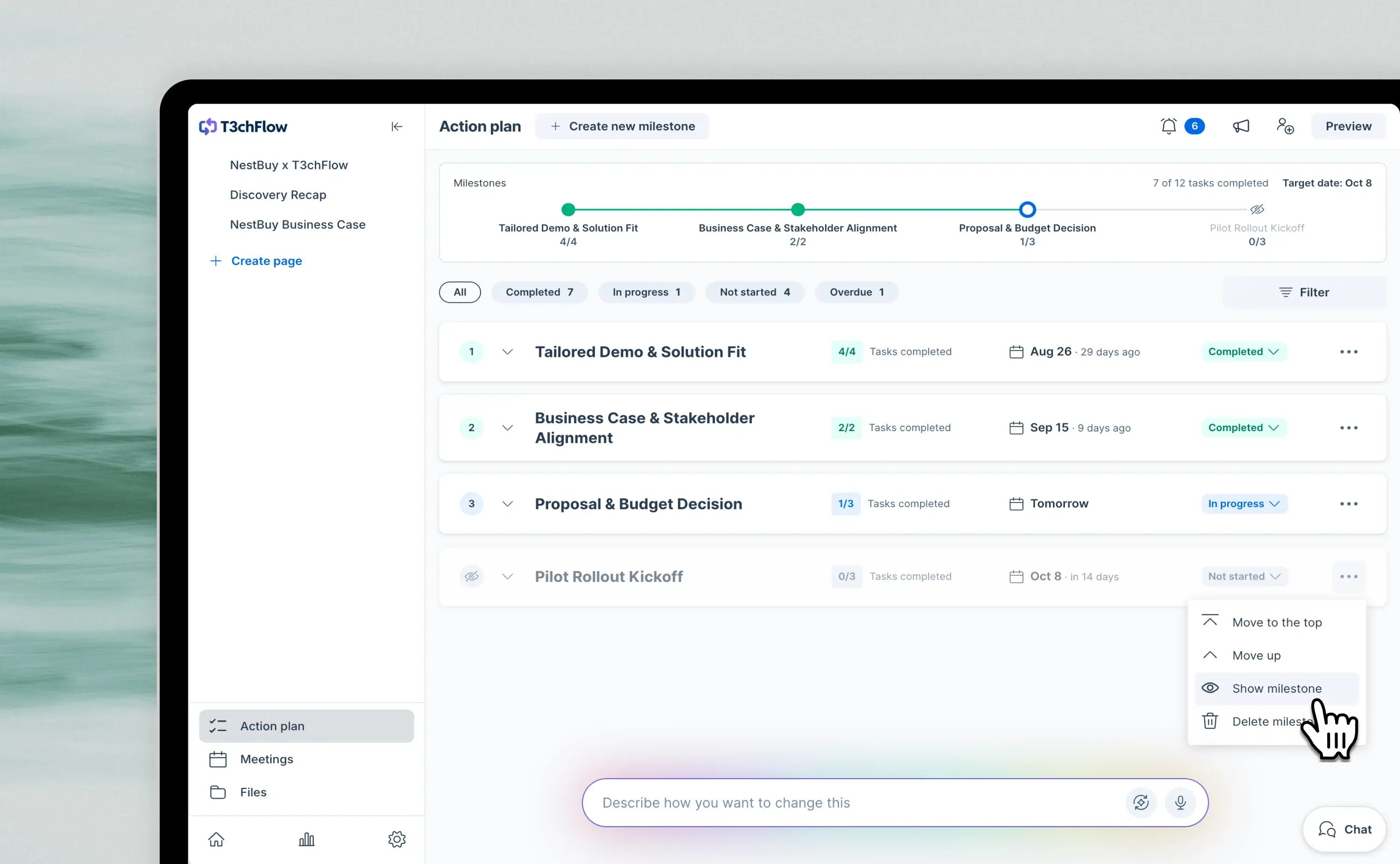 A Mutual Action Plan changes that. Instead of a mental checklist that lives in the rep's head (or scattered across follow-up emails), it's a visible, shared plan inside the Deal Room: milestones, tasks, owners, deadlines, progress. Both sides can see it. Both sides can act on it. And when your next meeting happens, AI can review what was discussed and suggest exactly what needs to change in the plan, so the MAP actually reflects where the deal is, not where it was three weeks ago.
Why shared visibility changes the dynamic
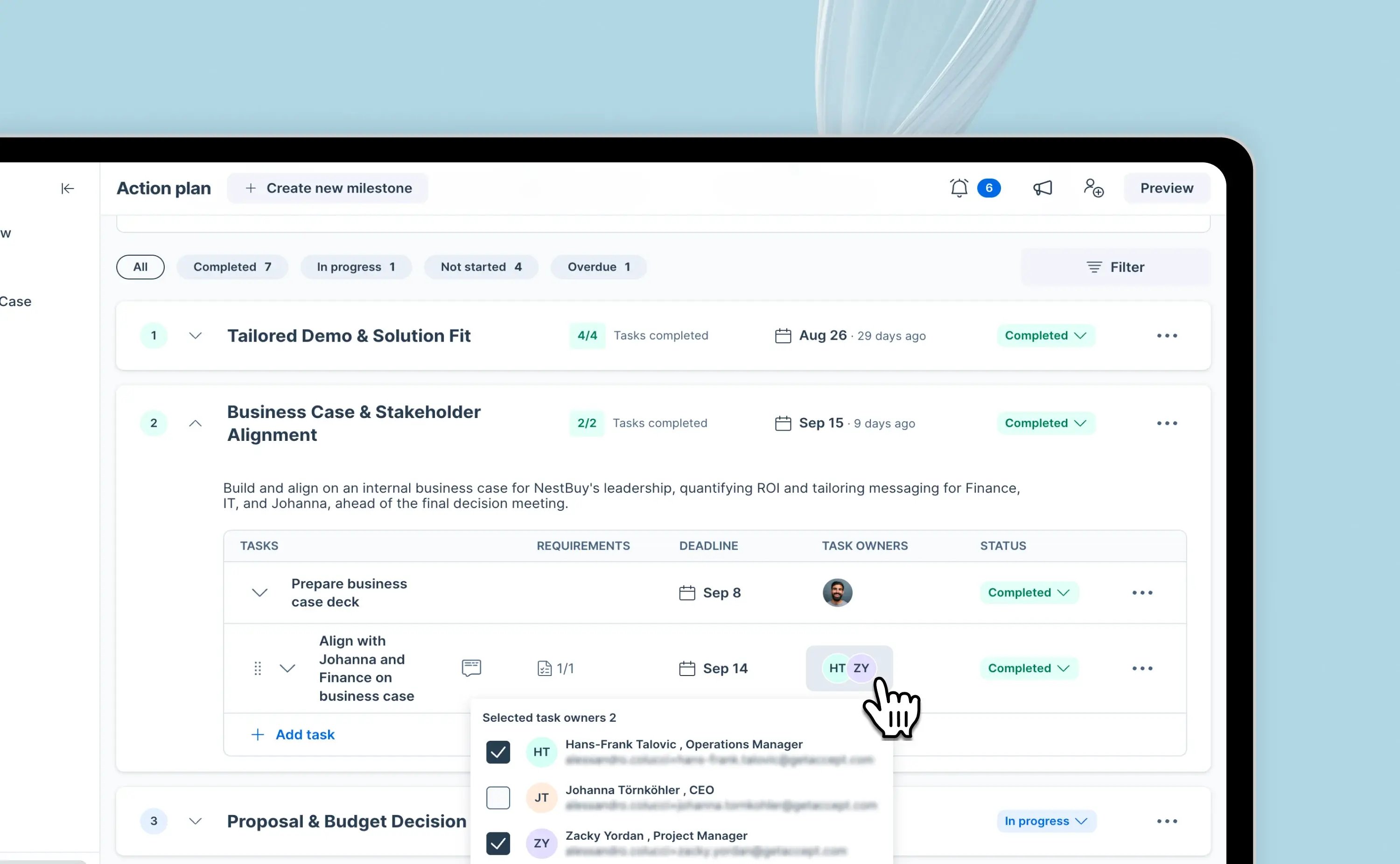
When next steps are visible to both parties, accountability shifts in a quiet but meaningful way. The buyer isn't just waiting to hear from you; they can see that they have tasks too. Legal review isn't a vague pending item; it's a milestone with a name attached to it. Procurement has a task. IT has a task. Everyone knows what they're responsible for and when.
Deals don't necessarily stall because people are disorganized. They stall because there's no shared structure to keep things moving. A MAP provides that structure without turning the sales process into a project management exercise.
It's also a trust signal. A buyer who sees a well-run action plan in their Deal Room understands that the seller knows what they're doing. That the deal is being managed. That there's a clear path to a decision – and someone is keeping track of it.
 The stages where it makes the biggest difference
MAPs matter most in complex deals: the ones with multiple stakeholders, long legal or procurement processes, and plenty of opportunities for things to go quiet.
When legal and security reviews are on the table, a MAP turns "we're waiting on legal" from a black box into a concrete milestone. Both sides can see where it sits, what comes before it, and what comes after. That alone can shorten the back-and-forth that typically surrounds those stages.
When new stakeholders join mid-deal (and they always do) a shared plan means they don't have to be caught up over a call. They can see exactly where things stand, what's been completed, and what they're being asked to do.
What good actually looks like
A good MAP is not a long list of every conceivable task. It's a few clear milestones with meaningful steps inside them: discovery, legal review, procurement, kickoff. It's specific enough that both sides know what's happening, simple enough that people actually use it.
Every task should have an owner. A task without a name attached is a task no one feels responsible for.
And the plan should be reviewed together on calls, updating status live, adding tasks as new information comes up. That shared review is often more valuable than the plan itself. It builds alignment in the room in a way that a follow-up email never will.
The hardest part of a MAP isn't building it. It's keeping it current. That's where most plans fall apart. The meeting happens, things change, and nobody updates the plan until the next call. AI changes that equation. When your meeting is recorded and transcribed, AI can review the conversation and suggest what to add, remove or update in the plan: new tasks that came up, milestones that shifted, owners that changed. You review the suggestions and decide what goes in. The plan stays accurate without anyone having to remember to update it.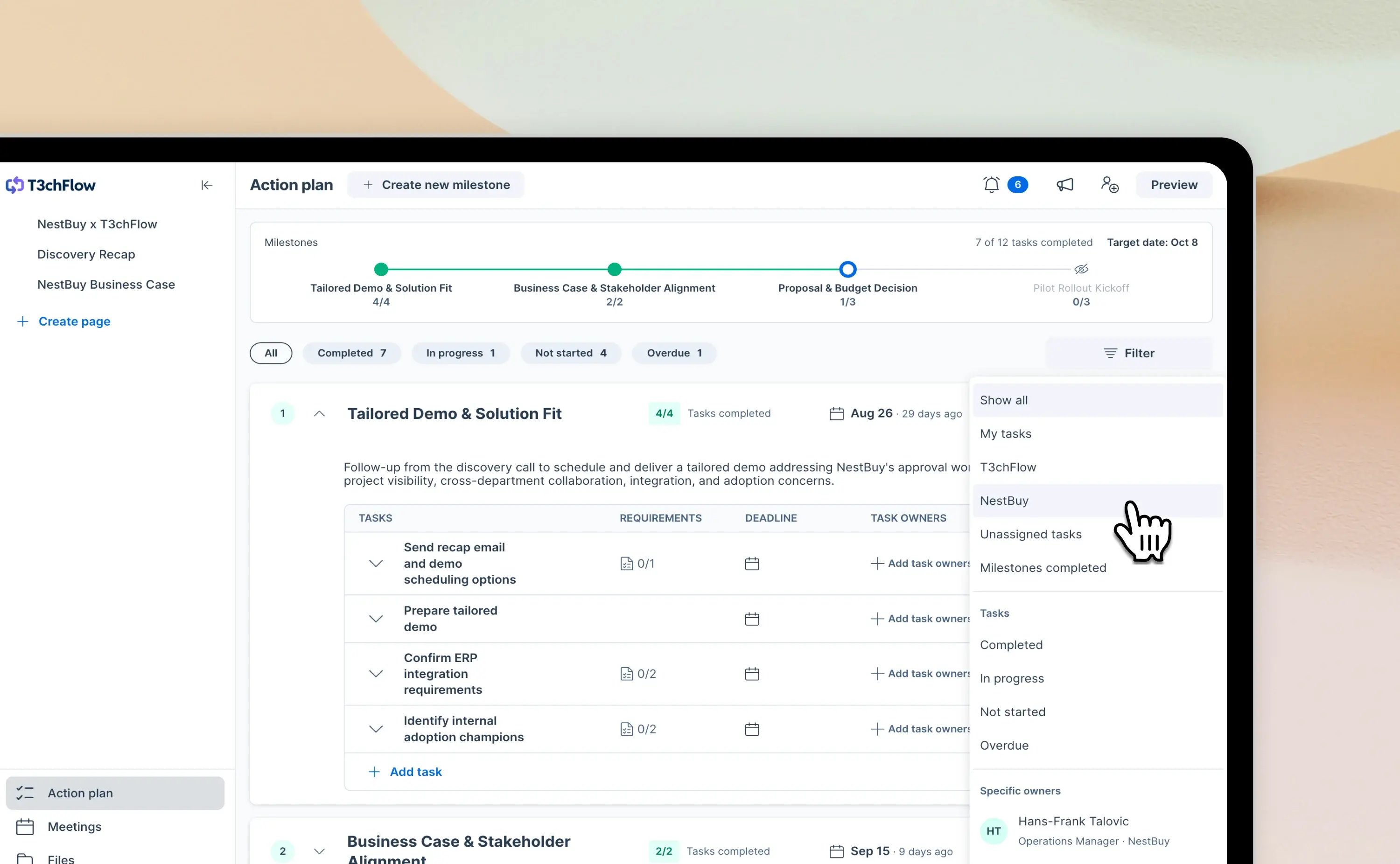
Task requirements make the MAP even more concrete. Instead of asking a buyer to upload a signed NDA somewhere in the room or fill in a form on a separate page, you can attach that request directly to the task it belongs to. The buyer sees what's needed, completes it in context, and the task stays open until it's done. No separate email. No chasing. No question about whether the right version was uploaded. The action plan becomes the place where things actually happen, not just where they're tracked.
The question worth asking
Next time a deal goes quiet, it's worth asking: does the buyer actually know what's expected of them right now? Is there a task with their name on it? A milestone they know they're blocking?
Most of the time, the answer is no. Not because the buyer isn't engaged, but because no one ever made the next steps explicit and visible to both sides.
That's the shift a Mutual Action Plan makes. Not more process. Not more admin. Just a shared, honest picture of where the deal is and what needs to happen next. The deals that close are rarely the ones with the best pitch. They're the ones where both sides always knew what to do next.
-1.jpg)