-1.jpg?width=48&height=48&name=55f40cc2763590699ea313bb5c9f08b5%20(chosen)-1.jpg)

The deal was going great. Then it went to legal.
You know the feeling. The room is warm. The buyer is nodding. The contract is out. Then someone says the words that quietly change everything. "Let me send this to our legal team."
The deal does not die. It just goes quiet. All the momentum you spent weeks building slows to a stop, one sentence in.
For a week, maybe two, you are on the outside. Somewhere, a lawyer is marking up your contract, and you do not see it happen. You wait for a file to land in your inbox. When it does, it is a PDF full of changes you now have to read, interpret, and re-enter by hand.
The black box in the middle of every deal
Here is what actually happens while you wait.
Your buyer exports the contract to a PDF. They send it to legal. Legal marks it up, by hand or in a separate tool, and emails it back. Your buyer forwards it to you. You read every change, decide what you can live with, and retype the whole thing into the contract. Then you send a fresh version and hope you did not miss anything.
It is slow. It is manual. And every day the contract sits outside your platform, the momentum you built leaks away, right when the buyer is closest to yes.
Worse, it happens in the one place you had full visibility. The platform where the whole relationship lived is exactly the place the deal just left.
The deal never should have left in the first place
Step back and look at the whole journey.
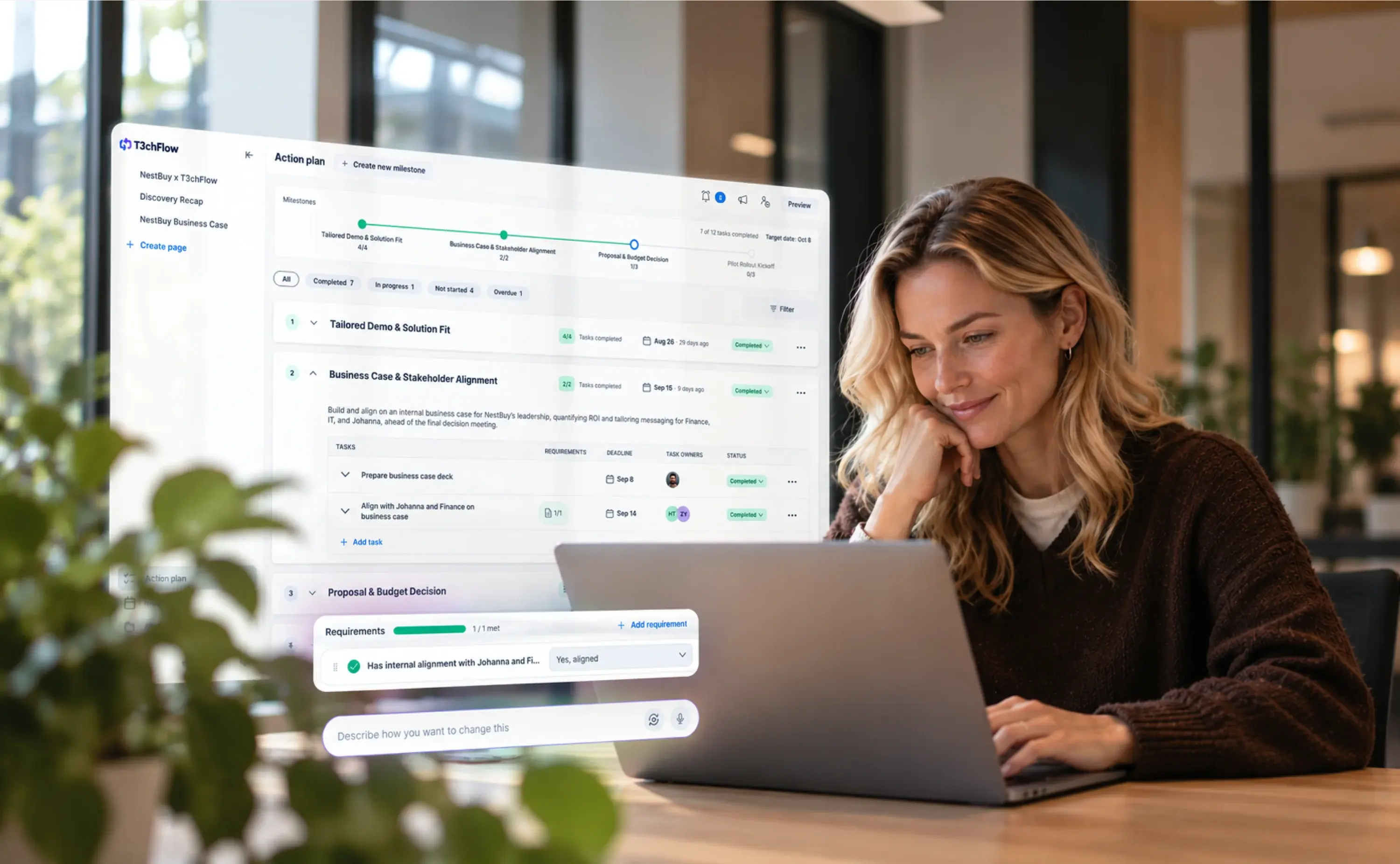
You opened a Deal Room to collaborate through discovery and the early conversations. You shared a proposal. You sent a contract to bring it home with an e-signature. From the first hello to the final signature, the deal lived in one place.
Except for one step. The edits. That was the last reason anyone had to leave.

Keeping the negotiation in the room
That step is now part of the flow.
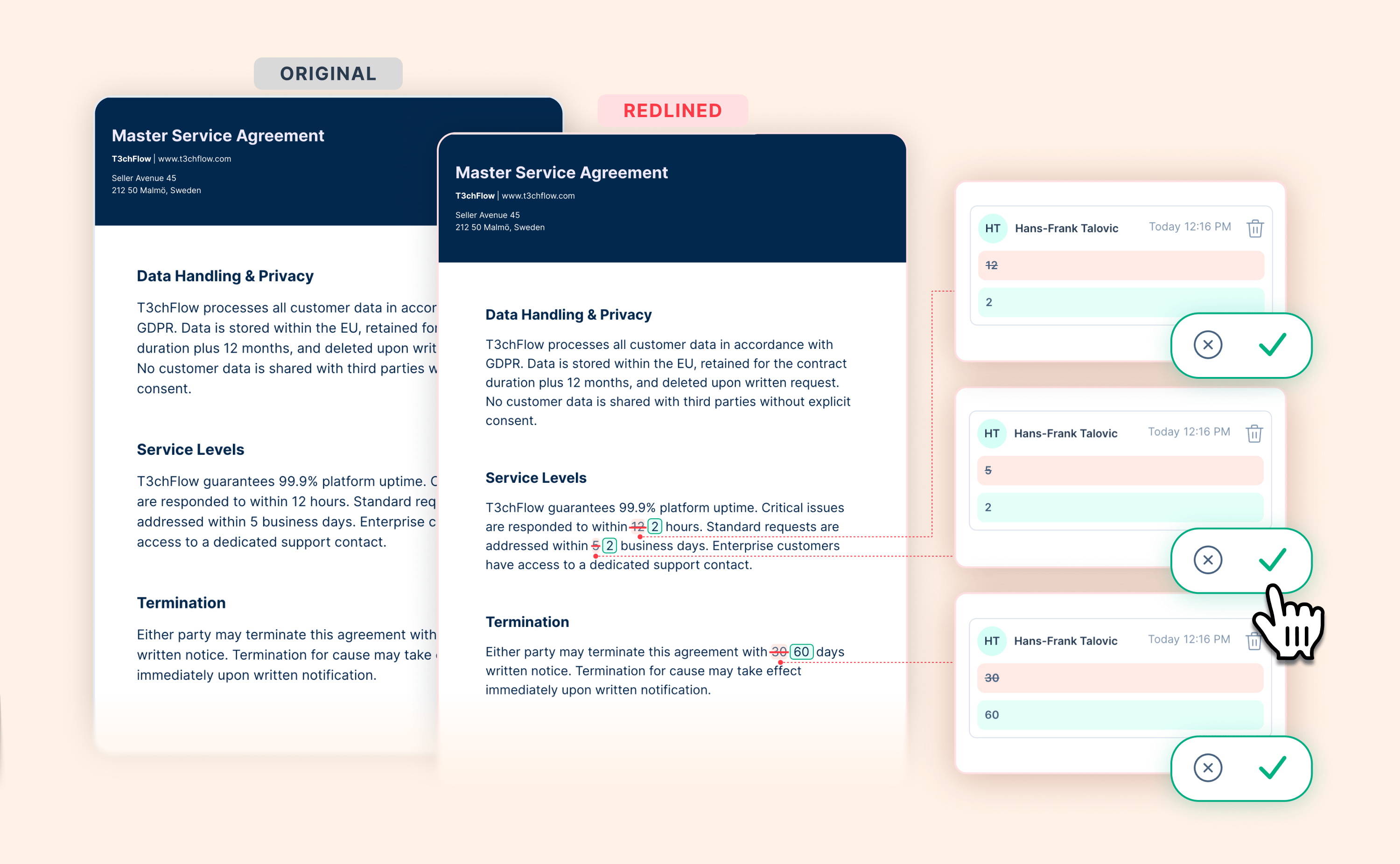
Your buyer can propose changes to the contract right on the signing page. They highlight a line, suggest new wording, or flag something to discuss. You see each suggestion as a clean before and after. You accept, decline, or reply, and nothing changes until you publish it. Both sides can look back at every version and see exactly what moved.
No export. No Word file. No retyping. The negotiation happens in front of you, in the same place the deal has lived all along.
One place, from first hello to signature
This is the part that matters more than any single feature.
A deal should not have to change tools to make progress. Every handoff costs you context, time, and a little bit of trust. Closing the last one means the entire journey, from the first Deal Room to the signed contract, finally happens without a detour.
So the next time a buyer says "let me send this to legal," the deal does not have to lose a step. The legal team does their work where you can see it. Momentum carries all the way to signed.
-1.jpg)