-1.jpg?width=48&height=48&name=55f40cc2763590699ea313bb5c9f08b5%20(chosen)-1.jpg)
8 out of 10 sales teams using AI sales automation report revenue lift and real ROI within the first year. AI sales automation isn’t experimental anymore.
But most AI conversations in 2026 focus on lead gen and outbound. That’s fine, but for teams dealing with 6-to-12-months sales cycle, that’s not where deals actually stall.
B2B deals stall once they're already in play, when multiple stakeholders are involved, contracts are under review, approvals are pending, and no one on the seller's side is fully sure what's happening on the buyer's.
AI closes that gap. Applied across the deal, it removes the small delays that add up, flags risk earlier, surfaces stakeholder engagement, and guides next steps inside active deals.
Here's how.
Why AI matters most once the B2B sales deal is in motion
Priorities change once a deal moves past discovery. Reps stop chasing attention and start protecting momentum.
Buyers at this stage are focused on internal alignment, looping in legal, finance, security, and leadership before moving forward. Friction tends to surface in practical ways - customized proposals take too long, engagement is unclear, approvals stall, and new stakeholders enter late.
Most of that alignment work happens without reps in the loop. Gartner’s research shows 67% of B2B buyers now prefer a rep-free buying experience, and Gartner separately puts the share of B2B purchases driven by internal organizational change at 99%, worked out over weeks of meetings the seller never sees.
Forrester’s 2026 State of Business Buying report puts the average buying decision at 13 internal stakeholders and 9 external influencers, with 86% of B2B purchases stalling somewhere along the way.
GetAccept’s own data shows the flip side: deals that pull in 6+ stakeholders close at a 60% win rate, well above smaller buying groups. The difference usually comes down to whether the seller can actually see what all those stakeholders are doing.
AI sales automation is most valuable here, inside active deals.
Mini case study
📊 At Dealfront (formerly known as Leadfeeder and Echobot), connecting buyer engagement, mutual action plans, and Salesforce data into one Digital Sales Room cut their sales cycle from 150 days to 50 days in several cases, and cut the time reps spent exchanging information with prospects by 75%.

7 AI sales automation use cases across the B2B sales cycle
1. AI-powered sales content creation
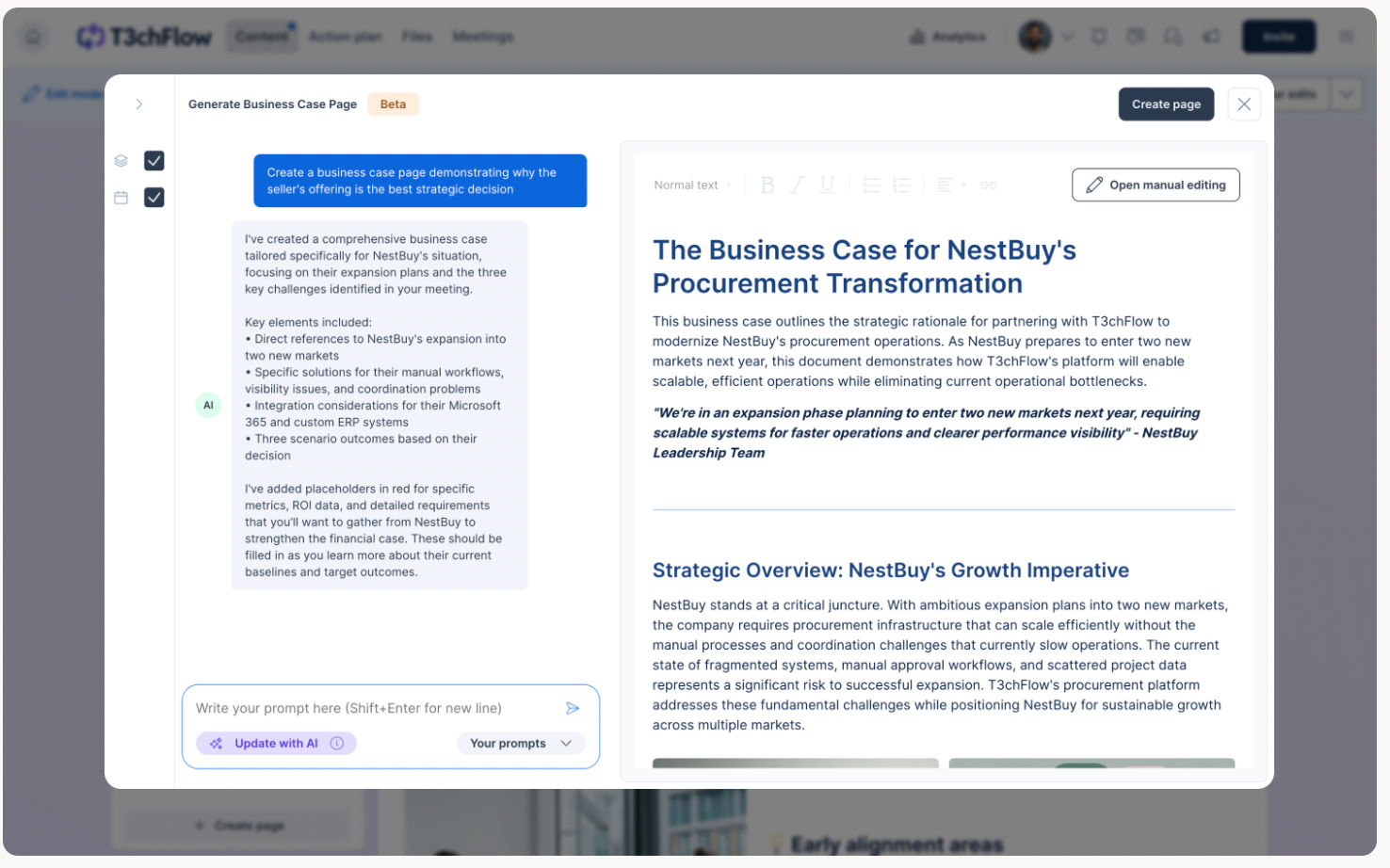
AI sales automation turns a prompt and your existing deal data into finished sales content: proposals, business cases, executive summaries, discovery recaps, even a full Deal Room page.
The first piece of content a rep builds sets the pace for the rest of the deal. A slow proposal or a business case stuck in five rounds of edits costs momentum before the deal has even started.
What building that content looks like without AI: A rep opens a blank document, checks the CRM for deal details, copies in notes from three different calls, and writes from scratch.
What it looks like with AI sales automation: A rep enters a prompt, or pastes in a call transcript, and Smart Content pieces generate the section from the deal data already in the room.
Four things do the work:
-
Content recommendations adjust by deal type, customer profile, and industry.
-
CRM data flows in automatically instead of getting copied and pasted.
-
Smart Content pieces generate an introduction, a discovery summary, a business case, or an executive summary in one click.
-
A Q&A section builds itself from the questions buyers keep asking.
Reps still shape the message. The difference is where they start: a finished draft built from real deal data, not a blank page.
💡 Faster content matters for one reason: it keeps response times tight, and keeps a deal from losing energy before it ever reaches review.
2. AI-driven engagement insights during buyer review
Once a proposal is sent, the deal keeps moving - it’s just out of view.
Buyers review it internally, revisit pricing, and bring in other stakeholders before anyone replies. Without visibility, sellers are left interpreting silence.
AI-driven engagement analytics make that activity visible and actionable. Sales teams can see how buyers are interacting with their content, how much time stakeholders spend on each document, and which questions must be proactively addressed before the deal stalls.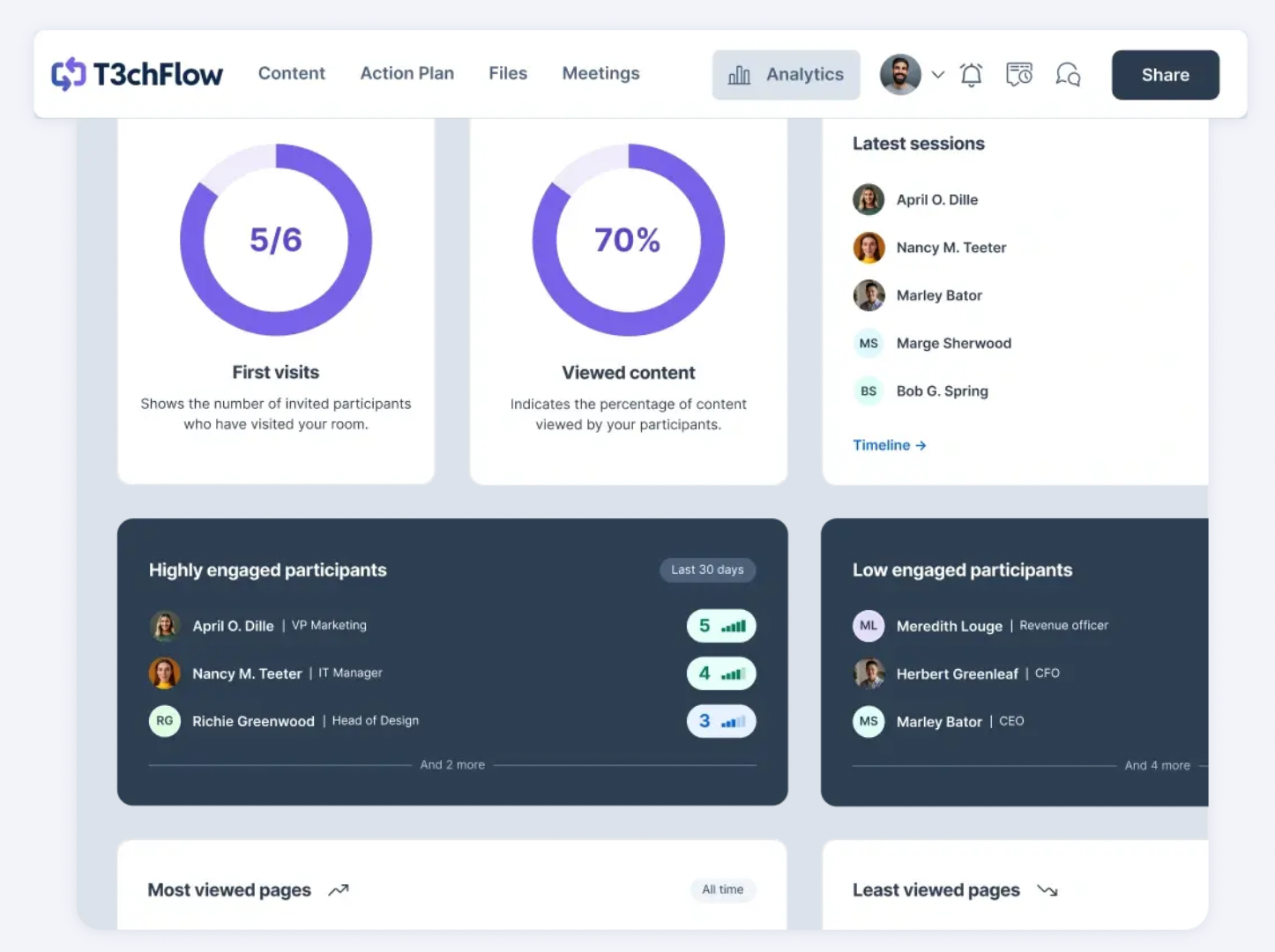
3. AI-powered visibility for accurate pipeline forecasting
For leaders, one of the biggest benefits of AI sales automation is clearer visibility into the pipeline. When engagement, approvals, and contract activity feed directly into the CRM, the forecast reflects more than rep updates.
AI strengthens sales pipeline forecasting by surfacing early signs of buyer intent, flagging deals that are stalling or accelerating, and reducing dependence on manual CRM updates.
This ties pipeline forecasts to real buyer behavior instead of the rep's gut feel. That makes it easier to prioritize the right deals, coach with context, and plan based on what’s actually happening in the pipeline.
4. AI guidance for next steps and follow-ups
AI sales automation helps by interpreting buyer engagement signals and pointing out where attention is needed. It can flag when activity drops off, which when new stakeholders enter the deal, or when engagement suggests the buyer is close to making a decision.
Example: AI flags that the CFO had opened the pricing section 6 times in 48 hours. That tells the rep that's not due diligence - that's finance building an internal case to go cheaper. One payback period doc sent that afternoon can change the outcome of the deal.
Without this data, the rep would've instead sent a generic "just checking in" email while Finance had already decided.
AI doesn’t sell for you, but it does help you act earlier and with better context, turning buyer behavior into clear next steps
5. AI-supported approval workflows
Approvals are a common source of delay in complex B2B deals. Legal, finance, and leadership all need to weigh in, and progress often slows because documents move between inboxes, versions get mixed up, and context gets lost.
AI helps by bringing structure to that process. It keeps routing clear, tracks who has reviewed what, and makes it easier to see where approvals stand so deals don’t stall unnecessarily.
|
Approval challenge |
How AI supports the workflow |
Result |
|---|---|---|
|
Unclear routing |
Automatically routes documents based on rules |
Faster reviews without manual chasing |
|
Missing context |
Keeps comments, versions, and history together |
More confident decisions |
|
Late-stage surprises |
Flags non-standard changes early |
Less rework near signing |
|
Manual follow-up |
Triggers reminders and visibility |
Approvals move without stalling deals |
AI-supported workflows reduce uncertainty without removing oversight, cutting out unnecessary friction while keeping control intact.
6. AI and e-signature: removing friction at the close
The final stages of a deal should confirm alignment, not reopen issues.
AI sales automation helps make sure that by the time a contract reaches e-signature, most of the work is already done.
The right version is in circulation, stakeholders are aligned, and engagement signals show real progress. Signing feels like the next logical step, not a rush to fix loose ends.
💡When engagement, approvals, and signatures are connected, closing becomes structured and predictable instead of uncertain.
7. AI beyond signing: onboarding, renewals, and expansion
AI sales automation doesn’t stop when a deal is closed-won.
All the engagement, contract details, and stakeholder history stay with the account context, so the next team isn’t starting from scratch.
Customer success can use AI to surface what was discussed and what mattered during the deal: what was promised, renewal conversations, and expansion opportunities all show up in the previous context with the account.
The context built during the sale carries forward instead of getting lost in a handoff. That continuity makes it easier to grow the account over time instead of treating every conversation like a reset.
What AI sales automation looks like with GetAccept
GetAccept uses AI where it makes a difference - inside live deals.
Across proposals, Digital Sales Rooms, approvals, engagement tracking, and e-signatures, it helps teams cut delays and see what’s happening at every stage.
With GetAccept, AI supports:
- Deal Room creation in minutes from your meeting notes or directly within Salesforce UI
- Faster proposal creation without all the manual copy-paste
- Real-time visibility into how buyers are engaging
- Clearer guidance on what to do next
- Approval workflows that are easier to track
- Signing that doesn’t drag out
- Better forecasting and renewal visibility
It's built into the workflows your team already uses every day.
GetAccept's AI now runs inside Salesforce. From a meeting transcript, a rep can turn this morning's call into a follow-up event, check which deals have gone quiet, draft and send a contract, or spin up a Deal Room for every qualified deal en masse, without opening a second tool.
The same access now extends to Claude, ChatGPT, and other AI tools, through GetAccept's MCP server. Add GetAccept as a connector, and a rep can ask which deals are going cold, check whether a contract's signed, log a call by pasting in the transcript, or build, publish, and invite a customer to a new Deal Room, all from inside the AI tool they already have open.
Reps get a link back into the room before anything customer-facing goes out. They stay in control either way.
💡 Curious what GetAccept's MCP can do for your deals? Ask your AI assistant "What can Ido with GetAccept MCP?" or connect it in under a minute.
AI works best when it supports the entire deal
AI sales automation makes the biggest difference when it’s built into the deal itself.
When it helps reps put proposals together faster, shows what buyers are actually looking at, keeps approvals on track, and carries context into renewal, it supports the work that’s already happening.
It keeps deals from drifting, cuts down on late surprises, and gives teams a clearer read on what’s real. Instead of guessing, reps and leaders can see what’s moving, what’s stuck, and where to step in. Over time, you bring consistency back to your pipeline.
-1.jpg)