Buyers rarely go quiet for just one reason. In complex SaaS deals, momentum often breaks when value is difficult to carry internally, the buying committee is incomplete, next steps are not jointly owned, or security and procurement introduce friction.
The challenge becomes greater as deals involve more stakeholders, longer evaluation cycles, and more information. Proposals, recordings, pricing, security documentation, and follow-up tasks often end up spread across email, Slack threads, PDFs, shared drives, CRM notes, and spreadsheets.
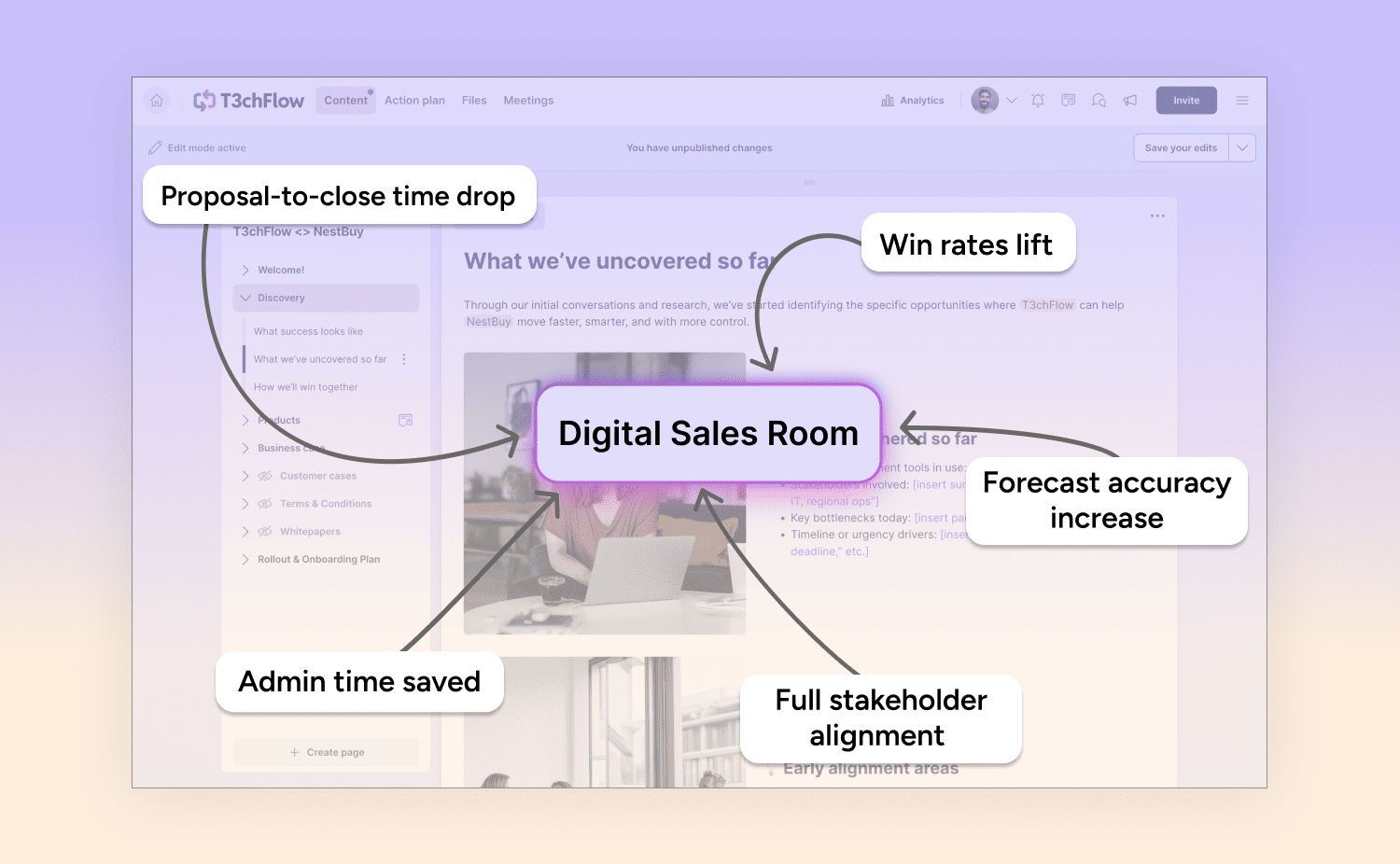
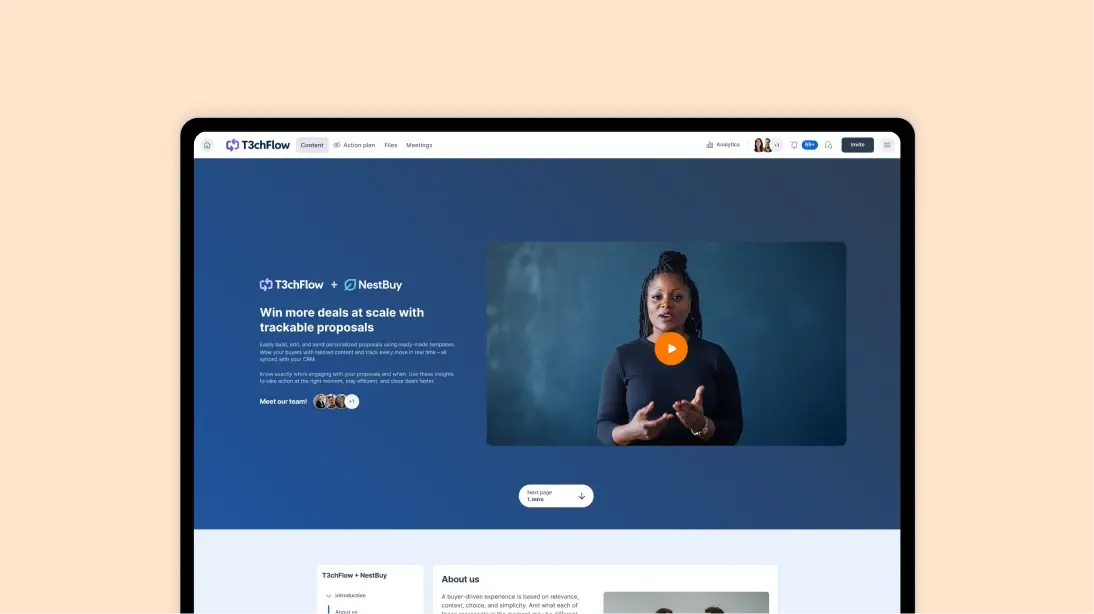
Digital Sales Rooms (DSRs) replace these fragmented workflows with a centralized deal environment. They combine relevant content, stakeholder management, mutual action plans, proposals, and engagement signals – while still supporting the PDFs, contracts, and customer processes that buyers already rely on.
The goal is not to force every buyer into a new workflow. It is to make complex SaaS buying processes easier to understand, coordinate, and move forward.
Skip the theory. Start a free trial and run your next SaaS deal through our DSR.
Why complex SaaS deals stall so often
SaaS deals rarely follow a simple pitch–proposal–sign sequence. A prospect may begin with one champion, then involve finance, legal, IT, procurement, operations, security, and executive leadership.
Each stakeholder brings different questions, requirements, and approval criteria. That is where deals can begin to slow down:
-
The original champion may not have enough information to build the internal business case.
-
The economic buyer may not be engaged.
-
Legal may introduce new requirements late in the process.
-
Security may block access to external links.
-
A proposal may be reviewed by several people without the seller knowing who is involved or what they still need.
In one high-value SaaS sales team, approximately 40% of otherwise viable opportunities were estimated to stall after the initial discovery and demonstration stages. Some buyers struggled to understand how to implement the solution, while others had not involved the right stakeholders or made the purchase a priority.
In another SaaS organization, deals were reaching the contract stage before board members requested additional due diligence. The sales team recognized that they were often working with only one contact instead of identifying and engaging the broader buying committee early enough.
These examples point to a broader issue: sales teams need a way to help buyers understand the decision, involve the right people, and keep the process moving.
Every delay between “proposal sent” and “proposal signed” costs time, trust, and often the deal itself.
Why PDFs and email alone break down in complex deals
Relying on PDFs and email alone becomes a problem when a deal involves multiple stakeholders, ongoing revisions, and a long path to signature.
A buyer may receive several versions of the same proposal. A champion may forward materials to finance or legal without the seller knowing. A security review may happen in a separate email thread. A meeting recording may be buried in an inbox.
By the time the seller follows up, no one is sure which version is current or what the buyer still needs to do. The result is avoidable friction:
-
Reps spend time recreating or resending documents.
-
Buyers struggle to find the latest version.
-
Internal stakeholders lack the context behind the proposal.
-
Sellers cannot see which stakeholders are engaged.
-
Managers have zero visibility into what is happening between meetings.
-
Important next steps remain implied instead of assigned.
A Digital Sales Room provides a shared layer around the documents. Depending on the workflow, it can combine:
- Proposals, contracts, and supporting documents
- Role-specific sales content for different stakeholders
- Mutual action plans with owners and dates
- Comments, questions, and shared updates
- Security docs and procurement information
- Engagement signals across shared content
- A clear route to proposal, contract, and signature
A Digital Sales Room is more than a document repository
A Digital Sales Room is not just a folder with a branded interface. Its value comes from connecting the content to the process around it.
Instead of sending a proposal and waiting, sellers can create a shared space where buyers can:
-
Review relevant content in one place
-
Bring additional stakeholders into the conversation
-
Ask questions and leave comments
-
See agreed tasks and deadlines
-
Access supporting documents
-
Review pricing and commercial information
-
Continue the conversation between meetings
For the seller, the room creates visibility into what is happening after content is shared. The team can see which stakeholders have entered the process, which materials are receiving attention, and whether agreed tasks are progressing.
That information can help sellers determine where to focus next. A buyer spending time on the security documentation may need help with procurement requirements. A new finance stakeholder entering the room may indicate that the business case needs to be strengthened. A stalled mutual action plan may reveal that the next step is unclear or that ownership has not been agreed.
The room doesn't replace qualification, stakeholder strategy, or good sales judgment. It gives the team a better environment in which to apply them.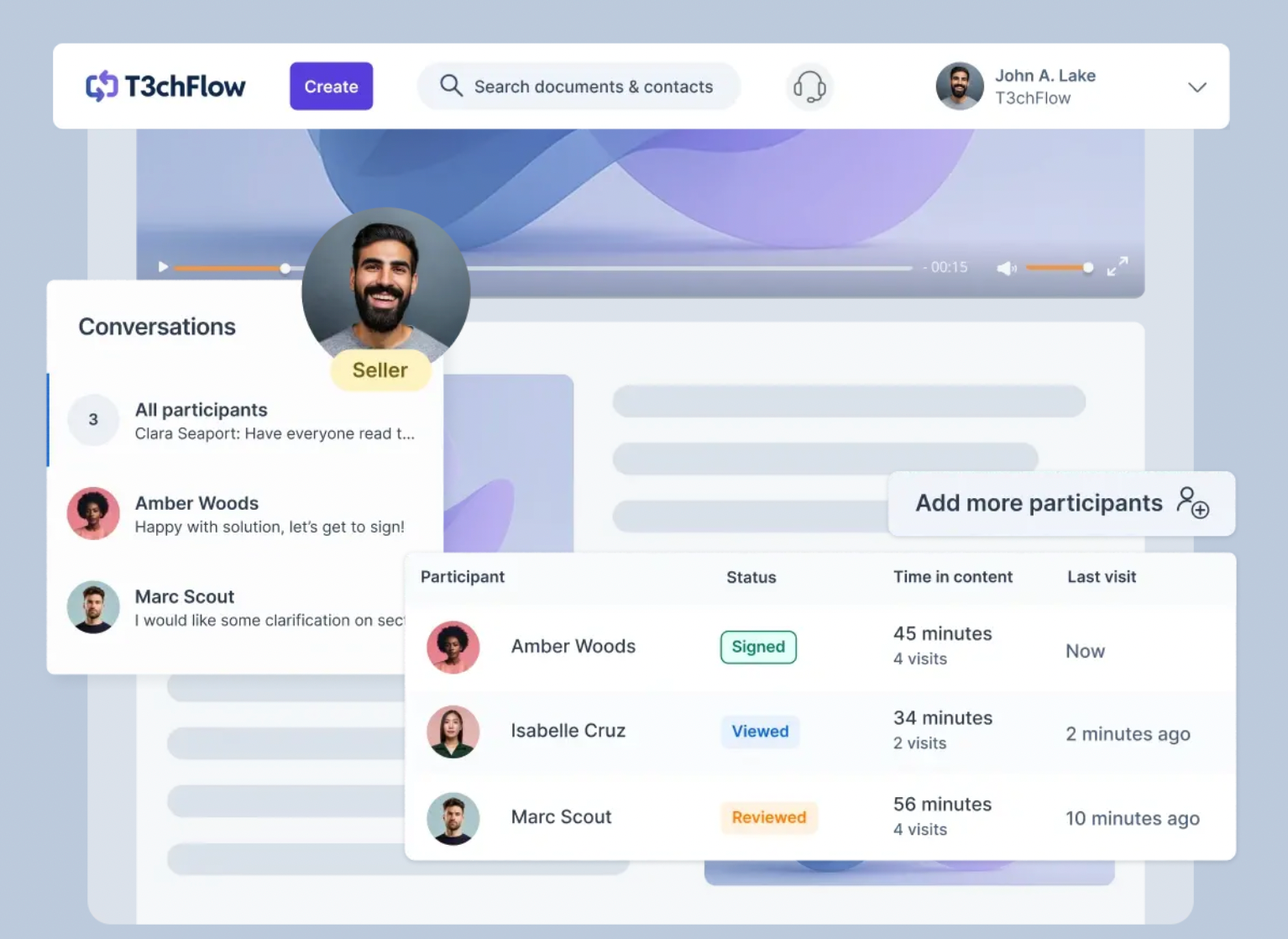
How Dealfront moved from proposal bottlenecks to sales velocity
Let’s see what this looks like in practice. A SaaS company Dealfront faced a familiar bottleneck: too many delays between proposal and signature.
They implemented GetAccept - and cut their sales cycle by 67% - from 150 days down to 50 days.
With a single, shared workspace for proposals, mutual action plans, and engagement analytics, they centralized documentation, aligned stakeholders faster, and gained meaningful insight into buyer behavior.

▶️ Read the full Dealfront case study.
How to structure a deal room across the SaaS buyer journey
A Digital Sales Room should reflect the buyer’s decision process rather than simply contain every piece of content available. Different moments in the deal require different types of support.
|
Buyer Stage |
Your Goal |
What to Include in the DSR |
|
Discovery → Value alignment |
Help the champion explain the problem and value internally |
Discovery recap, role-specific business case, relevant customer proof, stakeholder map |
|
Evaluation → Proposal |
Align scope, priorities, commercial assumptions, and owners |
Solution overview, ROI or TCO analysis, proposal, pricing options, mutual action plan |
|
Procurement → Legal |
Reduce late-stage surprises and clarify responsibilities |
Security materials, DPA, legal process, approval map, redline instructions, signer map |
|
Onboarding → Expansion |
Preserve context and coordinate execution |
Implementation plan, success criteria, contacts, decision history, renewal or expansion plan |
Not every deal needs every stage or every feature. A high-velocity sales motion may only need a simple proposal and eSignature workflow. A complex enterprise opportunity may require a broader room with stakeholder collaboration, content releases, security documentation, and a mutual action plan.
The best approach is to start with the point of greatest friction, prove value, and expand the workflow only when the buyer and sales team are ready.
Keep the distinction between deal rooms and contract rooms clear
A Digital Sales Room is not the same thing as a proposal document or an e-signature envelope. In practice, teams may use:
-
A Digital Sales Room for discovery, evaluation, stakeholder collaboration, content sharing, and mutual action planning
-
A Contract or Proposal Room for pricing, proposals, negotiation, document updates, PDF output, and signature
-
An eSignature workflow for executing the final agreement
GetAccept connects these workflows in one platform, but they serve different purposes. A strong buying experience gives buyers a clear path while preserving the formats and processes they need.
How sales leaders use DSR insights to forecast and coach
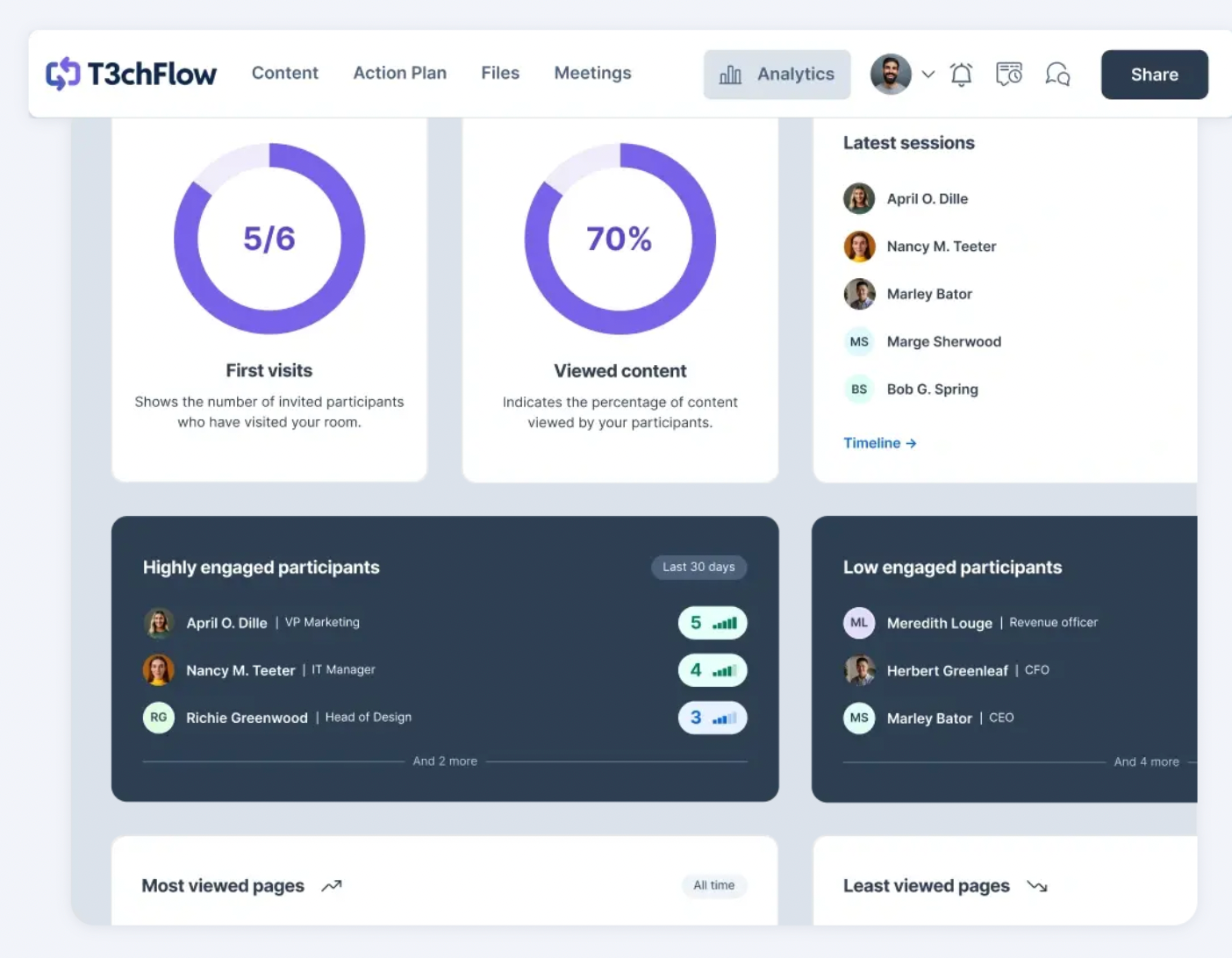
For revenue leaders, a DSR isn’t just about faster close rates - it’s better pipeline visibility and forecasting accuracy.
Traditional CRMs show what reps report while DSRs show what buyers actually do.
Leaders can use those signals to ask better questions:
-
Which stakeholders have entered the process?
-
Which members of the buying committee are still missing?
-
Which sections are receiving attention?
-
Did engagement drop after pricing or security information was shared?
-
Are agreed mutual-action-plan tasks being completed?
-
Is the deal progressing, or is activity coming from only one champion?
-
Has a new stakeholder been added without the seller knowing?
These insights don’t just improve forecasting; they transform coaching, and managers can guide reps using real buyer behavior. For example:
- “Legal spent 12 minutes on the DPA - let’s prep your answers now.”
- “The CFO joined the room yesterday - adjust your narrative around ROI.”
- “Engagement dropped off after pricing - follow up with a new business case.”
The result?
Smarter selling, stronger forecasting, and teams that react to real buyer signals.
From documents to deal momentum
In complex SaaS deals, scattered documents and fragmented communication slow progress and dilute momentum. A Digital Sales Room brings proposals, collaboration, and engagement insight into one shared space - reducing friction and keeping stakeholders aligned from start to finish.
The teams that accelerate their buying journeys are intentional about how deals move forward. They design the process so buyers can review, collaborate, and decide without unnecessary delays. And when the process moves smoothly, revenue follows.