You've just finished a great meeting, and the prospect asks for a proposal. Before you send that old template, consider if it's truly designed to win.
We analyzed our own GetAccept data and industry research to find out what separates a winning proposal from one that gets ignored. The data-backed tips in this article will help you create proposals that increase your close rate.
What is a sales proposal?
A sales proposal is a formal document a seller sends to a prospective buyer. It pitches their product or service as the solution to a specific problem. It's a persuasive argument that outlines the value, scope, and cost of your offering.
It is typically sent after a discovery call to convert a late-stage prospect into a customer. Learn more about GetAccept's proposal software and how it streamlines this process.
Its primary purposes are to:
- Demonstrate understanding: Show you've listened to the prospect's specific needs.
- Outline value: Clearly connect your solution to their business outcomes.
- Formalize the offer: Provide a clear scope, timeline, and price for their approval.
Sales proposal vs. RFP: What's the difference?
An RFP (Request for Proposal) is a document a buyer creates asking vendors to submit proposals. Your sales proposal is the response to that request. Think of the RFP as the question and your proposal as the answer.
Why a sales proposal template matters
Starting from scratch on every proposal is a waste of valuable selling time. Sales proposal templates provide a structured foundation, allowing you to work faster and smarter. Here’s why they are critical for any sales team:
- Save time: Eliminate hours of formatting and focus on personalization. GetAccept customers spend 53% less time creating proposals using free sales proposal templates.
- Ensure consistency: Maintain professional branding and messaging across your entire team. This prevents errors and ensures every proposal reflects your company's quality.
- Improve quality: Let reps focus on customizing content for the prospect instead of building from scratch, creating more persuasive documents.
- Scale what works: A great template ensures every rep uses a winning formula, scaling best practices across the sales organization.
8 key elements of a winning sales proposal
Every sales proposal should include these eight elements. Miss one and you risk confusion, delays, or losing the deal entirely.
| Element | What to Include | Why It Matters |
|---|---|---|
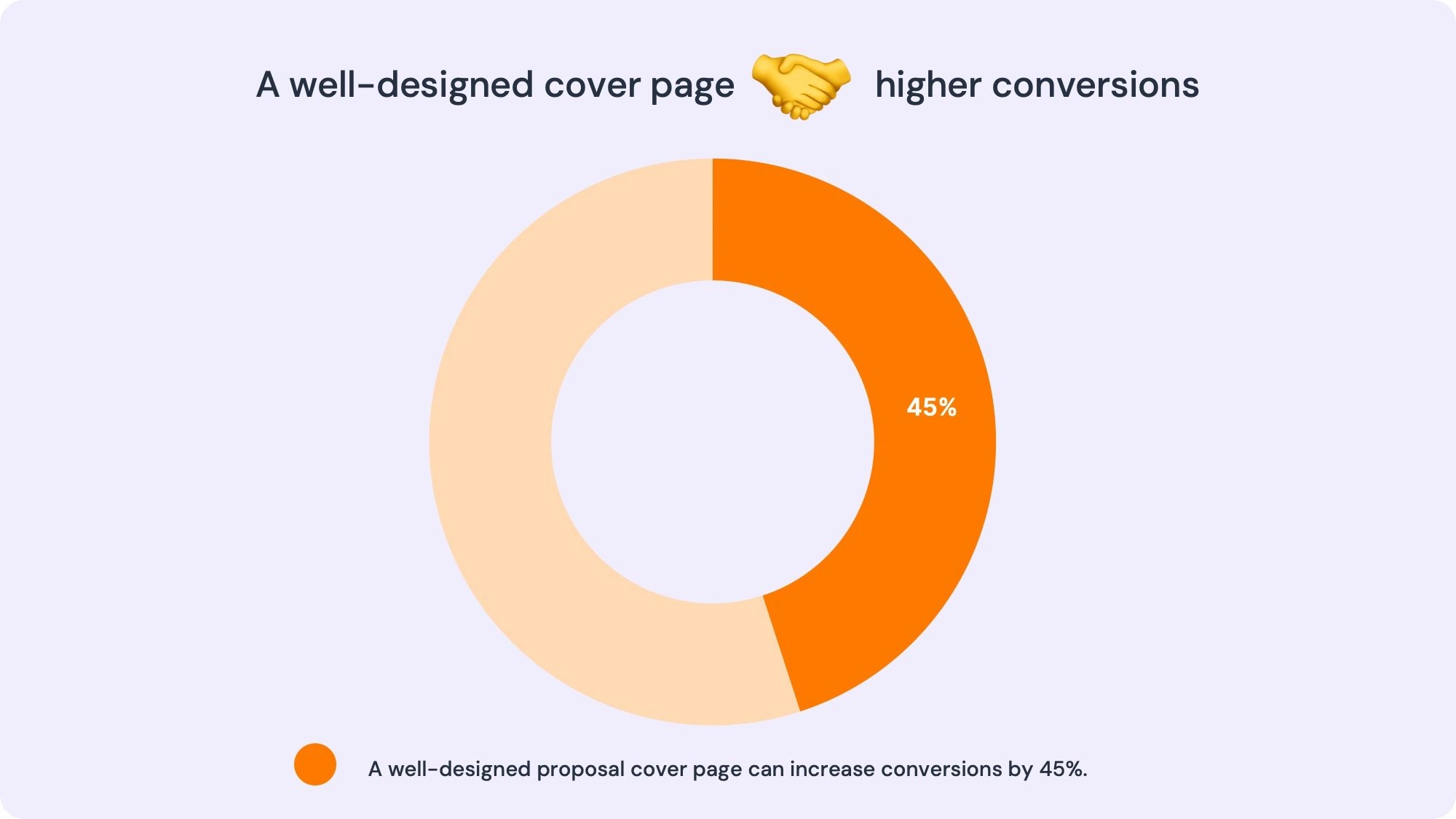
| 1. Cover Page | Professional title, client logo, your logo, and date. | Makes a strong first impression. According to Stanford Web Credibility Research, 75% of people judge an organization's credibility based on visual design — your cover page sets that tone before a word is read |
| 2. Executive Summary | A one-paragraph overview of the problem, solution, and outcome. | Many decision-makers only read this section. Make it count. |
| 3. Problem Statement | A clear articulation of the prospect's specific pain points, using their own language. | Shows you listened and understand their business. This builds trust. |
| 4. Proposed Solution | Details on how your product/service solves their problem. Focus on benefits, not just features. | Connects your offering directly to their needs and desired outcomes. |
| 5. Pricing & Terms | A transparent breakdown of costs, options, and payment schedule. | Avoids confusion and builds trust. Clarity on the investment is crucial. |
| 6. Timeline & Deliverables | Key milestones, deadlines, and what the client can expect at each stage. | Sets clear expectations and shows you have a plan for success. |
| 7. Social Proof | Relevant case studies, testimonials, or logos from similar customers. | Builds credibility and reduces perceived risk for the buyer. |
| 8. Next Steps & CTA | A clear call-to-action (e.g., e-sign, schedule kickoff) and legal terms. | Makes it obvious what the prospect needs to do to move forward. |
How to create a sales proposal: 5 data-backed tips
Now that you know what to include, here's how to create proposals that actually close deals. Use a sales proposal template as your starting point. These five tips are backed by GetAccept data and industry research.
1. Start with a template to save time
A template provides the foundation for your proposal. This lets you focus on personalizing the content for the client instead of starting from a blank page.
2. Add rich media to boost engagement
Static documents are easy to ignore. GetAccept data shows proposals with a personalized video see a 41% increase in engagement. That tracks with broader market research: buyers are 2x more likely to purchase from brands that use personalized video, and 4x more likely to prefer personalized over generic video content [Idomoo State of Video Technology Report, 2026]. Consider adding:
- Personalized intro videos
- Product demo clips
- Video testimonials
3. Keep it short and scannable
Shorter is better. Our research shows proposals under 5 pages have a 50% close rate, a 42% improvement over 20-page documents. The data suggests that concise proposals consistently outperform longer ones.
4. Design for visual appeal
Design isn't decoration, it's a credibility signal. Professionally designed presentations are rated 32% more credible and 28% more persuasive than content-identical ones with poor design [Journal of Business Communication, 2025].
5. Enable digital signatures for faster closes
Make it easy for them to say yes. Electronic signature software removes friction, and our data shows they lead to a 51% higher win rate.
Free sales proposal template
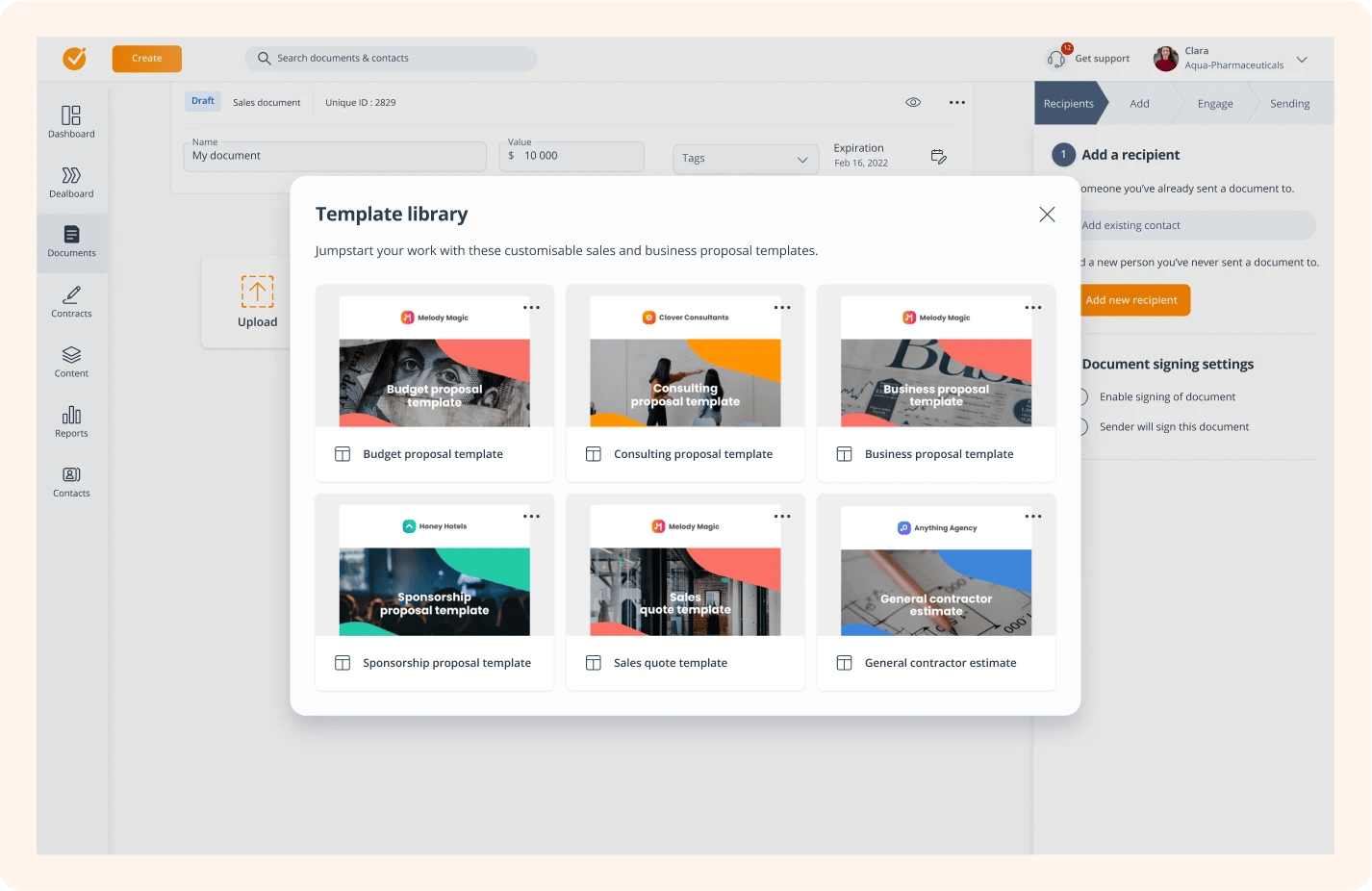
Ready to put these tips into action? Don't start from a blank page. GetAccept's library of free sales proposal templates gives you a data-backed head start.
Our templates are fully customizable, mobile-ready, and designed for specific use cases, including:
- Consulting proposals
- Marketing and agency proposals
- SaaS sales proposals
Sales proposal examples
Seeing how the elements come together can help. Here are a few examples of how different industries might structure a proposal:
- SaaS Sales: Focuses on the solution and tiered pricing. Includes a demo link and social proof from similar companies.
- Consulting Services: Emphasizes the project scope and timeline. Details the methodology and consultant expertise, supported by strong case studies.
- Marketing Agency: Highlights creative ideas and campaign mockups. The timeline is broken down by campaign phases, and pricing may include retainer options.
Sales proposal best practices
- Personalize Everything: Use the prospect's language from your conversations to show you were listening and understand their needs.
- Proofread Meticulously: Typos kill credibility. Always have a colleague review the proposal before you hit send.
- Address Objections Proactively: If they mentioned a concern about budget or implementation, address it head-on to show you have a plan.
- Make It Easy to Say Yes: The final step should be frictionless with a clear CTA and a simple e-signature process.
Common sales proposal mistakes to avoid
- Sending a generic, one-size-fits-all proposal.
- Focusing on your company instead of the client's outcomes.
- Making the document too long or complex.
- Hiding the price or using confusing terms.
- Forgetting a clear call-to-action.
What to do after sending your sales proposal
The work isn't over when you hit 'send'. Most proposals die from indecision, not a direct 'no'. A large-scale study of more than 2.5 million recorded B2B sales conversations found that between 40% and 60% of deals end in no decision — buyers who expressed intent to purchase but ultimately failed to act [Harvard Business Review, 2022]. The implication is clear: your follow-up strategy is just as important as the proposal itself.
If they say yes
Congratulations! Move quickly to confirm details and schedule the kickoff call.
If they say no
Ask for feedback politely. Understanding why provides invaluable data for your next opportunity.
If they ghost you
This is where proposal tracking shines. If you see they haven't opened it, follow up to ensure they received it. If they've viewed it but not responded, send a value-add follow-up referencing a section they focused on.
Bonus: Use proposal software to manage the proposal process
Proposal software helps you automate the sales proposal process. With it, you can track proposal status and review analytics to refine future proposals, making the entire process more efficient and effective.
GetAccept customers spend 53% less time sending proposals with proposal software, while seeing their win rates grow from 13% to 25% within 12 months.
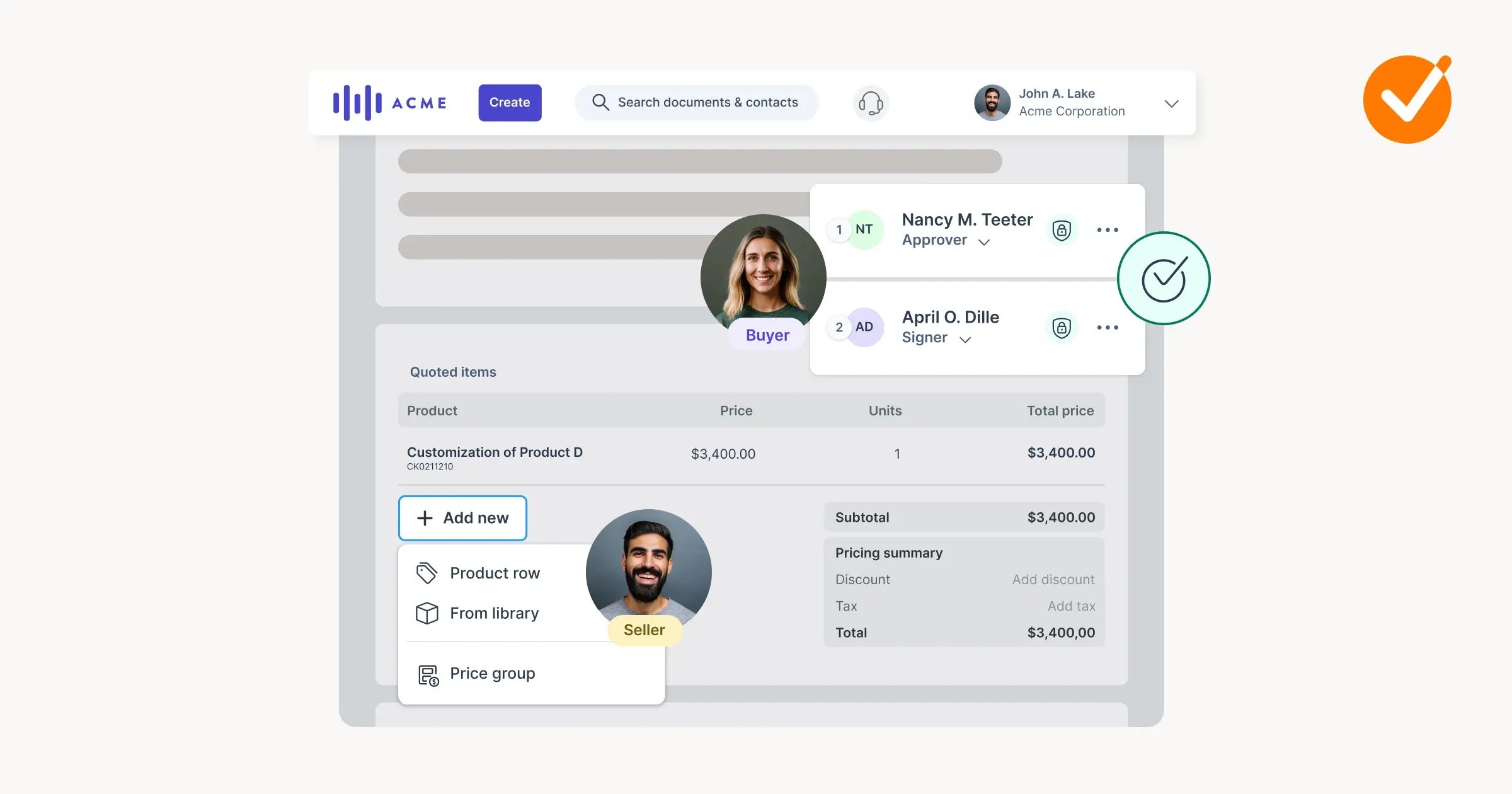
There are several types of proposal software, but here are 3 ways to get the most out of whichever platform you choose:
- Automate follow-ups: Use the software to schedule and automate follow-up emails after sending a proposal. This ensures timely communication and keeps the client engaged without manual effort.
- Collaborate in real time: Use the collaboration features to work with your team in real time. This way, everyone can contribute and review the proposal, leading to a more polished final product.
- Track engagement metrics: Use built-in analytics to monitor how recipients interact with your proposal. Understanding which sections they spend the most time on can provide insights for follow-up conversations and improve future proposals.
Customer spotlight
Culture Intelligence, a growth-driven organization within the rapidly evolving PeopleTech space, uses GetAccept to streamline their sales proposal process, achieving higher engagement and closing rates.
"We chose GetAccept because of everything this company stands for in terms of its vision, the people within the organization, and its platform. Digital Sales Room is the future of how to do business in a digital world."
Since moving from their previous vendor to GetAccept, Culture Intelligence has improved client interactions and sped up deal closures. Their proposal process is now more efficient and effective, leading to better business outcomes.
Conclusion
A sales proposal is more than just a Word document or PDF attachment.
To close more deals, a revenue-winning sales proposal is a professional, engaging, and concise document that appeals to your potential clients.
Based on our research, it means…
- Using templates
- Designing attractive cover pages
- Incorporating rich media
- Keeping proposals short
- Using digital signatures
…and making sure it’s all stored, managed and tracked in proposal software.
Get those things right, and you can significantly increase win rates.
Upgrade your sales proposals today
A winning sales proposal is more than a document—it's a crucial part of the buyer experience. The right sales proposal template, combined with personalized content and engagement tracking, helps you close more deals.
GetAccept brings these elements together in one platform to help you win. Ready to see how it works?

![5 Qwilr alternatives that win on speed, AI, and CRM integration [2026]](https://www.getaccept.com/hubfs/Qwilr%20alternatives.png)