Did you know that there are 261 different proposal management software apps on G2 as of February 2026
The choice is overwhelming, especially if you're part of the 30% of sales teams that don't use proposal software.
Companies that do use it submit 46% more proposals, quotes, and bids every year. They also increase their overall win rate by at least 10%.
You're missing out on an important source of productivity and revenue growth by not using software to help you write better proposals.
If you're in the market for a new proposal solution, this guide is for you. We'll explore key features, how they work, and the benefits you can expect.
What is proposal software?
Proposal software helps sales teams create, send, track, and manage business proposals. It is a specialized tool that improves the proposal-creation process with features not found in generic document editors. These features improve efficiency, ensure brand consistency, and increase win rates.
The best platforms connect directly to your CRM, automatically pulling deal data and syncing proposal activity back to your pipeline. This means reps spend less time on admin work and more time selling.
Why proposal management software matters for sales teams
-
Close deals faster: Eliminate repetitive work with templates and CRM integration. This allows reps to send more proposals in less time.
-
Gain buyer insights: See which stakeholders review your proposal and what content they focus on. This intel is invisible in email threads and PDFs.
-
Align buying committees: Keep all 6-10 stakeholders in a complex B2B deal aligned in one place. This prevents deals from stalling.
-
Maintain brand consistency: Ensure every proposal is professional and on-brand with pre-approved templates and content.
Essential proposal management software features
The best proposal software doesn't just help you create documents. It transforms how you engage buyers, manage sales cycles, and close deals.
This list of features is based on our in-depth analysis of the most popular proposal software for 2026, including GetAccept, PandaDoc, Qwilr, Better Proposals, and more.
To positively impact your business, you need these 10 non-negotiable features:
These 10 features are:
-
CRM integration
-
Content creation
-
Content library
-
CPQ (configure, price, quote)
-
Signing order and roles
-
Edit after sending
-
Tracking
-
Chat functionality
-
Electronic signatures
-
Contract management
This list of features is based on our in-depth analysis of the best proposal software for 2026 most popular features from companies like GetAccept, PandaDoc, Qwilr, Better Proposals, and more.
1. CRM integration
A good CRM integration allows you to form a two-way connection between your proposal software and your CRM system. Examples of how this works include:
-
Automatic population of contract fields in your proposal software with data from your CRM
-
Automatic updating of opportunity status based on proposal status
-
You can choose to store copies of signed contracts in your CRM automatically

If your chosen integration option isn’t supported ‘out of the box,’ you can also find providers that offer custom integrations via API.
Choosing an integrated solution helps your team to work more efficiently, and offers several additional benefits, including:
-
Real-time sales pipeline updates
-
A centralized, single ‘source of the truth’
-
Removal of operational silos
-
Automation of key tasks and processes
-
A more consolidated tech stack
| Tip: Consider integrating proposal software into your CRM, ERP, and the rest of your IT infrastructure for a truly seamless buyer experience. |
2. Intuitive content creation tools
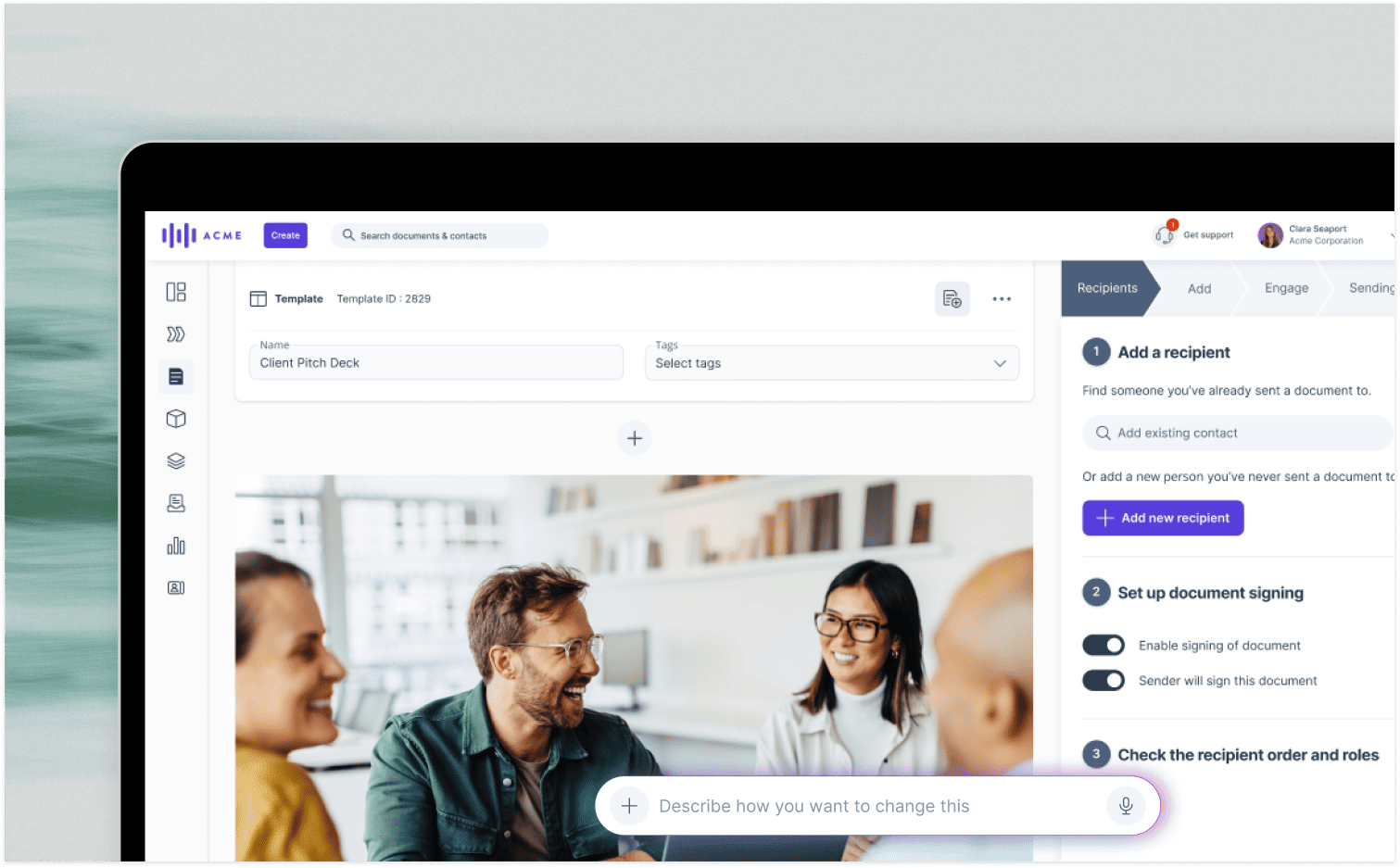
Content creation features help you to quickly produce pixel-perfect proposals, quotes, bids, contracts, and other commercial documents.
Using a dedicated feature like this, rather than generic office tools, means you can create highly polished and professional proposal documents that better represent your business.
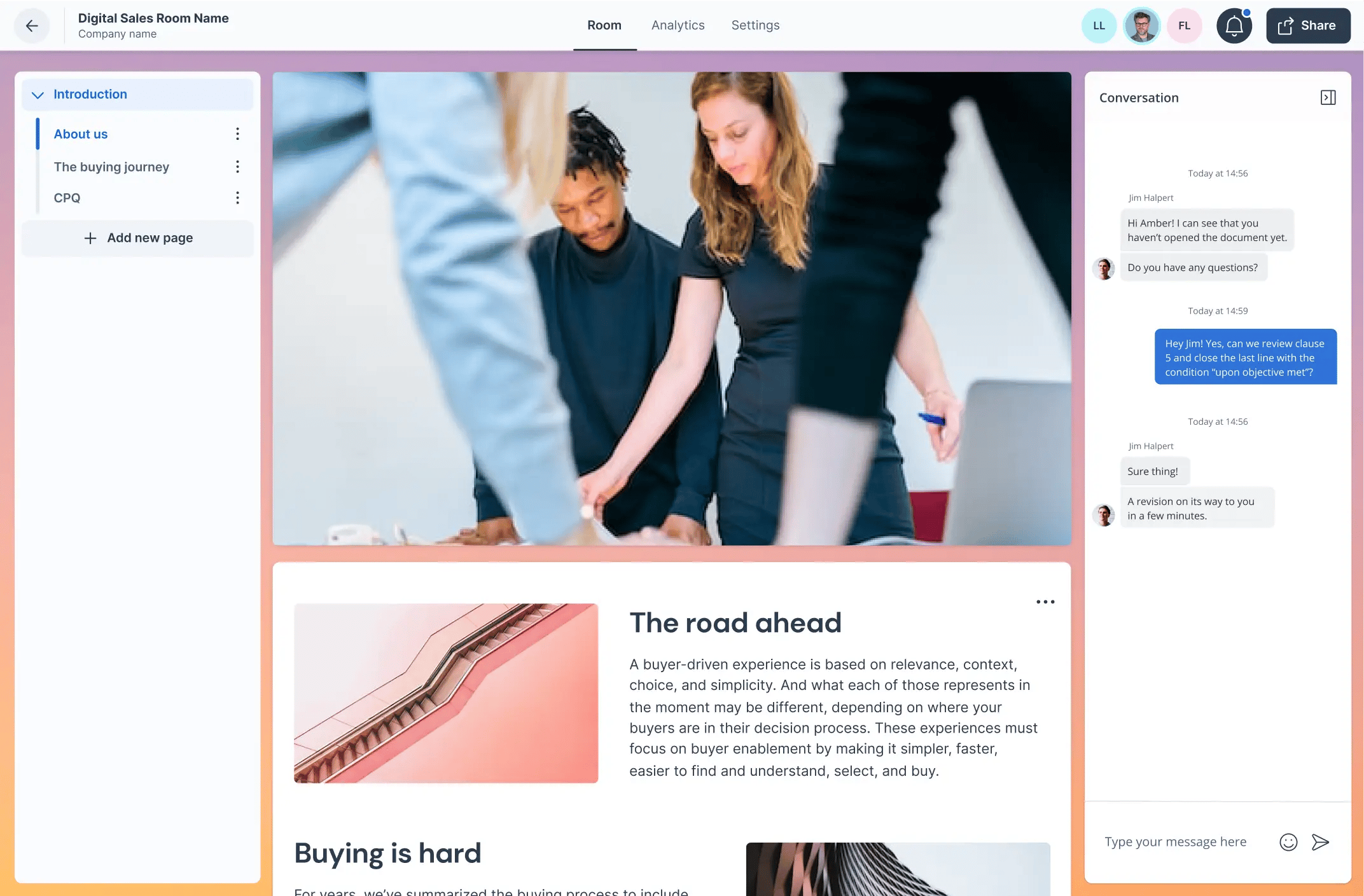
Not only do content creation features make it quicker to create great-looking proposals, but you’ll also experience additional benefits like:
-
Reduced graphic design costs and resources
-
Empowered sales team thanks to the removal of resource bottlenecks
-
Easier to keep your proposal documents consistent and ‘on brand’
-
Creating a great first impression for your prospects
| Tip: The best creation tools don’t limit you to just proposals, you can also create contracts, bids, quotes, and more. |
3. Content library
A content library lets you centrally store pre-configured content that your sales team can use in their proposal creation process. There are two key uses for a content library:
-
Templates: Rather than starting from scratch for each proposal, reps can use a pre-designed template as the basis for their documents.
-
Pre-approved content: To keep your messaging consistent, you can create pre-approved content blocks, such as product descriptions or boiler plates, to slot into a proposal.
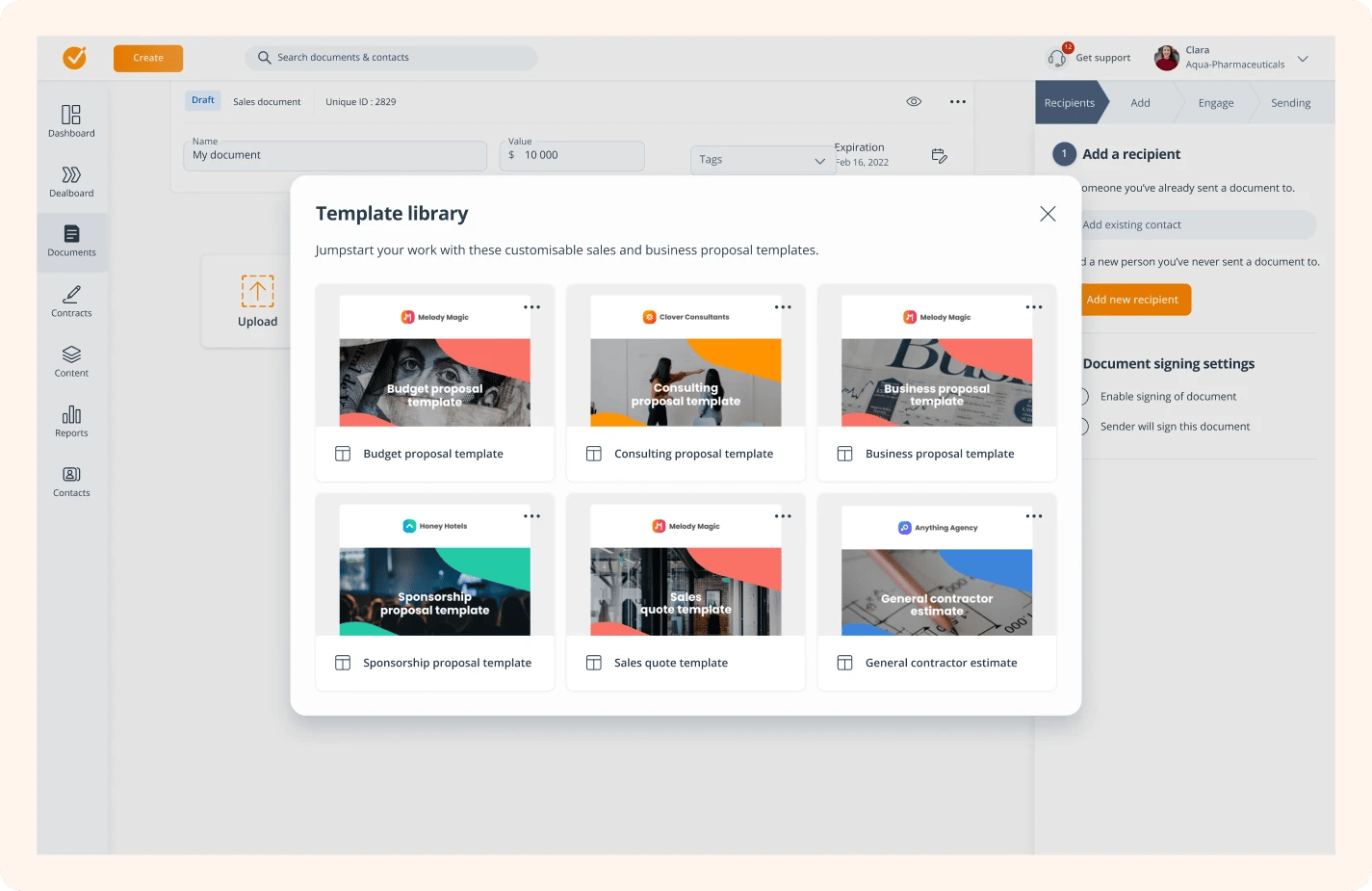
Content libraries benefit sales teams in several ways:
-
You save time on proposal creation with templates
-
Reps can spend more time focusing on building relationships and closing the deal
-
Your core messaging remains ‘on brand’, no matter who is sending a proposal
-
More polished proposals will have a positive impact on your customers
-
Submit more proposals per sales rep per year
| Tip: Remember that the content library can include templates for a wide range of proposal and deal-related documents. The sky’s the limit. |
4. CPQ
CPQ – short for configure, price, quote – is a feature that helps you to quickly create accurate pricing tables for quotes and proposals.
Using CPQ helps ensure that your proposals are free of costly mistakes and that everyone on your sales team uses the most up-to-date pricing.
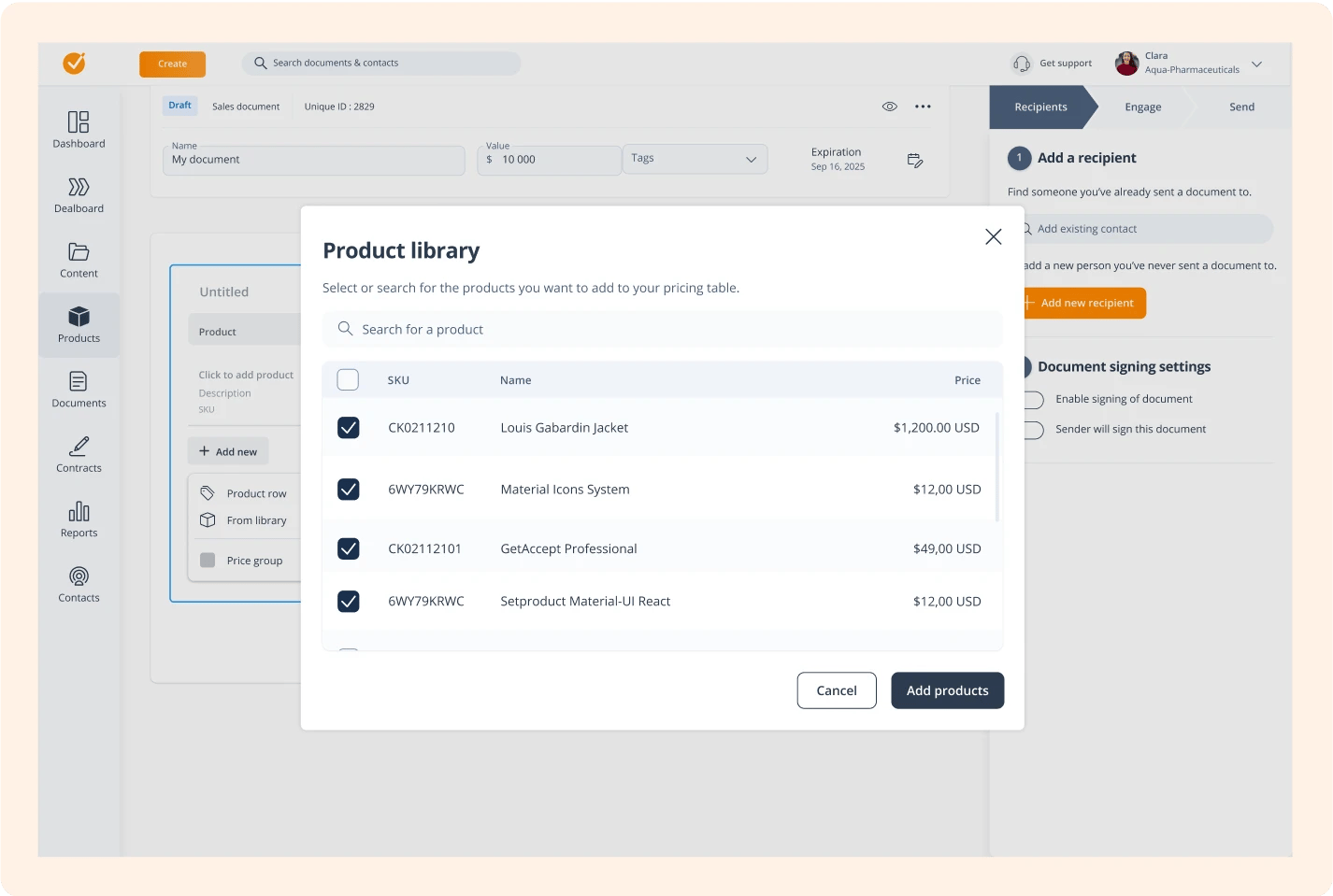
Making the most of CPQ functionality in proposal software will offer you and your sales team a wide array of benefits, such as:
-
Minimizing proposal errors and pricing mistakes
-
Ensuring your current pricing is used consistently
-
Saving time producing pricing tables using ‘drag and drop’ content
-
Pre-load product pricing and descriptions into CPA for maximum efficiency
| Tip: Building a product library of pricing plus approval controls gives you ultimate control over proposals before they’re sent to prospective clients. |
5. Signing order and roles
Before a deal can be officially closed, it needs to be signed off by the relevant stakeholder(s) on the buying team.
Signing order and roles functionality gives you granular control over who should be able to view a proposal, quote, or contract, as well as who should sign it off – and in what order.
The main benefits of signing orders and roles include:
-
Giving all stakeholders in the buying team relevant access
-
Ensuring the right people are signing off to validate the deal
-
Achieving sign-off in the right order to ensure proper process is followed
-
Granular-level controls to grant access on a ‘need-to-know’ basis
| Tip: To minimize the time required to sign off, documents that require a signature can be sent directly to the signatories named in the ‘signing order and roles’ feature. |
6. Edit after send
If you create a proposal or quote in a generic office tool like Word, or even if you send it as a PDF, it can quickly become difficult to manage if you need to edit or update the document.
This is where ‘edit after send’ comes in.
Often, your prospects will request changes to a document before signing off. This could be to correct an error, increase their order value, or clarify a clause.
When used with content created in your proposal software, edit after send gives you a live document that can be easily and quickly updated without fuss.
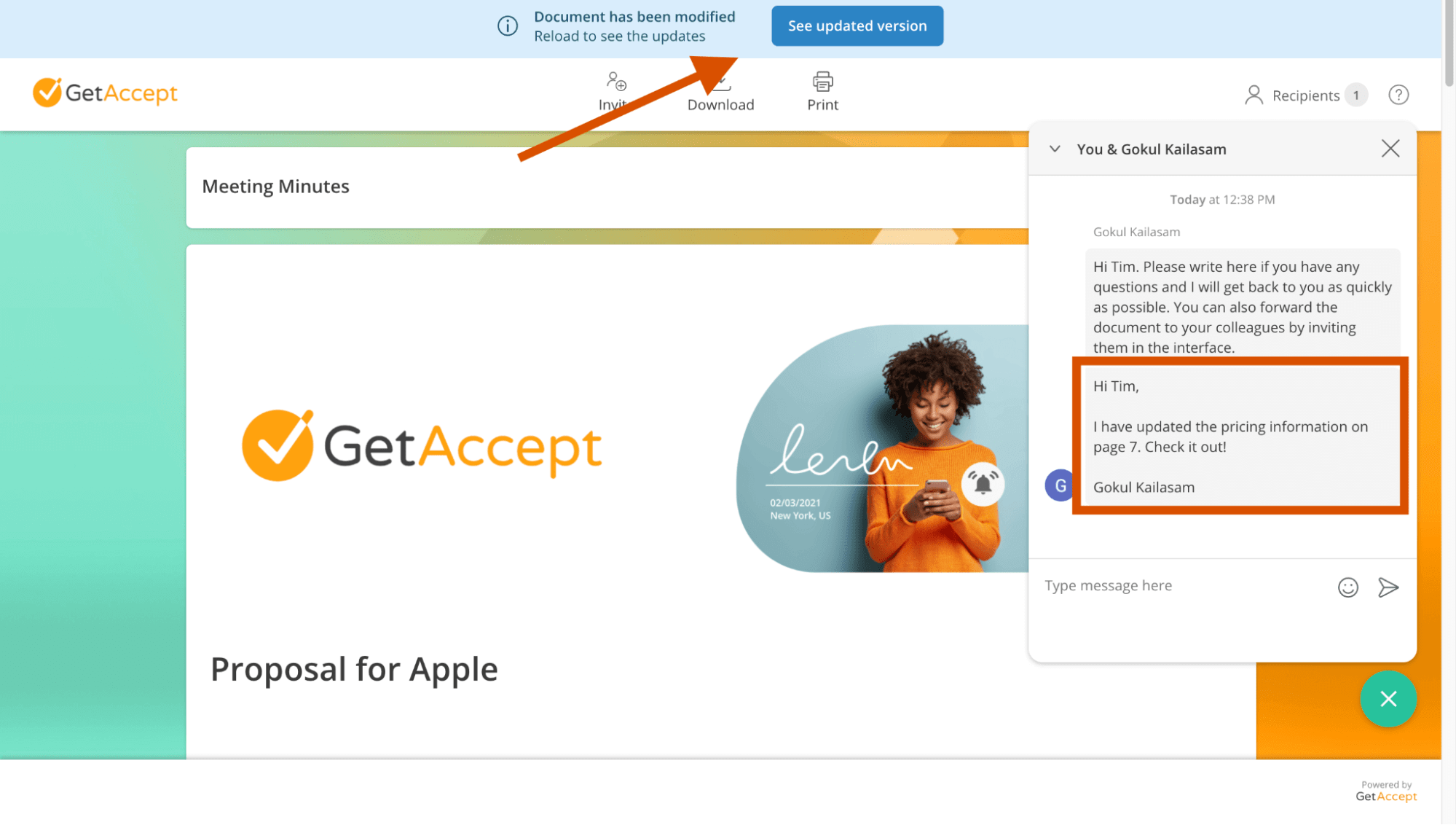
But how does this help your sales team?
Edit after send actually offers several benefits, like:
-
Removing friction and helping close deals more quickly
-
Easily correct errors before a prospect opens the document
-
Facilitate collaboration between your company and your customers
-
Make adjustments to the deal based on new information or requirements
| Tip: ‘Edit after send’ isn’t just a way to correct errors. Think of it as having a living, breathing document that can be shared with your customers and updated as needed. |
7. Proposal tracking and analytics
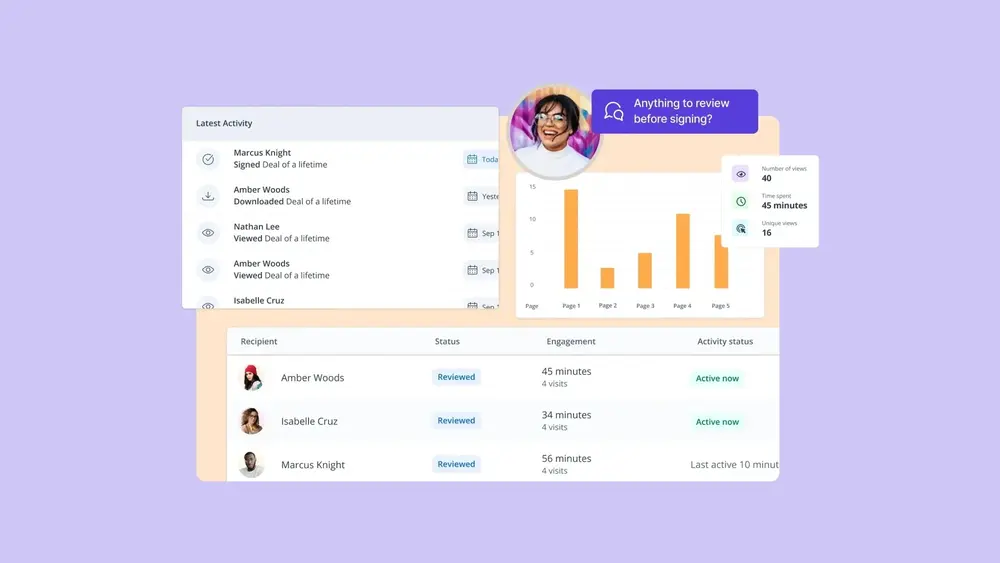
Proposal tracking lets you understand who opened your proposal, how many times they've read it, and how much time they spent on each section. This is useful for two key reasons:
This is particularly useful for two key reasons:
-
Engagement: Understand if your prospect and associated stakeholders have read the document to help better inform your follow-ups.
-
Stakeholders: Discover if the proposal has been forwarded to any other potential stakeholders you aren’t aware of. This insight can help you adjust your stakeholder map.
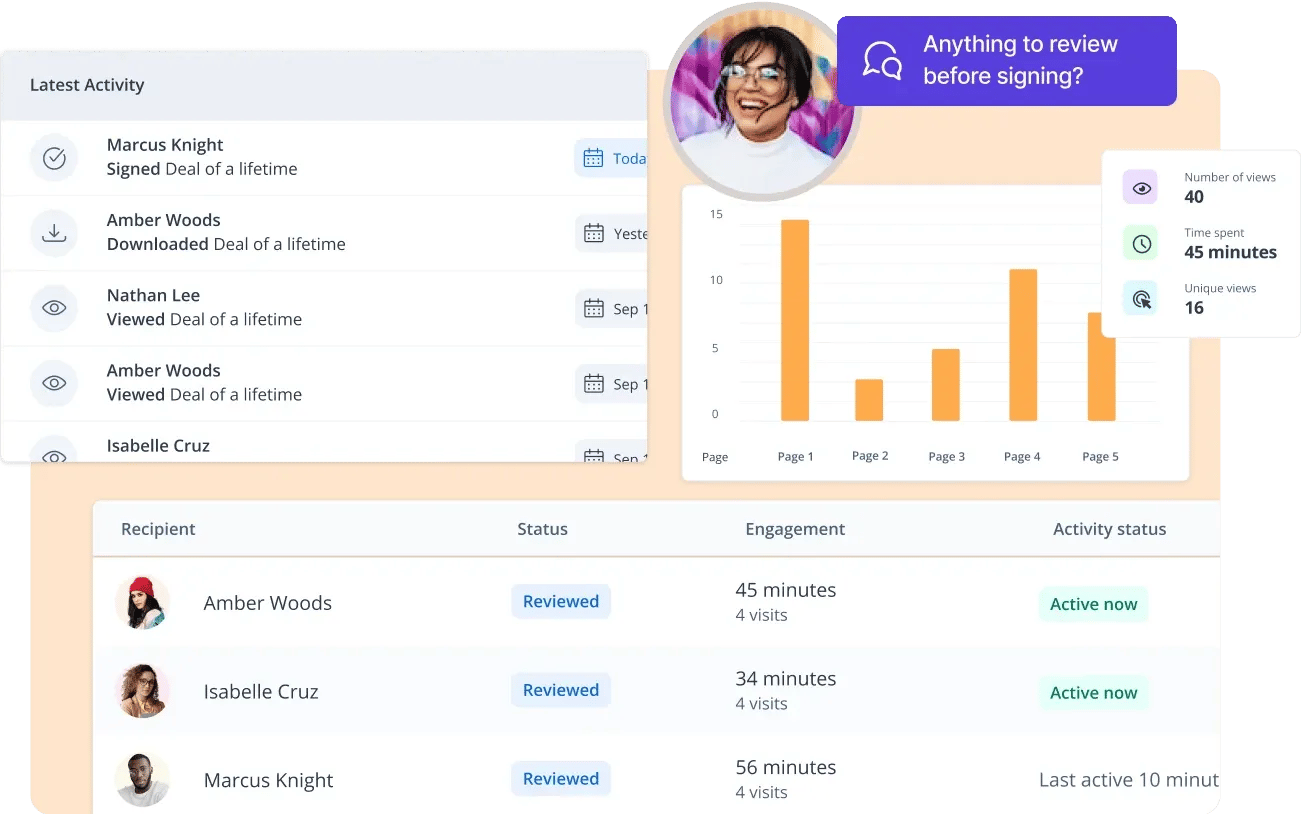
Some of the biggest benefits of using the tracking feature to monitor your proposals include:
-
Understanding when and how prospects engage with your proposal
-
Get clarity on parts of your proposal that ‘trip up’ prospects
-
Discover new stakeholders not previously part of your sales discussions
-
Use the information you’ve learned to craft more meaningful follow-ups
| Tip: Data captured during tracking can be exported to other systems or used in reporting to help you understand pipeline status and probability. |
8. Real-time collaboration and chat
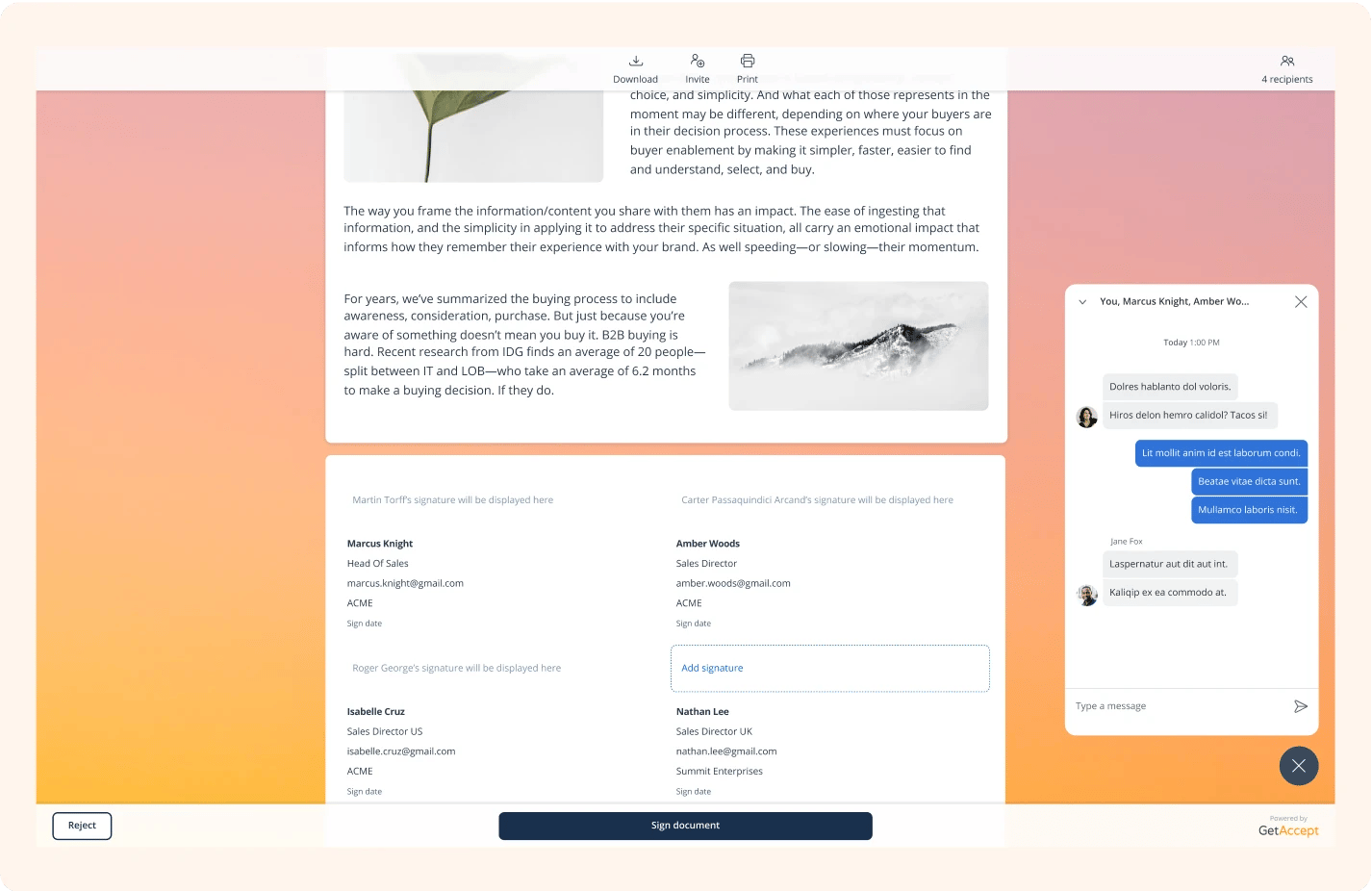
Real-time collaboration features give you multiple ways to work with prospects as they evaluate your offer. This helps you avoid lengthy email chains and unnecessary calls.
-
In-document chat: Lets prospects quickly flag areas for clarification directly within the proposal.
-
Comments and annotations: Allow multiple stakeholders on the buying committee to discuss your proposal internally while keeping you in the loop.
-
Live notifications: Alert you when stakeholders are actively engaged so you can answer questions while they're top of mind.
| Tip: Real-time collaboration is a fantastic way to clear up quick questions, overcome objections, and keep momentum alive between formal meetings. |
9. Electronic signatures
Before electronic signatures, sending documents for signature involved a convoluted combination of printing, signing, scanning, and emailing.
Thankfully, electronic signatures – also known as digital signatures – give you the ability to collect digital signatures on documents.
This is an extremely useful feature in proposal software as it enables prospects to sign without any friction or difficulty, which means deals can be closed more quickly.
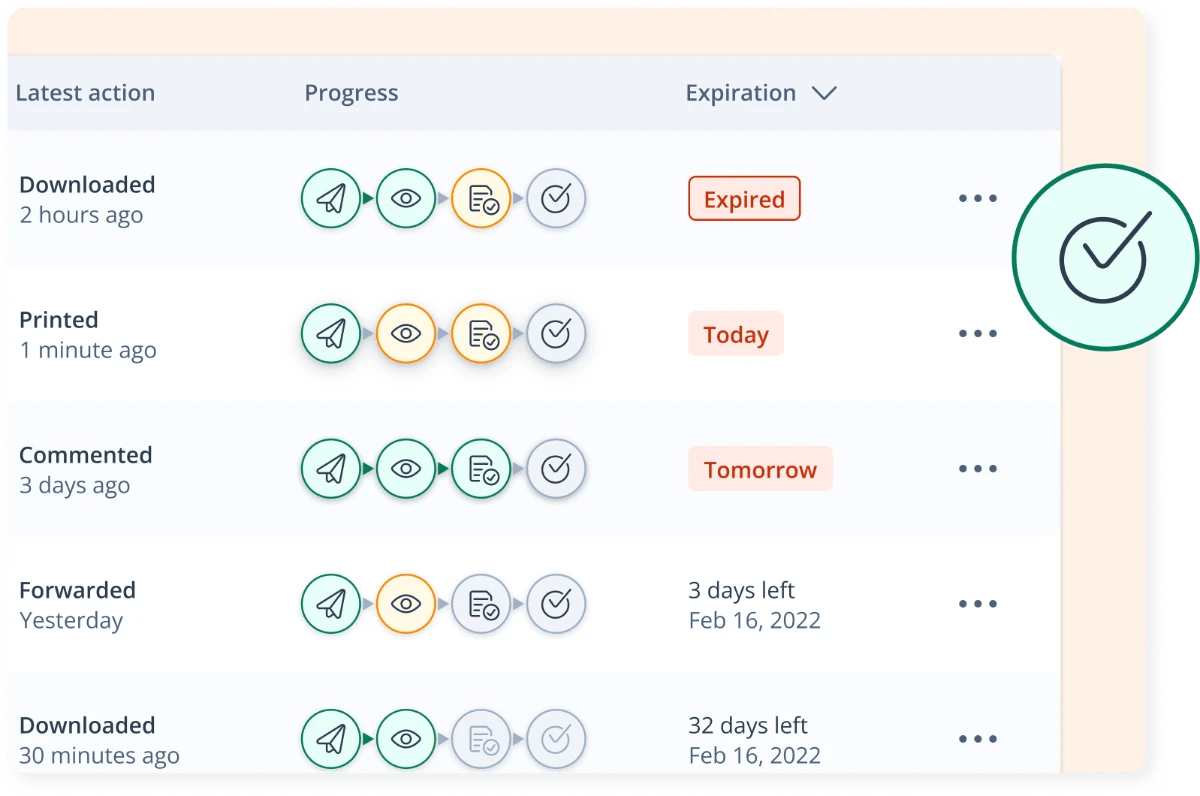
In fact, through our electronic signature tool, 44% of all documents sent are signed in less than 60 minutes.
Using e-signatures instead of traditional ‘wet’ signatures offers a number of advantages, such as:
-
Closing deals more quickly
-
Reducing friction for prospective buyers to sign (no printing, etc.)
-
Gather signatures from multiple parties at the click of a button
-
Automate follow-ups and reminders to sign
-
Additional layers of security and authentication are available
| Tip: E-signatures aren't just for proposals. Any document within your proposal management software can use electronic signatures, including quotes, contracts, and bids. |
10. Contract management
A robust contract management feature will help you centrally store and access the most up-to-date version of any contract – to keep everyone on the same page.
Your sales and accounts teams can use contract management to answer customer questions confidently and stay fully in control of the renewal process, too.
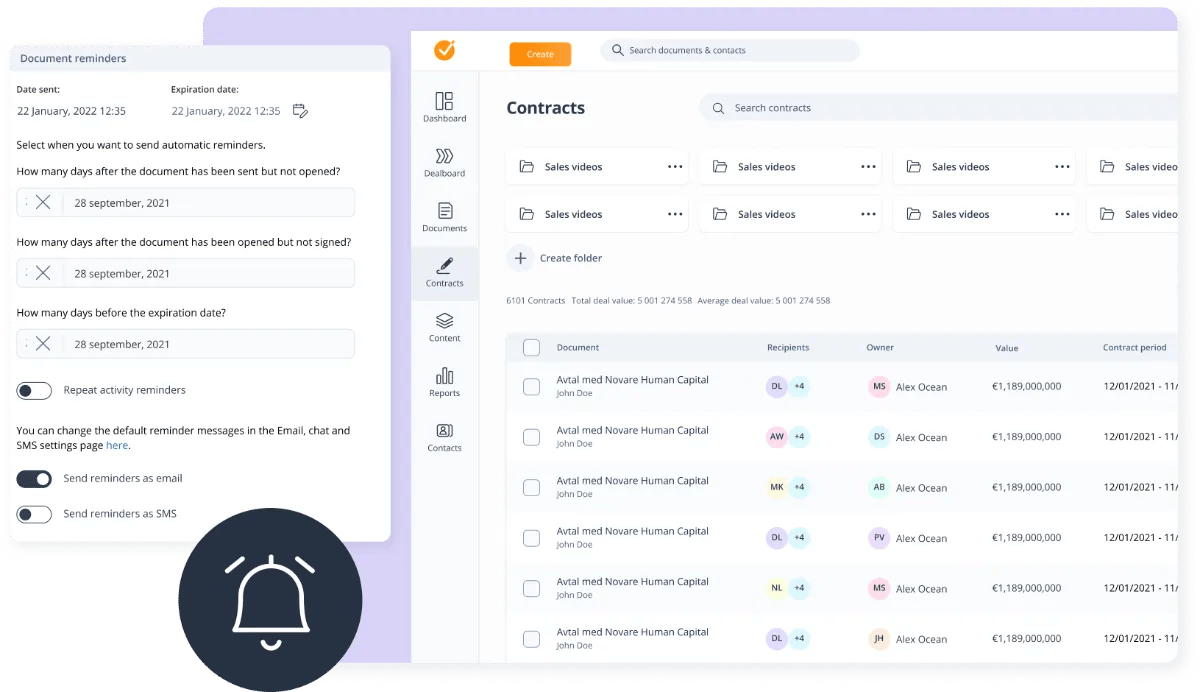
Using contract management software as part of your proposal solution means you can expect to benefit from:
-
Easy to search for the right contract or supporting document
-
Confidently answer any customer questions based on the latest information
-
Automatically keep up to date with contract renewal opportunities
-
Keep in control of your contract process from one central location
| Tip: Set up reminders to be sent by email and SMS to ensure contract renewals aren’t overlooked. |
AI-powered proposal automation
Modern proposal software uses AI to eliminate repetitive work and personalize content at scale. The goal is to automate busywork so reps can focus on building relationships.
-
AI-generated content: Drafts proposal sections based on CRM data and previous winning proposals, giving you a solid first draft to refine.
- Smart content suggestions: Recommends which case studies or testimonials to include based on the buyer's industry and engagement patterns.
- Automated workflows: Route proposals for internal approval based on deal size or discount levels, flagging issues before they go out.
-
Predictive analytics: Identify which deals are most likely to close based on buyer engagement, suggesting follow-up actions.
Proposal software feature checklist
As you consider procuring proposal management software for your business, you’ll need to think about how these essential features fit into your requirements.
In isolation, you may think that missing out on a feature or two isn’t a ‘big deal’, but they’re essential for a reason.
Reference guide
To help you see how all these essential features work together, we’ve created an easy-to-read checklist of the features, their main use case, and benefits – for you to use as a reference guide.
|
Feature |
Use Case |
Benefit |
|
✅ CRM integration |
To make sure your sales records reflect the latest status of proposals. |
Create a central source of the truth and keep pipelines up to date. |
|
✅ Content creation |
Create stunning proposals that stay on-brand and professional every time. |
Present your company in the best light every time to win more business. |
|
✅ Content library |
Centralize pre-approved content for proposals to reduce repetition. |
Reduce the time it takes to create winning, high-quality proposals. |
|
✅ CPQ |
Quickly produce accurate pricing. |
Pre-approved pricing with no errors. |
|
✅ Signing order and roles |
Assign permissions to relevant members of the buying team. |
Control who sees and signs your proposals - and in what order. |
|
✅ Edit after sending |
Update the document whenever needed, even after you’ve sent it. |
Edit in real-time based on buyer feedback to help close the deal. |
|
✅ Tracking |
Understand who has viewed your proposal and when. |
Track prospect engagement and identify new stakeholders. |
|
✅ Chat functionality |
An open channel of communication between you and the prospect. |
Overcome objections and close more deals in real-time conversation. |
|
✅ Electronic signatures |
All parties can sign proposals digitally in real-time. |
Close deals more quickly and reduce time spent printing and signing. |
|
✅ Contract management |
Central storage, version control, and search of contract documents. |
Instant access to the latest contract version and set renewal reminders. |
Now that you know which key features should be on your requirements list, it’s time to consider which proposal management software is right for your business.
Transform your proposal process with GetAccept
Proposal software has two key benefits for your business:
-
It makes sales reps more productive by issuing more proposals and quotes
-
It increases your overall win rate by offering a suite of tools to help close deals
Think of it like this:
The average sales rep sends 179 proposals a year using proposal management software versus 145 without. At a 44% close rate, that’s an extra 17 deals a year you’re missing out on.
The challenge, though, is that not all proposal software is created equal - and some platforms deliver more value than others.
To positively impact your business, you need software that doesn’t just help you create proposals – but manages the entire process and integrates with your infrastructure.