

Why contract management matters after the deal is won
Most teams treat signing as the finish line.
The contract gets stored. The deal is marked as closed. Everyone moves on.
But the contract contains the details that define what happens next:
- When the relationship starts and ends
- When renewal conversations should begin
- When notice must be given
- What the customer is actually paying for
When that information is buried inside PDFs, teams rely on memory, spreadsheets, or last-minute scrambling.
That’s when problems show up:
- Contracts auto-renew without discussion
- Notice deadlines are missed
- Expansion opportunities are discovered too late
- Teams lose visibility into active agreements
The issue isn’t missing data. It’s that the data isn’t usable.
From stored contracts to something you can act on
Manual contract tracking works… until it doesn’t.
As your number of contracts grows, keeping everything updated becomes time-consuming and unreliable.
AI Contract Management removes that bottleneck.
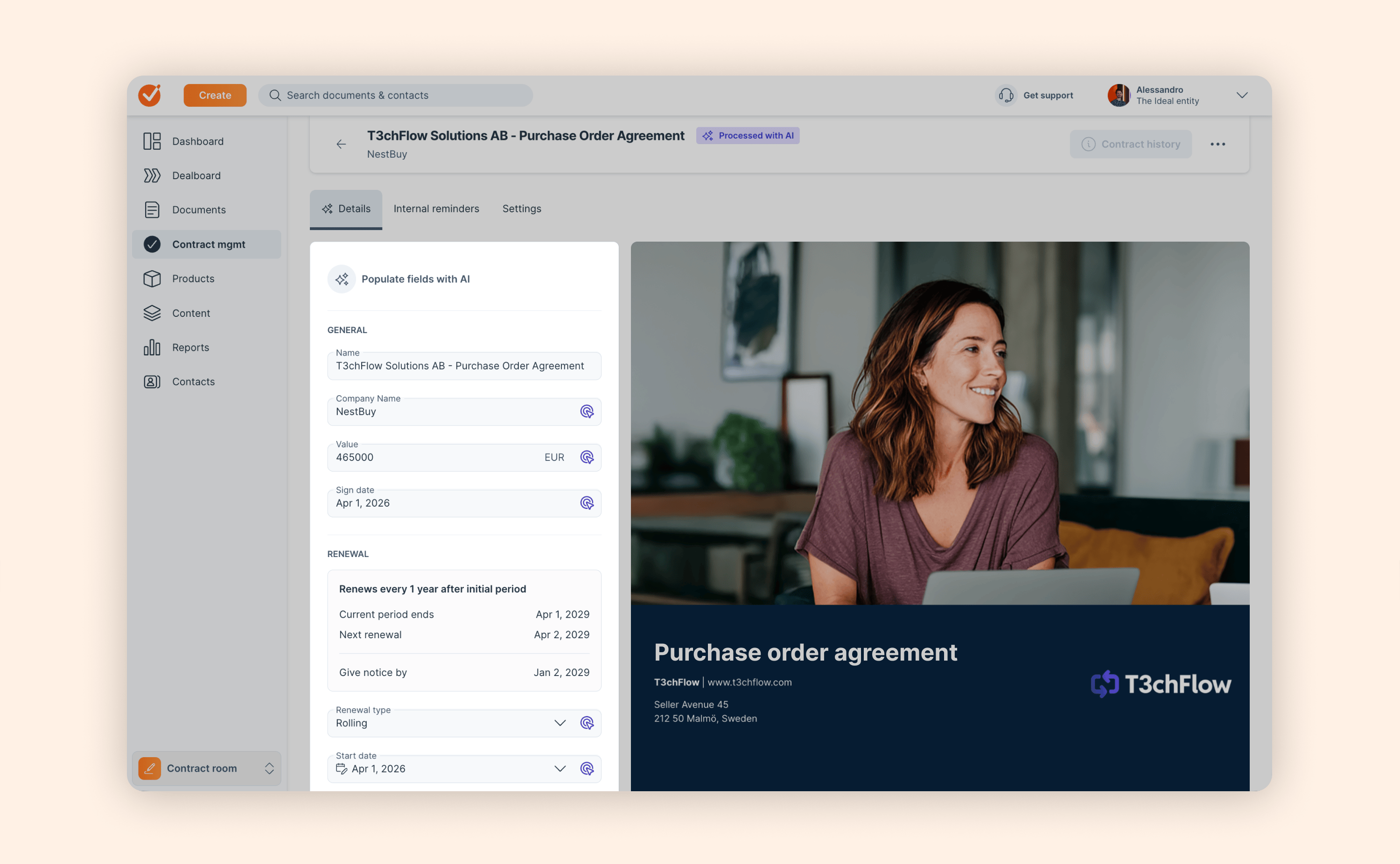
When a contract is signed or uploaded, AI:
- Reads and understands the document
- Extracts key data automatically
- Structures it so it becomes searchable and usable
This includes:
- Contract value
- Start and end dates
- Renewal type and renewal date
- Notice period and notice date
- Payment terms
- Contract status
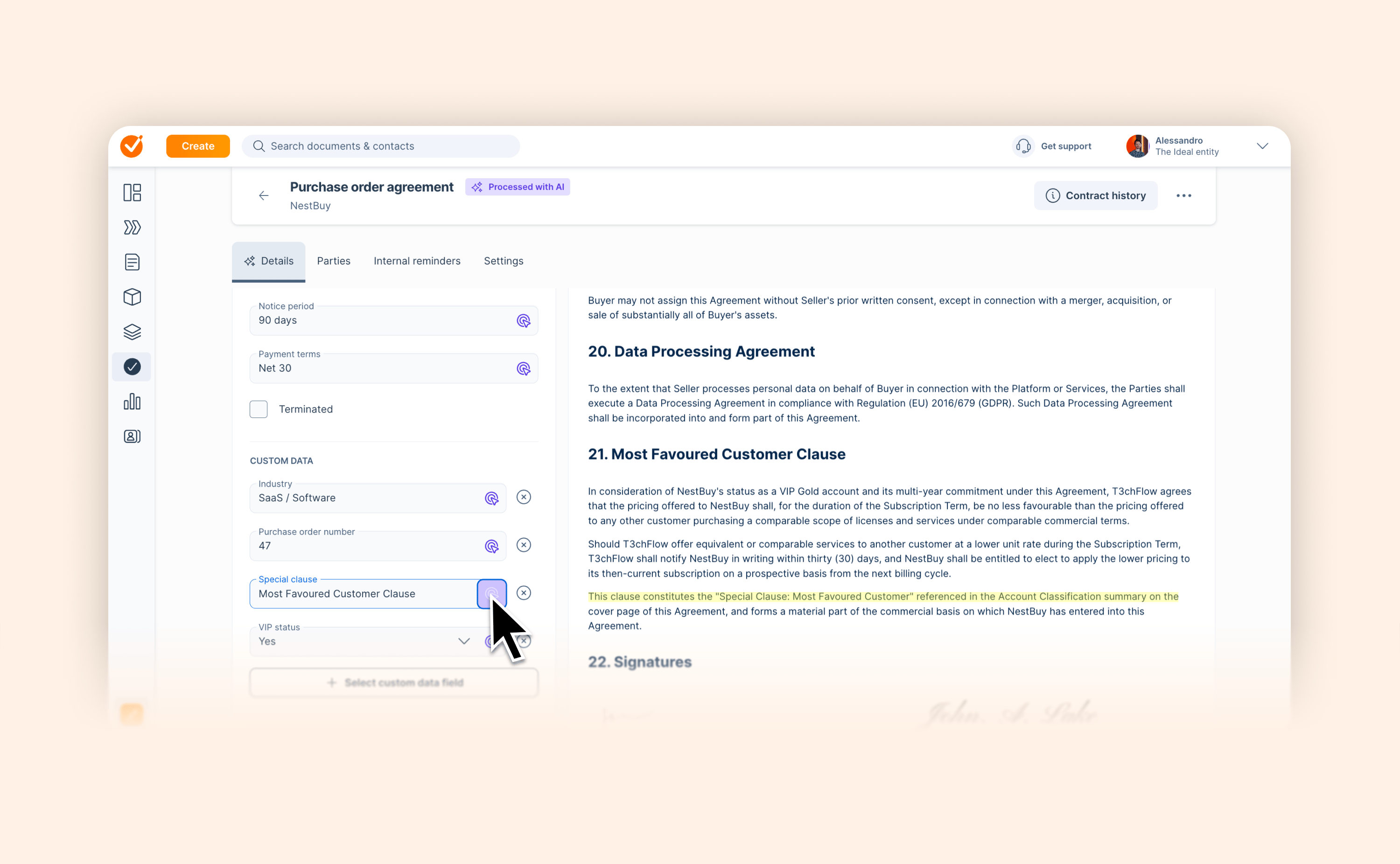
- All custom data fields defined by your business, such as SLA tiers, region, industry, purchase order number, or indexation percentages.
Instead of opening contracts one by one, your team can see what matters instantly.
And importantly, you can always verify the data. Each extracted field links back to the exact place in the contract, so you stay in control.
What this looks like in practice
Without structured contract management:
- Renewal tracking lives in spreadsheets
- Teams rely on reminders or memory
- Contracts are reviewed only when something goes wrong
With structured contract management:
- Contracts are organized and searchable
- Key dates and terms are visible at a glance
- Teams know what’s active, what’s ending, and what needs attention
With AI Contract Management:
- No manual data entry
- Instant visibility across all contracts
- Faster decisions based on real contract data
How teams use contract data to drive outcomes
When contract data is visible and structured, teams work differently.
They can:
- Start renewal conversations earlier instead of reacting late
- Prevent unwanted auto-renewals by tracking notice deadlines
- Identify expansion opportunities based on contract value and timing
- Align sales, CS, and finance around the same source of truth
Contract management becomes less about storage, and more about timing and action.
Recap
By completing this lesson, you should now understand that:
- A signed contract is the start of the relationship, not the end
- Contract management is about visibility, timing, and action
- Structured data makes contracts searchable and usable
- AI removes manual work and makes key information instantly available
- The real value of a contract comes from what you do with it afterwards