


Introduction
Personalization isn’t about adding a company name. It’s about reflecting what this buyer cares about, what they’ve said, and what they need to decide next.
Buyers don’t want more sales content. They want content that feels written for them.
GetAccept helps you turn real deal context into tailored proposals and business cases, using AI grounded in your Deal Room, meetings, and shared knowledge – not guesswork.
What “personalized” actually means in B2B sales
In complex B2B deals, personalization goes far beyond surface-level changes.
Real personalization usually reflects:
- The buyer’s goals, risks, and constraints
- The language and priorities expressed in meetings
- The different concerns of technical, commercial, and executive stakeholders
- Decisions already made – and decisions still pending
When content isn’t tailored, buyers are forced to interpret it themselves. That creates friction, slows decisions, and weakens confidence.
The cost of generic sales content
Even strong products struggle when content feels generic.
When proposals and Deal Rooms aren’t tailored:
- Stakeholders interpret value differently
- Objections surface late or indirectly
- Sales cycles drag on unnecessarily
Personalization isn’t about doing more work. It’s about reducing interpretation work for the buyer.
How GetAccept AI creates a relevant first draft
GetAccept AI doesn’t guess what matters. It drafts content from context that already exists in the deal.
That context typically includes:
- The structure and content of the Deal Room
- Meeting transcripts or notes added to the room
- The Knowledge Base, which provides shared guidance on tone, positioning, and rules
This allows AI to produce a strong first draft that reflects real conversations rather than generic assumptions.
Smart Content: built-in personalization
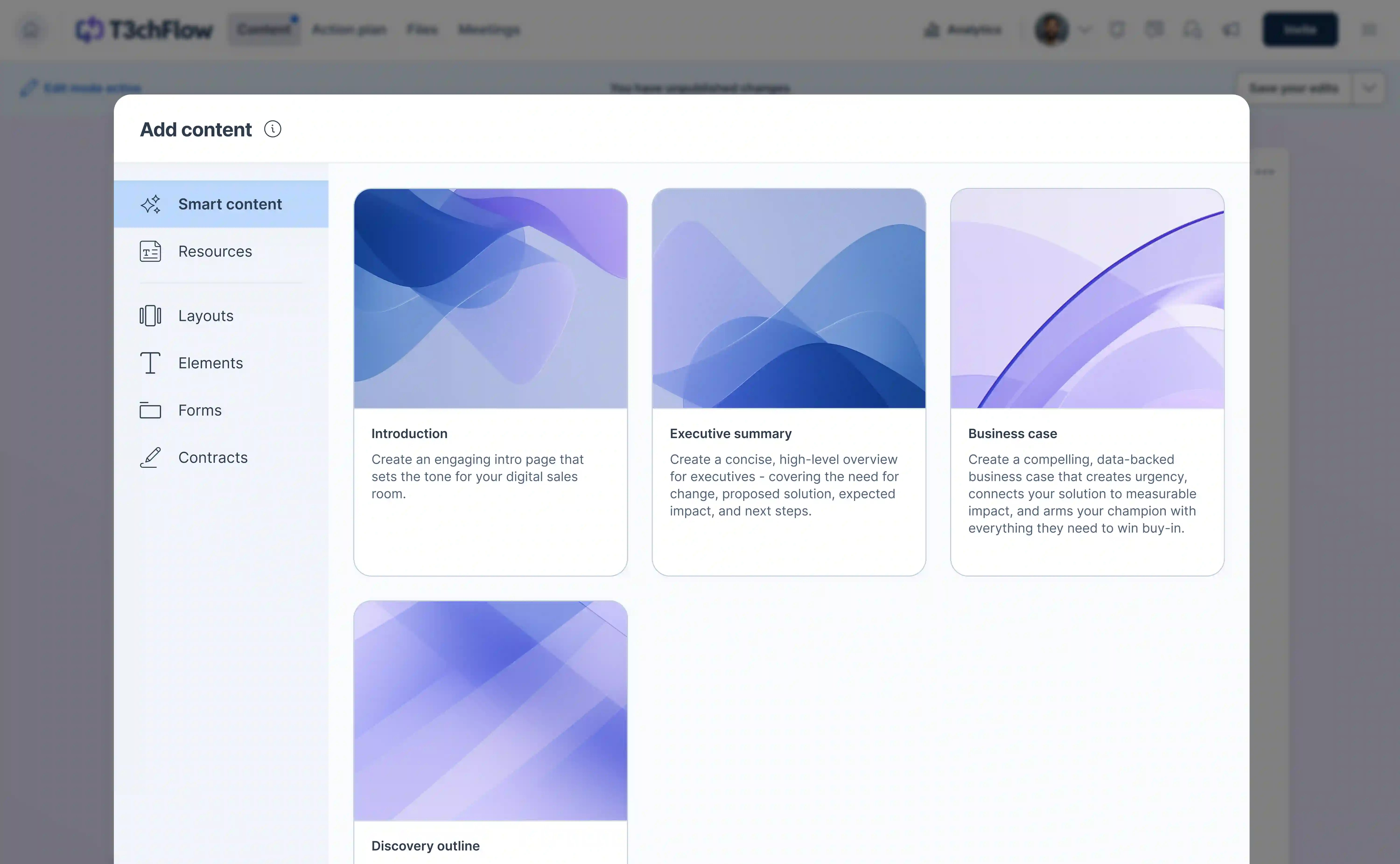
Most teams start with Smart Content.
Smart Content is designed to generate core sections such as:
- Introduction pages
- Executive summaries
- Discovery summaries
- Business cases
These sections automatically use available deal and meeting context, giving you a relevant starting point. From there, sellers can refine the content manually or continue adjusting it with AI – changing emphasis, tone, or structure as the deal evolves.
Smart Content gives you speed without losing relevance.
When personalization needs to go deeper
As deals become more complex, different stakeholders need different information.
For example:
- IT stakeholders want to understand integration, security, and operational impact
- Legal or procurement teams care about decisions, risks, and clarity
- Finance teams focus on commercial logic and justification
- Executives want outcomes, confidence, and next steps
Not every buyer needs the same story. Tailored sections help each stakeholder quickly find what matters to them.
Section prompts: structured personalization at scale
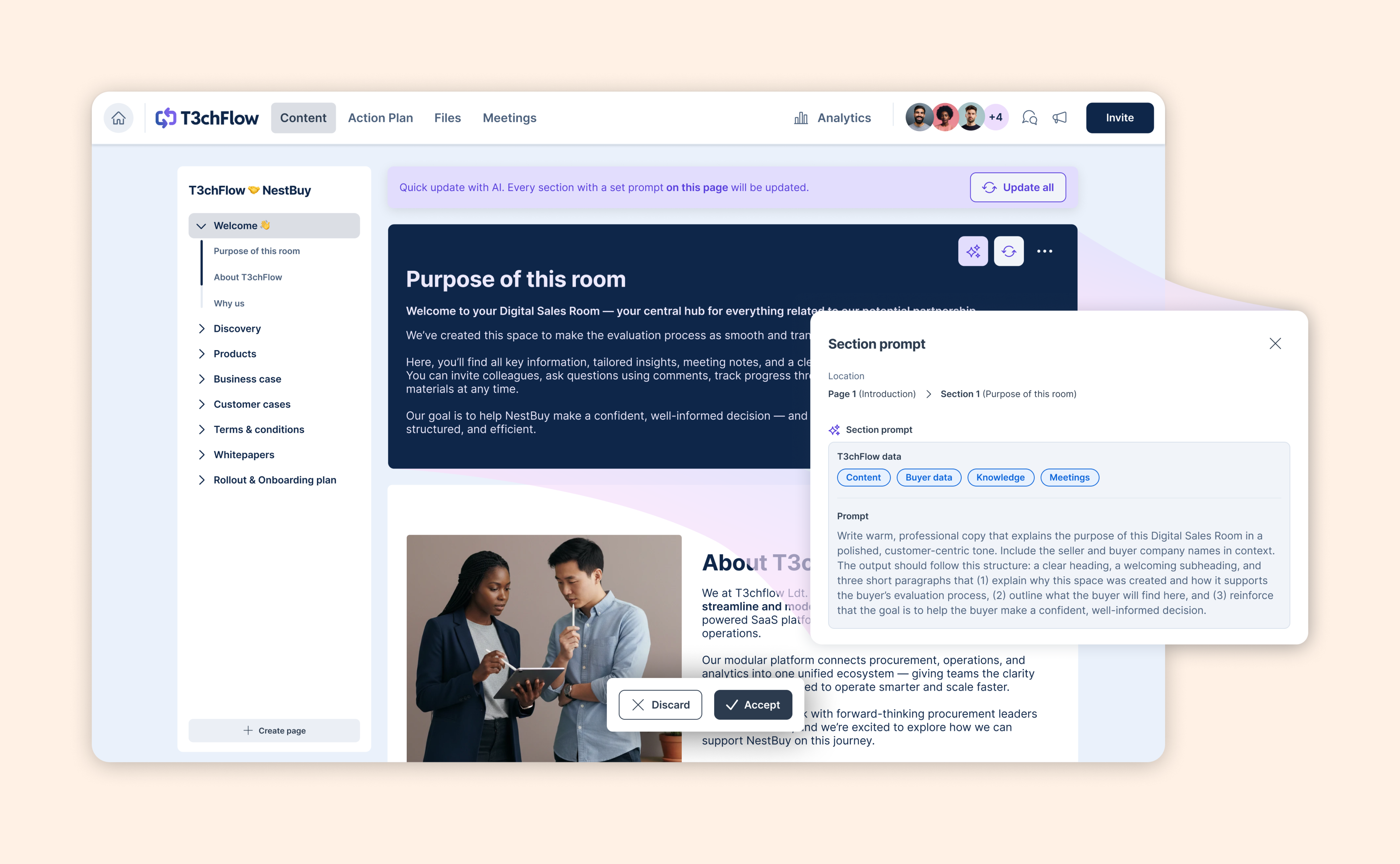
Section prompts are pre-defined sections in a Deal Room that include instructions for AI.
They are especially useful when you need:
- A specific structure or format
- Stakeholder-specific sections
- Content that needs to be updated repeatedly as the deal evolves
For example, a “Current status” or “Risks and open questions” section can be refreshed after each major meeting using the same structure, without rewriting from scratch.
This makes personalization consistent without forcing identical wording.
The Knowledge Base as guardrails
Personalization only works when it’s accurate.
The Knowledge Base allows admins and content managers to define:
- Tone of voice guidelines
- Approved positioning and value messaging
- Topics that should be avoided or handled carefully
- Non-negotiable rules, such as legal or compliance constraints
These guardrails help ensure AI-generated content stays on-brand and safe, even when tailored for different buyers.
What should not be customized
Not everything should be tailored.
Content that usually stays fixed includes:
- Legal language and standard terms
- Compliance statements
- Non-negotiable product or pricing rules
Personalization should focus on relevance and clarity – not rewriting rules that protect your business.
Putting it together
A strong personalization workflow looks like this:
- Capture meetings and deal context as you go
- Use Smart Content for the main narrative
- Add section prompts for stakeholder-specific or recurring sections that can be generated in a preferred format
- Rely on Knowledge Base guardrails for accuracy
- Review drafts to ensure they reflect what’s been confirmed
This approach makes personalization part of the process, not an extra task.
Recap
By now, you should be able to:
- Define real personalization in B2B deals
- Use Smart Content and section prompts appropriately
- Apply guardrails to personalize safely
- Decide what should and should not be customized