-1.jpg?width=48&height=48&name=55f40cc2763590699ea313bb5c9f08b5%20(chosen)-1.jpg)

There's a version of AI-assisted selling that looks impressive in a demo and underwhelms in practice. The AI summarizes a deal, tells you the stage and close date, maybe surfaces a few talking points from the last call. It's pulling from your CRM record and a handful of email threads. It sounds useful. But it's missing the most important data you have.
The richest signal about a deal doesn't live in your CRM. It lives in what your buyer actually does between your conversations.
The context gap in AI deal tools
When a buyer opens your proposal at 10pm and spends 45 minutes reviewing the pricing section, that's signal. When they come back three times to the business case before the final decision meeting, that's signal. When they've added two new stakeholders to the Deal Room but haven't touched the action plan in two weeks, that's also signal – and probably not the good kind.
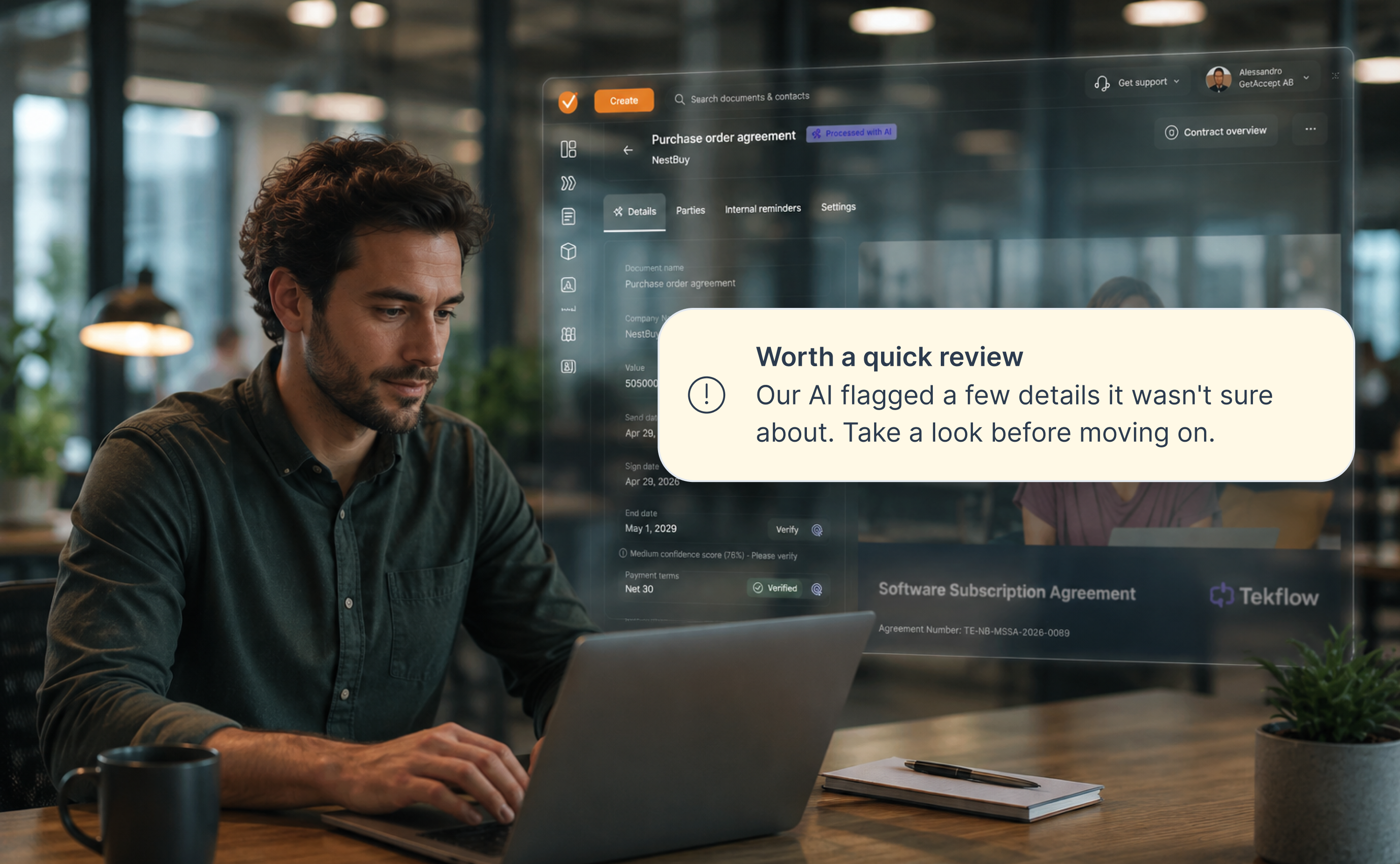
This kind of engagement data tells the real story of a deal. But most AI tools in the CRM can't read it. They're working from structured CRM fields, email metadata, and call transcripts.
What they miss is everything that happens in the Deal Room when your rep isn't actively selling. That 10pm proposal view, the repeat visits to the business case, the new stakeholder added three days before a decision call – all of that lives in the Deal Room.
What changes with GetAccept and Agentforce
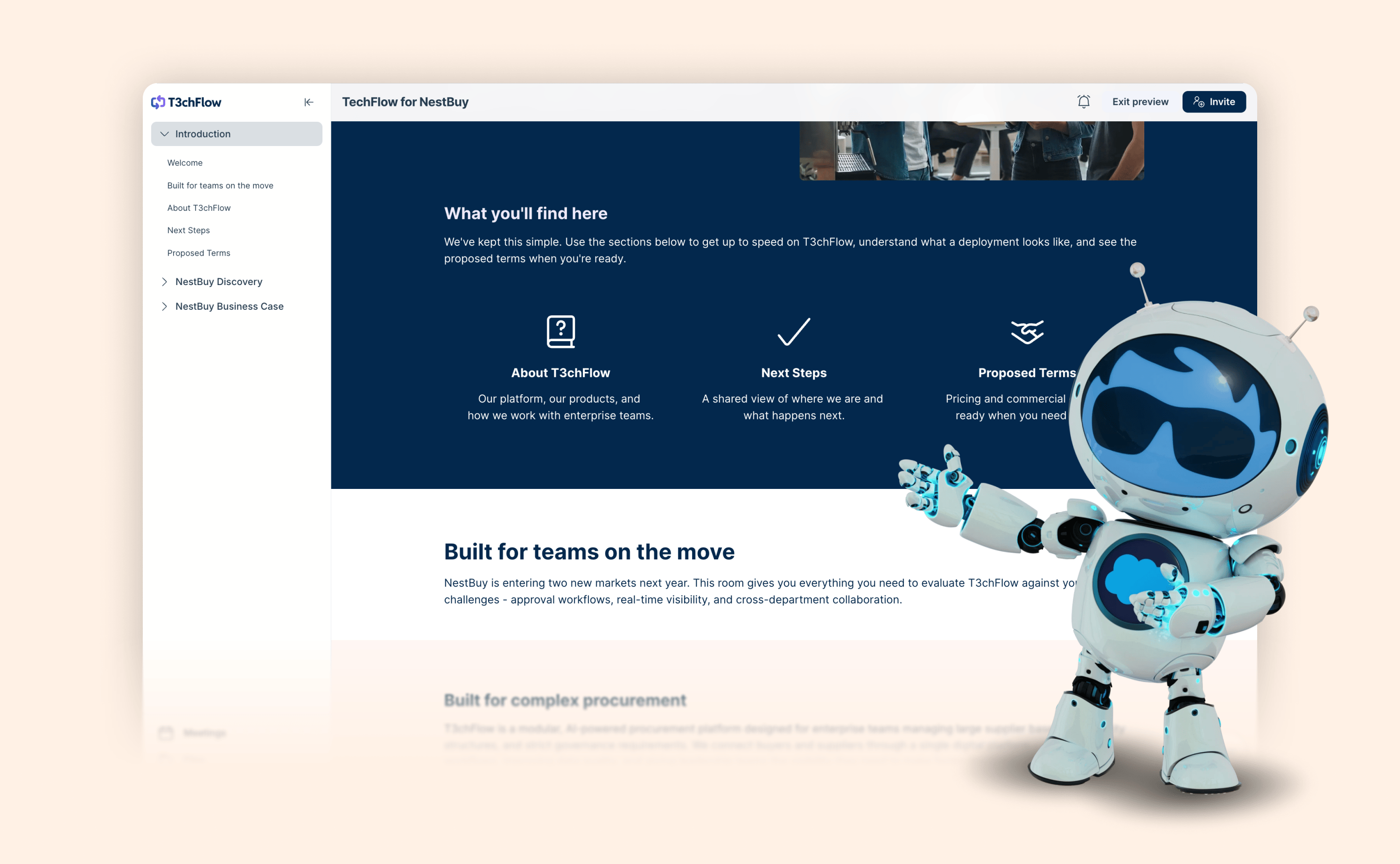
GetAccept's Agentforce integration exports the full content of a Deal Room to Agentforce. Every section of the room – shared assets, text content, mutual action plan status, meeting transcripts, buyer comments, engagement history – is available as readable context.
When a rep asks Agentforce "what's going on with this deal?", the AI draws on the complete buyer picture. Not just the opportunity record. Not just the last call notes. The whole story: what was shared, what was reviewed, what was agreed on, and what hasn't happened yet.
Why deal-aware AI is different
There's a principle worth naming here: your AI is only as smart as the context it can access.
A Deal Room captures buyer behavior that no other tool records. It's where buyers review content on their own time, share rooms with colleagues, engage with proposals, and signal intent through their actions. That engagement is continuous – it happens between meetings, outside business hours, and at every stage of the buying process.
When that context becomes readable by AI, the quality of everything downstream improves. Summaries are more accurate. Coaching recommendations reflect real deal dynamics. Forecasting draws on genuine buyer signals rather than rep-entered fields.

What this means for CRM teams using GetAccept
For sales leaders thinking about how to build an effective AI stack, it raises a question worth asking: where does your deal context actually live? If the richest data about your buyers isn't somewhere AI can read, the intelligence you're getting is incomplete.
The most useful thing you can give your AI isn't more prompts. It's better context. And the best context for a deal is what's happening in the room.
-1.jpg)