-1.jpg?width=48&height=48&name=55f40cc2763590699ea313bb5c9f08b5%20(chosen)-1.jpg)

The average tech sales stack runs 15–20 platforms: CRM, a data provider, a sequencing tool, a scheduler, a forecasting layer, a proposal tool, an e-sign tool, and three more somebody bought in 2023 that nobody's logged into since.
Yet if you ask most revenue leaders how well these tools fit together, the answer is usually a grimace 😬
Why? They’re disconnected:
- Reps bounce between five tabs just to update a deal.
- Leaders question whether pipeline reports are accurate.
- Buyers notice it - with scattered proposals, repeated questions, and delays that kill any momentum.
Your sales stack isn't a list of tools, it's four layers doing four different jobs, and for B2B teams, the deal execution layer is the one that's almost always the weakest and least owned
This guide covers nine of the most important platforms shaping B2B sales stacks today.
The four layers of a B2B sales stack in 2026
Every tool you own is doing one of these four jobs. Sort them this way and the stack gets much easier to reason about.
|
Layer |
The job it does |
Tools that live here |
|---|---|---|
|
System of record |
Hold the deal: pipeline, stages, reporting |
Salesforce, HubSpot |
|
Pipeline generation |
Find buyers and start conversations |
ZoomInfo, LinkedIn Sales Navigator, Outreach, Chili Piper |
|
Deal execution and buyer collaboration |
Move the opportunity to signature with the buyer |
GetAccept |
|
Revenue intelligence |
Read deal health, forecast what closes |
Airspeed (Glyphic), Clari |
Notice that layers 1, 2, and 4 are crowded, mature, well funded. Layer 3, the one where the deal actually closes, is the one most teams never bought a tool for.
Sorting your stack this way is how you find the layer you've been ignoring.
Before the tools, a quick gut check:
-
Record: do you trust your own pipeline?
-
Pipeline generation: do reps have enough of the right people to talk to?
-
Deal execution: can you see and steer a deal after the proposal goes out?
-
Revenue intelligence: do you actually know what's going to close?
Hold your answer. We'll come back to it at the end, once you've seen what lives in each layer.
1. System of record: Salesforce, HubSpot Sales Hub
Two platforms own this layer for B2B, and the choice between them is less about features than about what kind of organization you are.
Salesforce
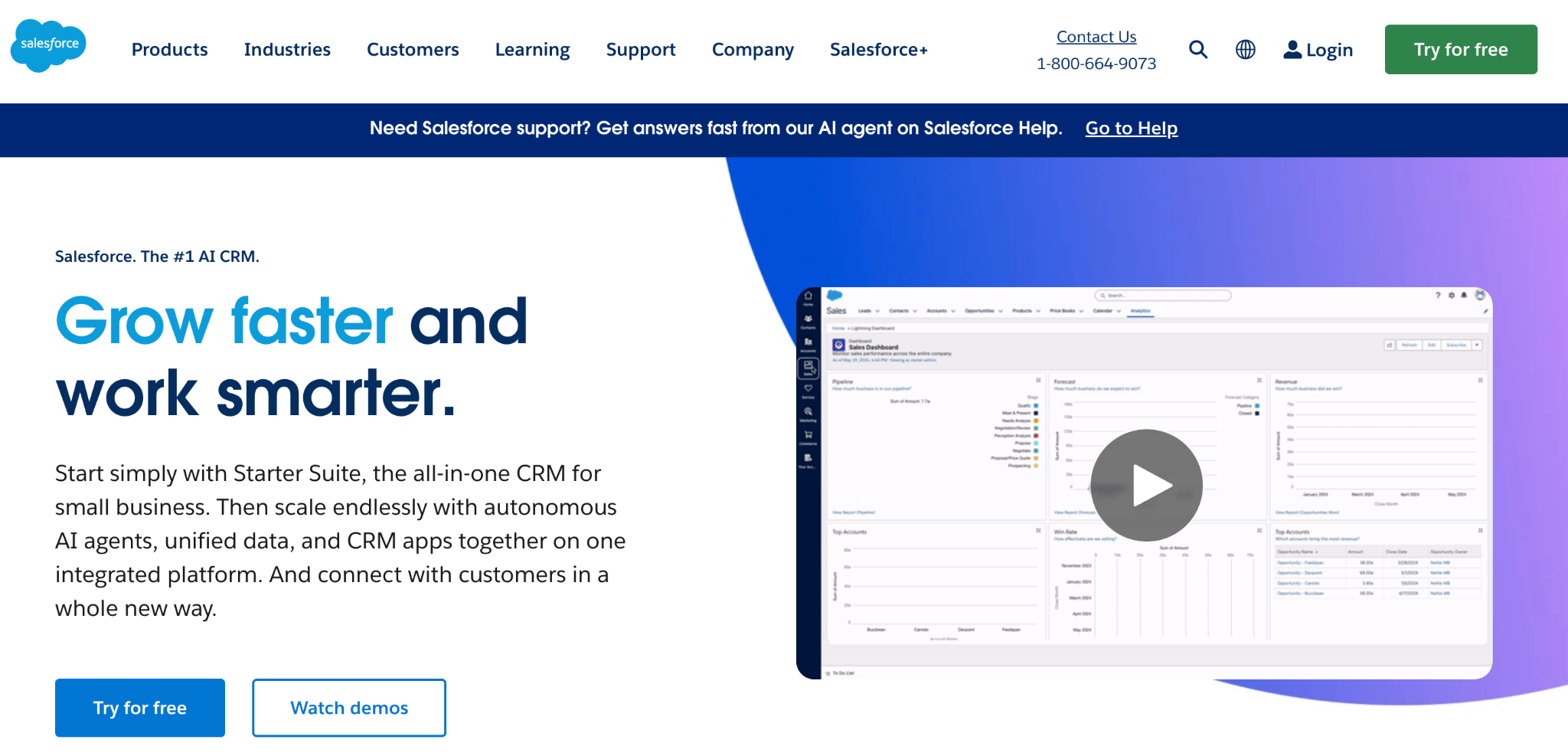 Some reps love it, some tolerate it. Either way, Salesforce is still the system of record for enterprise sales, and that probably won't change in 2026.
Where it earns its place: scale and governance. Forecasting, compliance reporting, cross-functional visibility across sales, marketing, and service all flow through it. If you're running a 200-person sales org across multiple regions, Salesforce handles the complexity that breaks lighter tools.
Where it doesn't: adoption. Many reps still view Salesforce as an admin burden rather than a selling tool, as updating opportunities often feels like data entry. This tension is why so many enterprise stacks layer other tools on top - to make Salesforce usable without forcing reps to live inside it.
🏆 Best for: large, complex organizations that need reporting and governance at scale, even if getting reps to actually use it takes work.
HubSpot Sales Hub
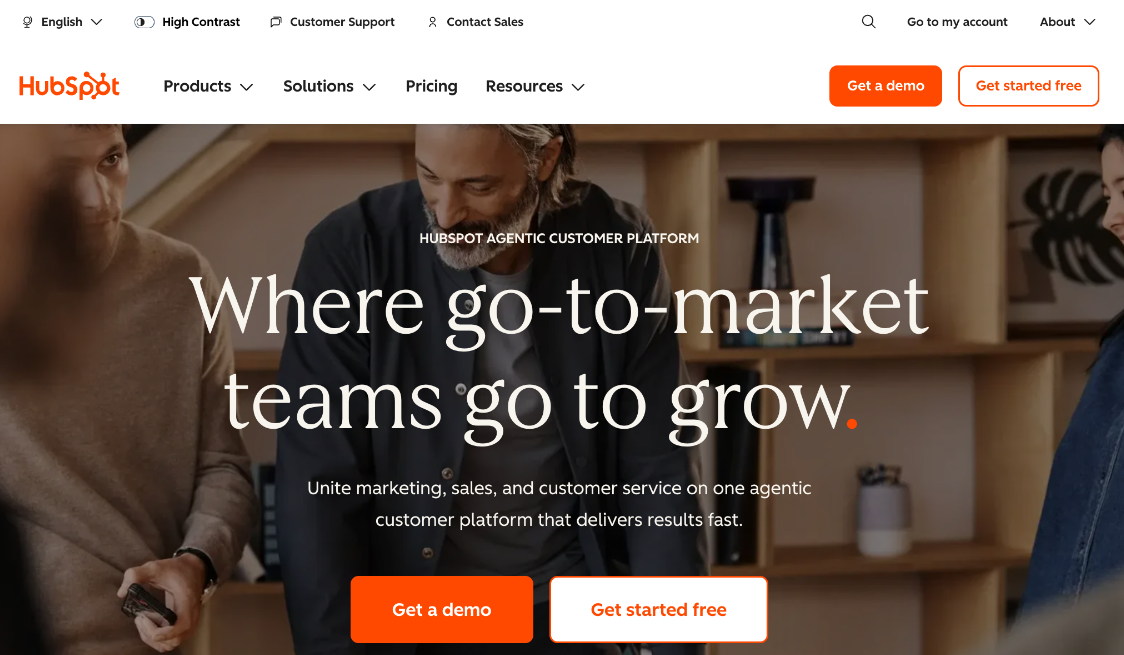
If Salesforce is built for the org chart, HubSpot is built for the team that wants to move fast without a dedicated admin.
Where it earns its place: usability. The interface is clean, reps actually want to use it, and that adoption translates directly into better data quality without managers chasing updates.
Tight alignment with HubSpot's marketing and service hubs gives you one of the most unified customer platforms available at mid-market scale.
Where it doesn't: enterprise complexity. Compared to Salesforce, HubSpot hits limits faster on advanced reporting, granular permissions, and deeply customized workflows. Large orgs with strict governance requirements will feel the ceiling.
🏆 Best for: SaaS companies and mid-market teams that value speed and usability over heavy customization. If your biggest CRM problem is that nobody uses it, HubSpot solves the right problem.
2. Pipeline generation: ZoomInfo, LinkedIn Sales Navigator, Outreach, Chili Piper
This is the layer most B2B teams have invested in hardest (which makes sense). If there's nobody to talk to, nothing else matters.
Four tools worth knowing here, each doing a different part of the job: finding the right accounts, reaching them, and making sure the handoff from marketing to sales doesn't leak.
ZoomInfo
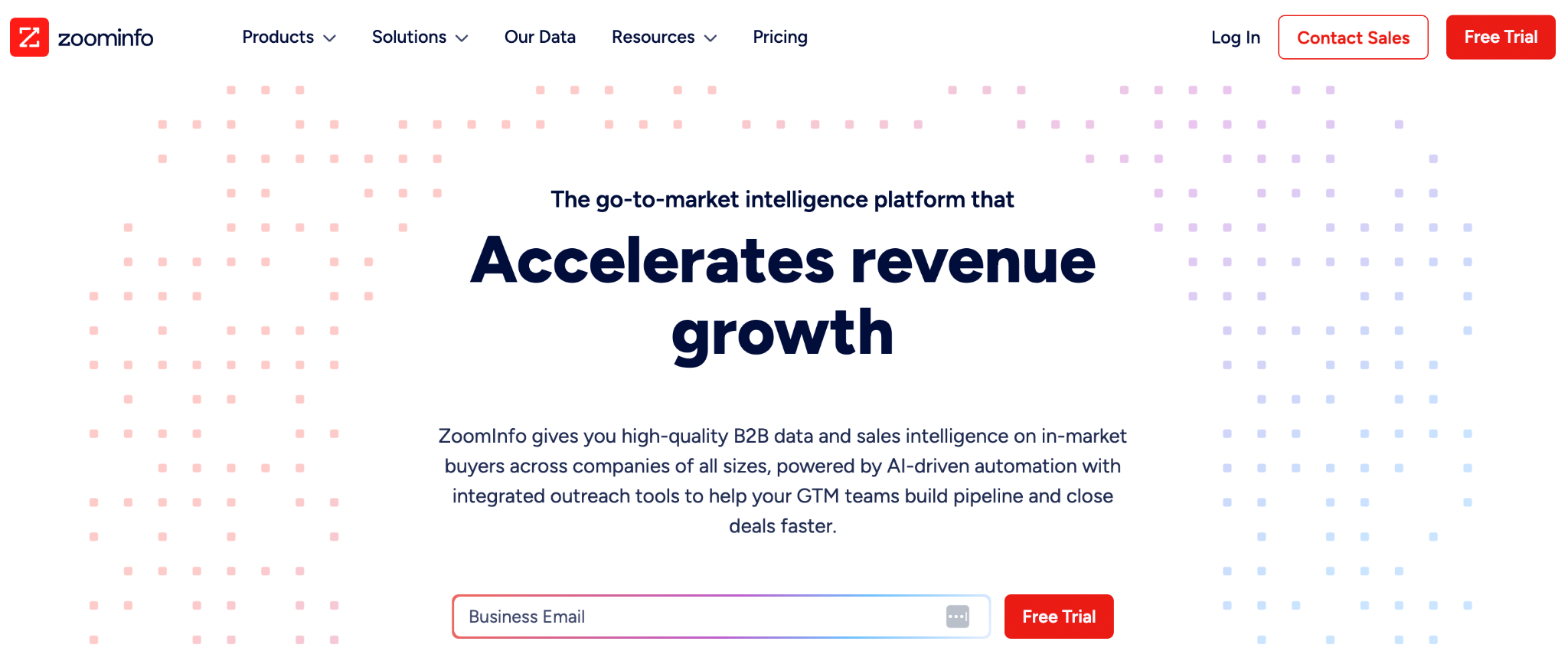 ZoomInfo is the data layer under your prospecting motion. Verified contacts, firmographic detail, technographic data, and intent signals that highlight which accounts are actively researching your category.
Where it earns its place: breadth and depth of B2B data, especially in North America. When paired with a sequencing tool like Outreach, reps can prioritize accounts showing buying behavior instead of working a static list.
Where it doesn't: accuracy outside the US. European data (particularly Nordics) is patchier, with contacts that are outdated or missing. If your market is primarily EMEA, verify coverage before committing.
🏆 Best for: outbound teams that need accurate contact data and intent signals to focus their targeting. The ROI depends on how much of your market falls inside ZoomInfo's strongest coverage.
LinkedIn Sales Navigator
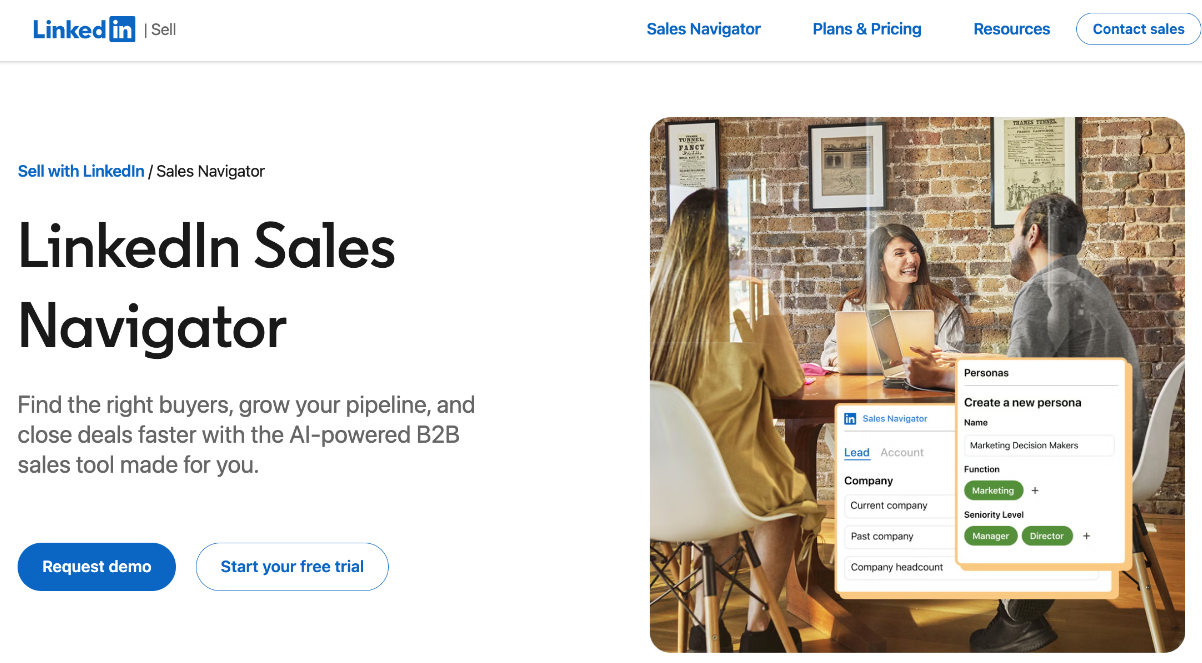
LinkedIn Sales Navigator is the direct line to B2B decision-makers that no other platform replicates, because it sits on top of the professional graph people actually maintain themselves.
Where it earns its place: real-time access to org structures, job changes, and buying signals. Sellers can find the right stakeholders, track when a champion moves companies, and reach out with context that makes the first message relevant instead of cold.
Where it doesn't: cost. Enterprise licenses add up, and if reps don't know how to filter well, Sales Navigator overwhelms them with data they can't act on. It's a precision tool that rewards skill.
🏆 Best for: account-based teams selling into complex buying committees where knowing the org chart and the timing of personnel changes is a real advantage.
Outreach
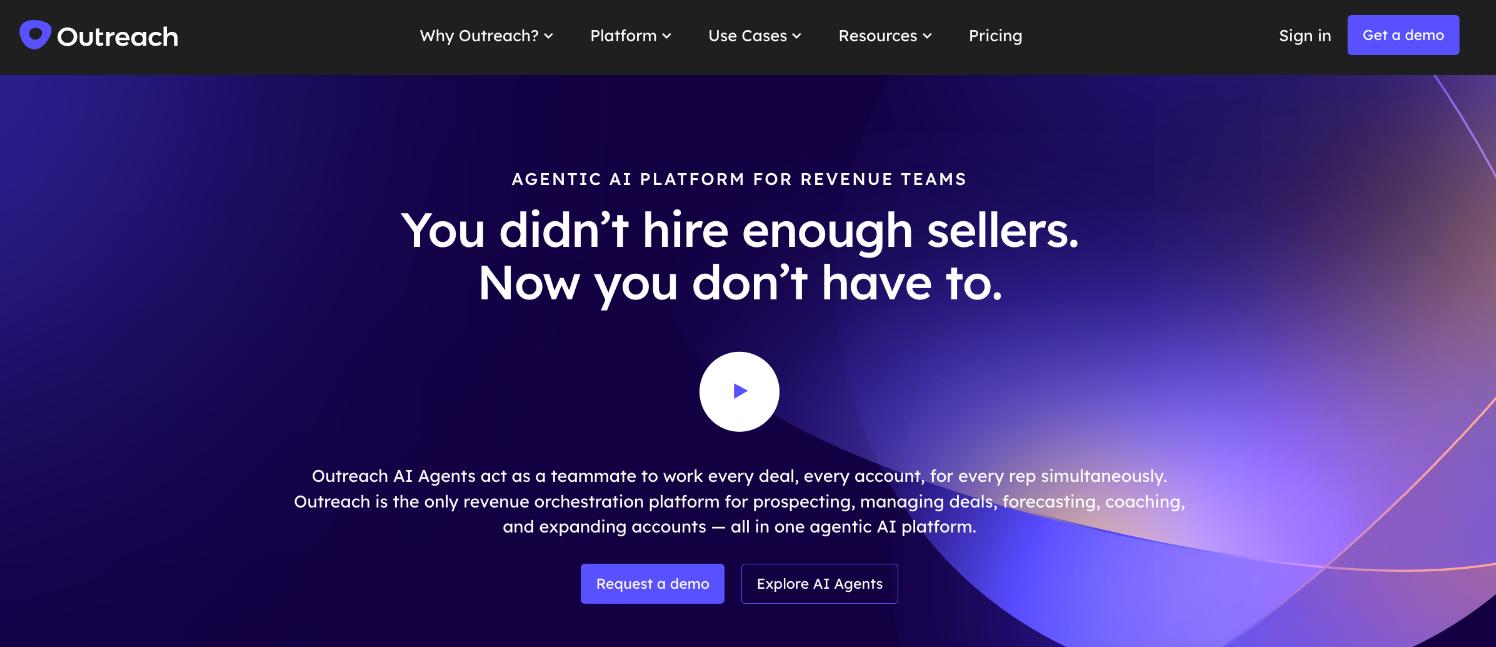 Outreach has grown past sequencing into an AI-assisted execution platform for pipeline generation. Its AI agent helps reps prioritize accounts, adjust messaging, and automate follow-ups based on engagement signals across email, phone, and social.
Where it earns its place: structured, repeatable prospecting at volume with AI layered on top. SDRs run cadences while the platform recommends where to focus and how to improve. Managers get visibility into performance trends, not just activity counts.
Where it doesn't: automation without oversight. If AI-driven sequencing isn't paired with thoughtful targeting and genuine personalization, outreach still lands as noise. The platform is powerful, but lazy configuration produces lazy output, and buyers can tell.
🏆 Best for: SDR-heavy teams running high-volume prospecting that want AI to help prioritize and guide reps without replacing judgment.
Chili Piper
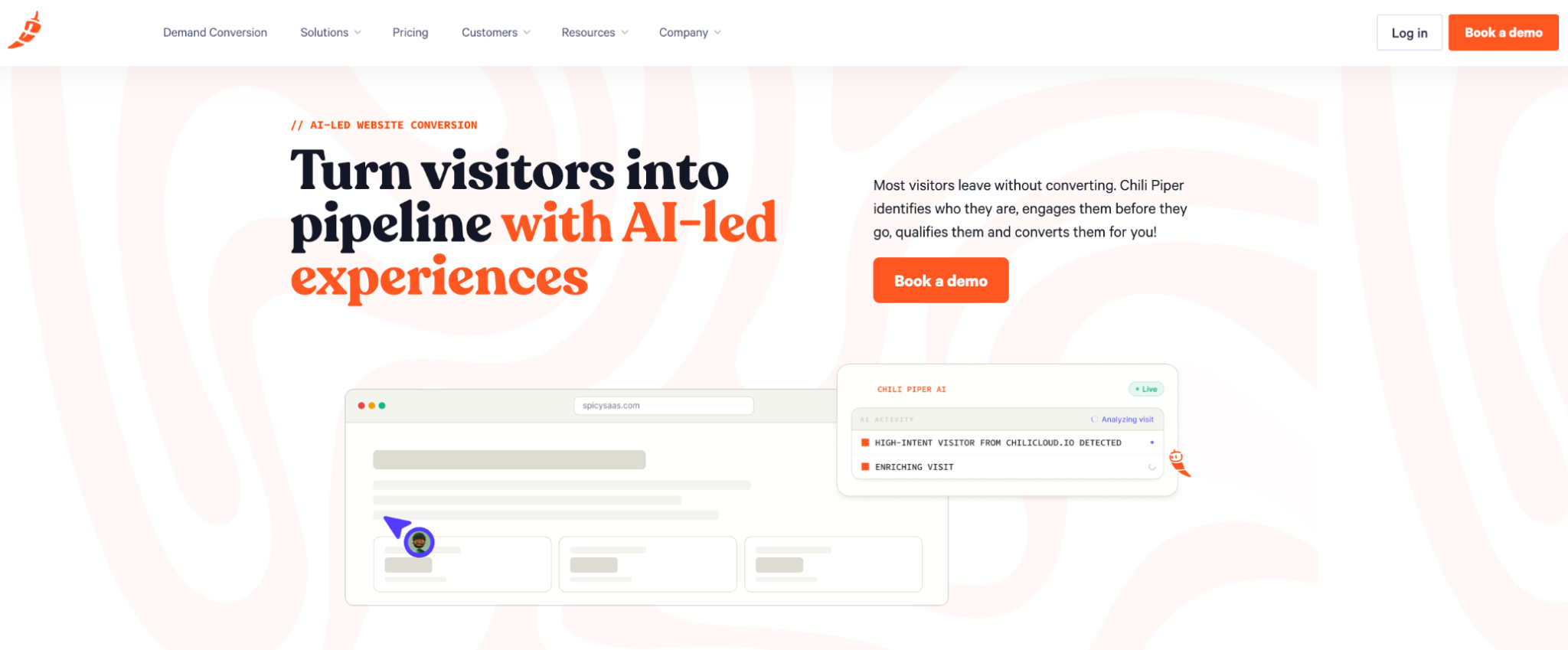 Speed-to-lead, solved. When a prospect fills out a form and waits hours or days for a meeting, another vendor often gets there first. Chili Piper automates scheduling and lead routing so the handoff from marketing to sales is immediate.
Where it earns its place: instant meeting booking, intelligent routing, round-robin assignment. Integrates with Salesforce and HubSpot to keep routing rules aligned with CRM logic. For high-inbound teams, conversion rates from form-fill to booked meeting go up measurably.
Where it doesn't: setup complexity. Smaller teams without dedicated RevOps support can find the routing configuration heavy, especially if your lead-scoring and assignment rules aren't already well defined.
🏆 Best for: SaaS companies with high inbound volume where the gap between "hand raised" and "meeting booked" is costing you pipeline.
3. Deal execution and buyer collaboration: GetAccept
One tool in this layer, and it's ours. We're going deeper here because it's the layer we build for, and because it's the one we see B2B teams most often running without a real tool.
Full disclosure: this article is published on GetAccept's blog. We've applied the same evaluation criteria to ourselves as to every other tool on this list, including the part where we tell you where we're not the right fit.
GetAccept
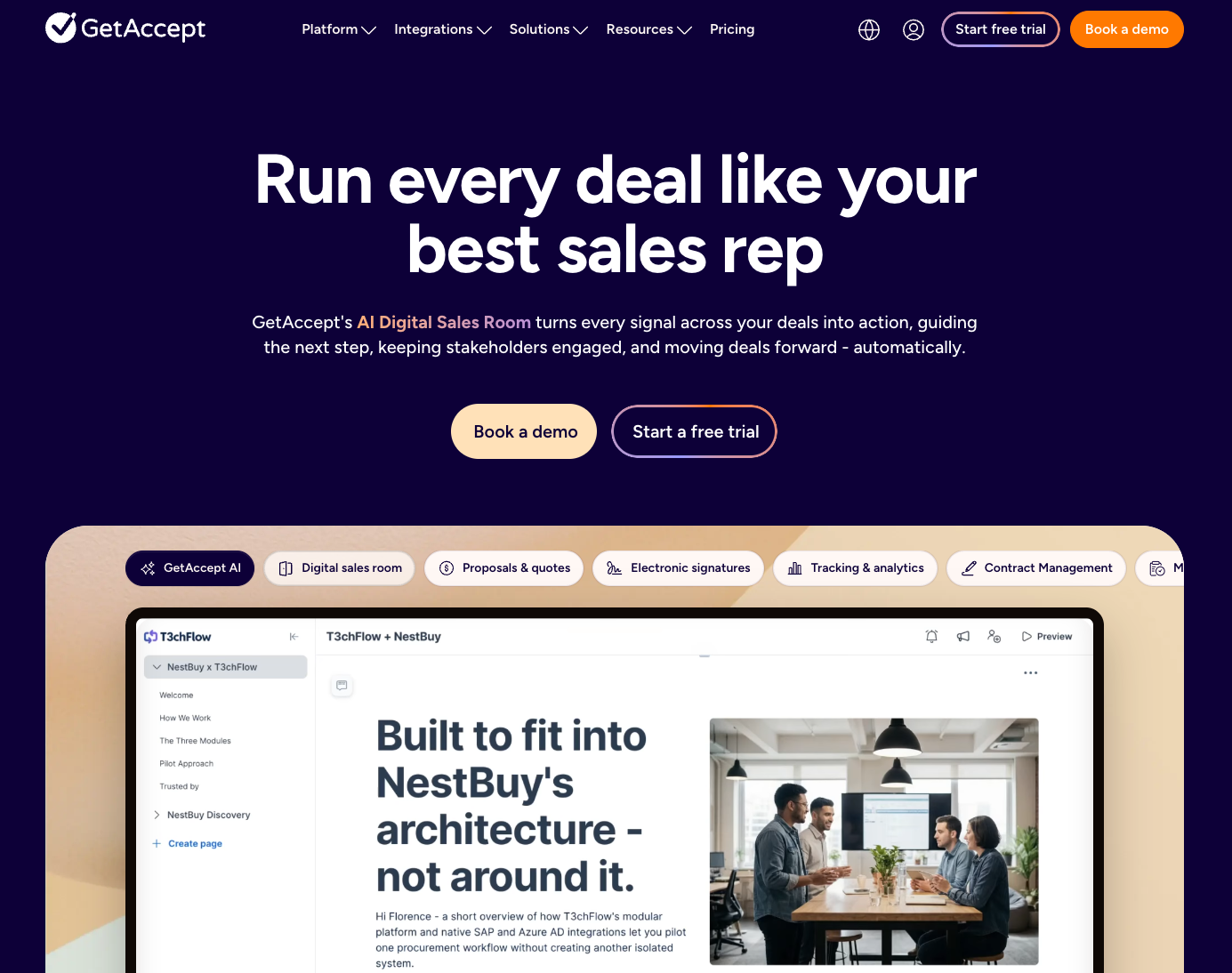 GetAccept is a Digital Sales Room - a shared, living workspace where buyers and sellers stay aligned from first click to close.
Instead of juggling email threads, attachments, and endless PDF versions, reps can house proposals, manage contracts and mutual action plans in one workspace.
Buyers comment directly in-document, procurement and legal get the compliance structure they need, and sellers see exactly who opened what, when, and for how long.
Where it earns its place: visibility and control in the messy middle of a deal. The engagement tracking shows you which stakeholders are actually reading the proposal, which sections they spent time on, and who forwarded it internally.
Dynamic updates mean every stakeholder always sees the latest version, so you stop losing weeks to "wait, which PDF are we looking at?"
For complex B2B cycles with multiple stakeholders, legal review, and procurement sign-off, that visibility compounds.
Real-life example: Dealfront cut their sales cycle from 150 days to 50 after moving deal execution into GetAccept. It came from removing the dead time between "sent" and "signed" where deals used to sit in someone's inbox.
"The engagement tracking is just huge for me," said Carolina Bräuninger, Senior Strategic Account Executive EMEA at Dealfront.
Read the Dealfront case study →
Where it doesn't: smaller, transactional deals. If one or two people make the decision quickly and the proposal is a one-page quote, a full Digital Sales Room adds weight you don't need.
GetAccept is built for the deal that involves a buying committee, a legal review, and a month (or three) of back-and-forth. If that's not your motion, this layer might not need a dedicated tool at all.
🏆 Best for: B2B sales teams running multi-stakeholder cycles where the deal requires proposals, contracts, sign-off from multiple parties, and real-time visibility into who's engaged. SaaS and mid-market enterprise are the sweet spot.
See how GetAccept handles the execution layer → Book a demo
4. Revenue intelligence: Airspeed, Clari
The layer that reads everything below it and tells you what's real. Revenue intelligence sits on top of your CRM, your activity data, and your engagement signals, and turns them into a forecast you can actually defend.
Airspeed (Glyphic)
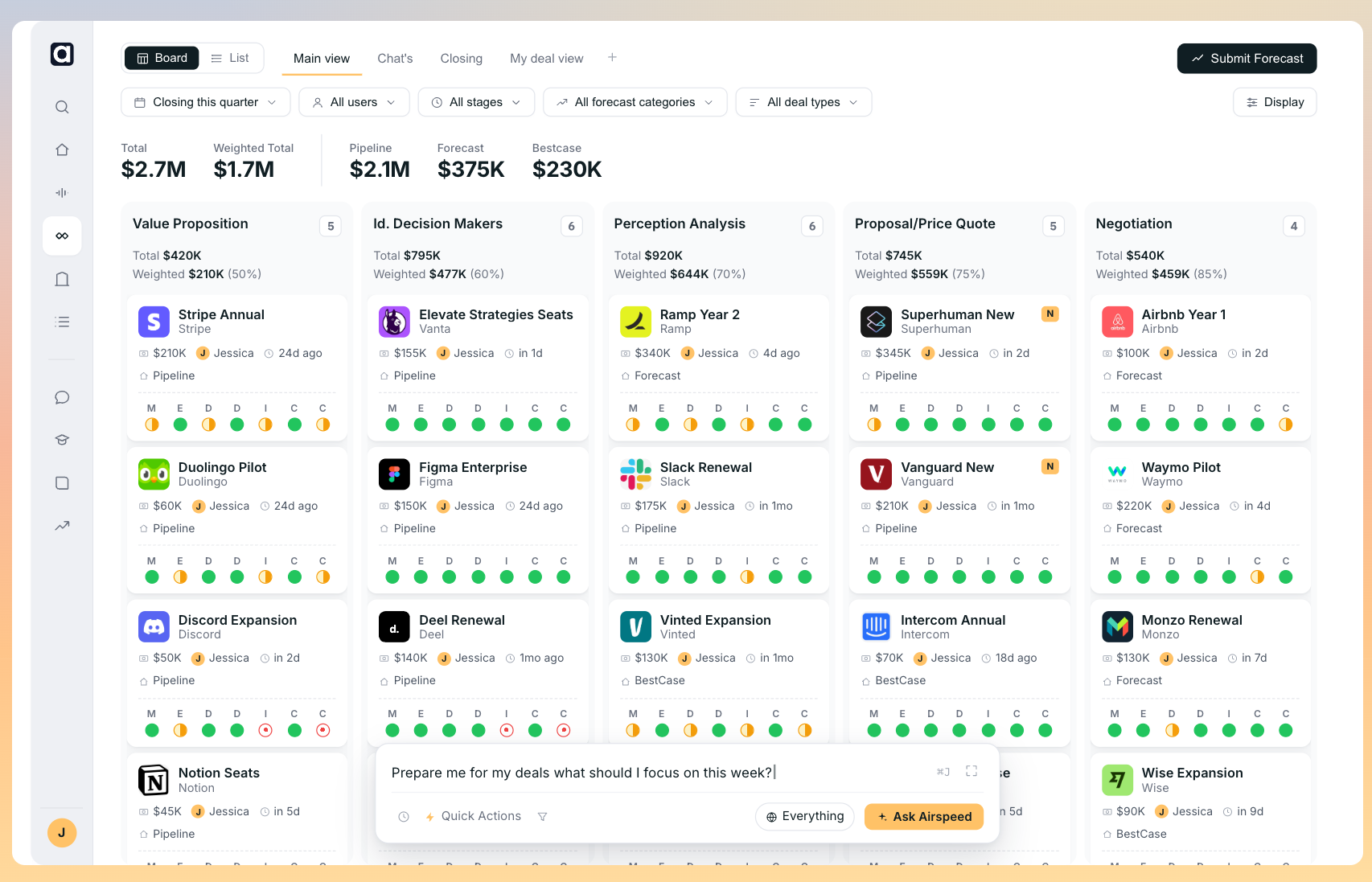 Airspeed (formerly Glyphic) is built for revenue leaders who need a clear read on deal health without digging through dashboards and call transcripts.
It uses AI to analyze buyer engagement signals across the pipeline and surfaces what matters: which deals have momentum, which are drifting, and where a rep's attention would actually change the outcome.
Where it earns its place: turning scattered deal data into a coherent picture. Airspeed connects buyer behavior, deal activity, and workflow patterns into a single view of deal health. You see what needs attention now instead of discovering it in Friday's pipeline review.
Where it doesn't: Airspeed isn’t a call-recording platform. Teams looking for deep conversational analysis may need to pair it with another tool if call coaching is a priority.
🏆 Best for: revenue teams that want fast, buyer-centric deal intelligence they can act on without drowning in data. Particularly useful if your pipeline reviews currently run on gut feel and anecdote.
Clari
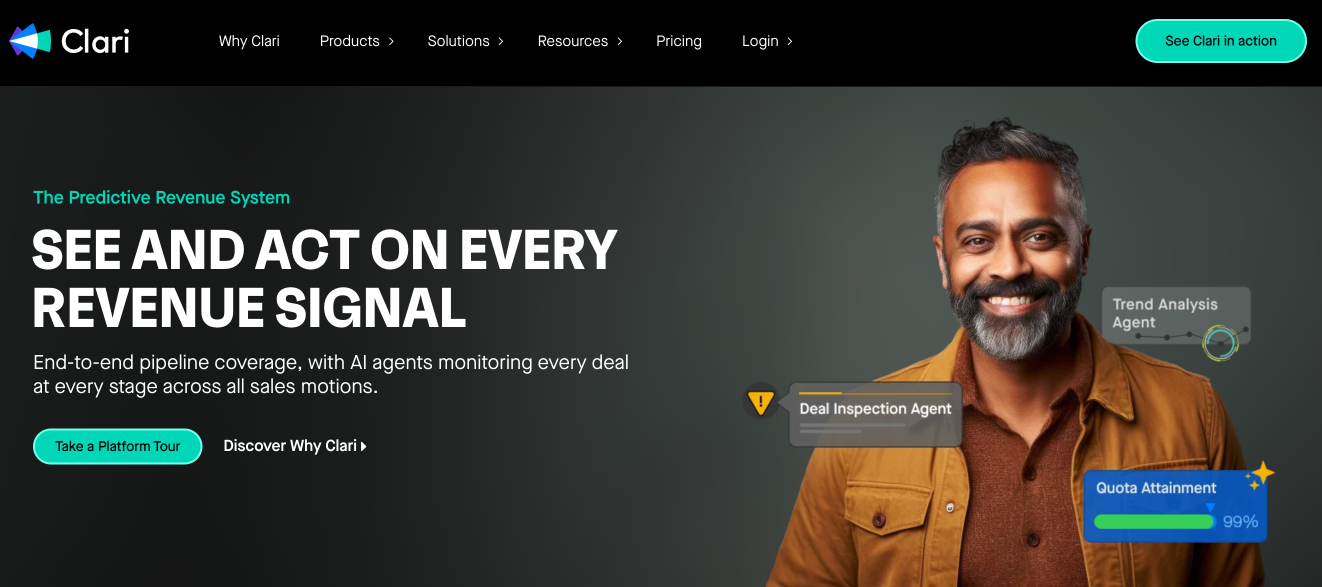 Clari is a forecasting and revenue operations platform built to close the gap between what your CRM says and what's actually happening in your deals.
It pulls data from Salesforce, email, calendars, and engagement tools into one view, then applies AI to flag risk and score confidence on every opportunity.
Where it earns its place: forecast accuracy. Real-time deal inspection, AI-driven risk alerts when opportunities stall, and a confidence layer that tells leadership which "commits" are actually going to land.
Front-line managers see where to coach, reps see where to focus, and the forecast stops being a negotiation between optimism and reality.
Where it doesn't: implementation weight. To get real value from Clari, you need mature RevOps processes and reasonably clean CRM data.
If your system of record layer is weak (stale stages, empty fields, pipeline nobody trusts), Clari will amplify the mess instead of clarifying it. Smaller organizations will find it overkill.
🏆 Best for: enterprise and mid-market SaaS companies with enough deal volume and RevOps maturity to feed the platform clean data. If your biggest problem is that leadership can't trust the forecast, Clari is built for exactly that.
How to compose your sales stack in 2026: Finding your weakest layer
System of record: Do you trust your own pipeline?
You've got a problem here if:
-
Pipeline reviews turn into arguments about whether the data's even right
-
Managers rebuild the forecast by hand because the CRM can't be trusted
-
Deals are sitting open with a close date from last quarter
A weak record layer poisons everything above it. You can't forecast or coach off numbers nobody believes.
Pipeline generation: Do reps have enough of the right people to talk to?
Trouble here looks like:
-
Busy reps, flat pipeline
-
Coverage below 3x
-
New hires taking a full quarter just to find someone to call
If this layer's thin, fix it before anything else.
Deal execution: Can you see and steer a deal after the proposal goes out?
The tells:
-
Deals reliably reach "proposal sent" and then go silent
-
You can't say who in the buying group is engaged without emailing to ask
-
Sign-off drags for weeks because the contract is buried in someone's inbox
If your deals die in the gap between "sent" and "signed," this is your layer.
Revenue intelligence: Do you know what's actually going to close?
You're weak here if:
-
The forecast misses in both directions and nobody saw it coming
-
Deals slip to next quarter as a surprise
-
"Commit" means optimism instead of evidence
Where to start?
Depends on your deal motion.
-
High-volume SMB team starving for pipeline? Layer 2.
-
Enterprise team watching six-stakeholder deals go dark after the proposal? Layer 3.
-
Scaling org whose forecast is a spreadsheet and a hope? Layer 4.
Note: A weak layer doesn't always mean a missing tool. Sometimes it means you've bought four overlapping ones (usually in pipeline generation), and reps are drowning in tabs that don't talk to each other.
Consolidating can do more than buying. The goal is a layer that does its job, however few tools that takes.
-1.jpg)