-1.jpg?width=48&height=48&name=55f40cc2763590699ea313bb5c9f08b5%20(chosen)-1.jpg)

A deal gets signed, the document is sent off, and everyone moves on to the next opportunity.
That moment often feels like the finish line. In reality, it’s the start of everything that follows.
What’s written in that contract shapes the relationship going forward. Renewal timelines, notice periods, pricing, and scope all define what happens next. The challenge is that most teams don’t really work with that information after signing. They store it.
And storing is not the same as managing.
The part of the process we usually overlook
A lot of effort goes into getting contracts right before they’re signed. Templates are refined, approvals are streamlined, and the process is optimized.
But once the contract is signed, things tend to become less structured.
Contracts are saved somewhere, and if someone needs to check a detail, they open the file and go looking for it. That might work with a few agreements. It becomes harder to rely on when you’re dealing with dozens or hundreds.
Not because the information isn’t there, but because it isn’t available in a way that fits how teams actually operate day to day.

When timing becomes guesswork
Every contract contains a timeline. Start dates, renewal terms, notice periods, and key commercial details are all there.
But they’re not always visible when you need them.
So teams fall back on spreadsheets, reminders, or memory to keep track of what’s coming up. Sometimes that’s enough. Often it isn’t.
- A renewal conversation starts later than it should.
- A contract rolls over without discussion.
- An opportunity to revisit terms quietly passes by.
These aren’t edge cases. They’re the natural result of having the right information in the wrong format.
Contracts are documents, but teams need answers
Most teams don’t need to read more contracts. They need to understand what’s inside them.
They need to know which agreements are coming up for renewal, which ones require notice soon, and where there’s an opportunity to act.
If getting those answers means opening documents one by one, it’s unlikely to happen consistently. That’s why manual systems tend to emerge alongside contracts, even though the information already exists.
A better way to think about contract management
Contract management is often framed as storage and organization. In practice, it’s about timing and visibility.
It’s about knowing what matters across your agreements and being able to act on it at the right moment.
That’s where things start to shift.
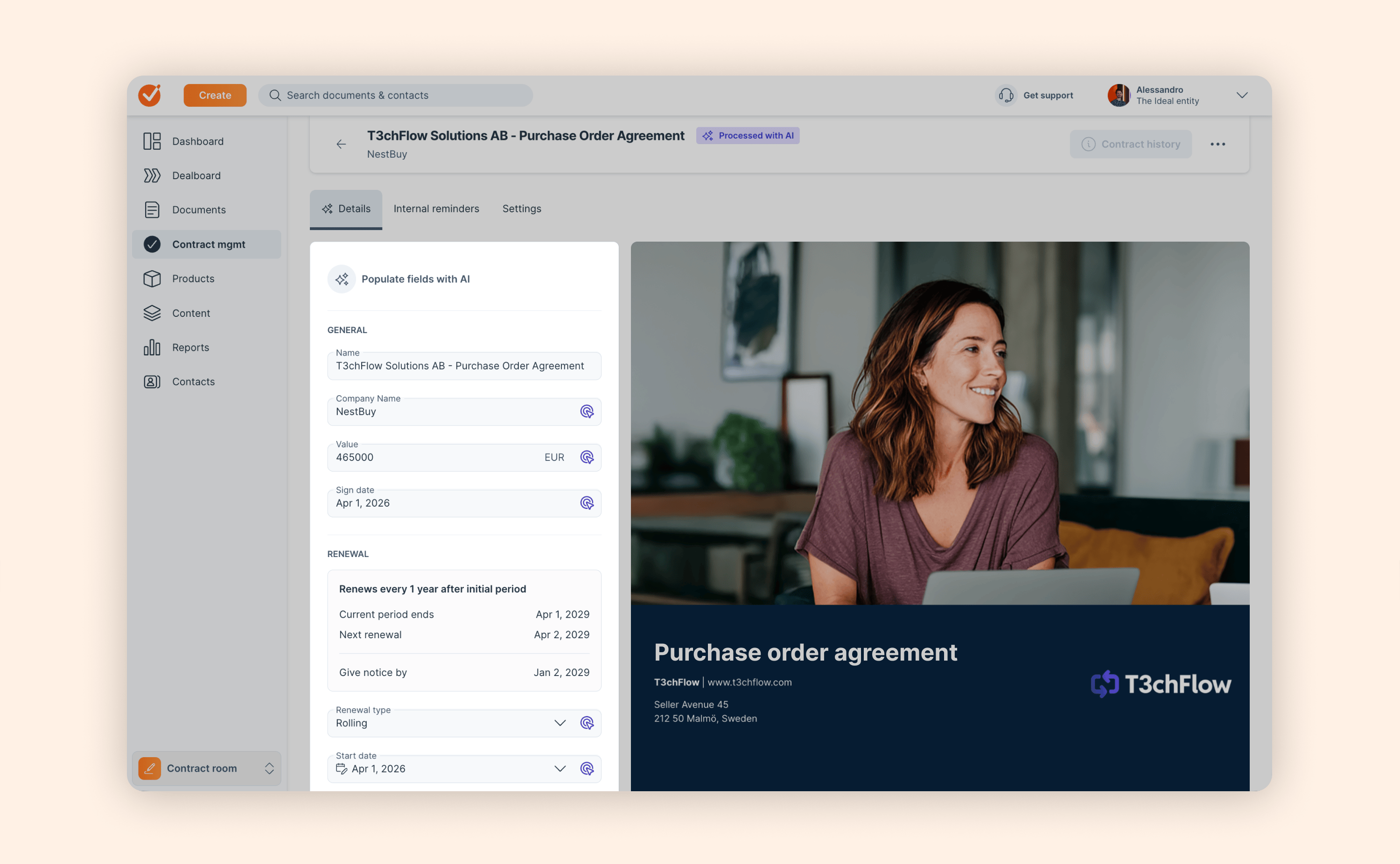
Instead of treating contracts as static documents, more teams are beginning to treat them as structured data. Key details like renewal dates, notice periods, and contract value become something you can track, filter, and act on across your entire portfolio.
In GetAccept, that can be done manually through a structured contract repository, or automatically with AI that analyzes and organizes this information for you.
Either way, the outcome is the same. You move from reacting too late to being able to act at the right time.
Because the real value of a contract isn’t just in getting it signed. It’s in what you do with it afterwards.
-1.jpg)