-1.jpg?width=48&height=48&name=55f40cc2763590699ea313bb5c9f08b5%20(chosen)-1.jpg)

If you look at how modern sales teams operate, one thing is clear: email is no longer the center of execution.
It still exists, of course. Contracts are sent. Notifications are delivered. But the real collaboration – the fast decisions, the internal alignment, the “can someone approve this now?” moments – happens somewhere else.
It happens in Slack.
The challenge is that while collaboration has moved into Slack, deal activity often hasn’t. Reps check their Deal Rooms in one tab, contracts in another, CRM updates somewhere else, and notifications in their inbox. Signals are scattered. Momentum depends on someone noticing the right update at the right time.
In this guide, we’ll look at how sales teams are using Slack to centralize deal visibility, reduce context switching, and respond faster to buyer engagement, without adding more tools or complexity.
Why email-based deal updates slow teams down
For years, deal activity updates were tied to email.
A buyer opens a proposal? Email.
A contract gets signed? Email.
A question is posted? Email.
The problem isn’t that email doesn’t work. It’s that it’s no longer where teams actively collaborate. Important notifications get buried between newsletters, internal threads, and automated system messages. Reps miss signals. Managers ask for updates that were technically sent, but not seen.
When deal momentum depends on quick reactions, even small delays matter.
Modern revenue teams need deal activity to show up where they already work.
Turning Slack into your deal visibility layer
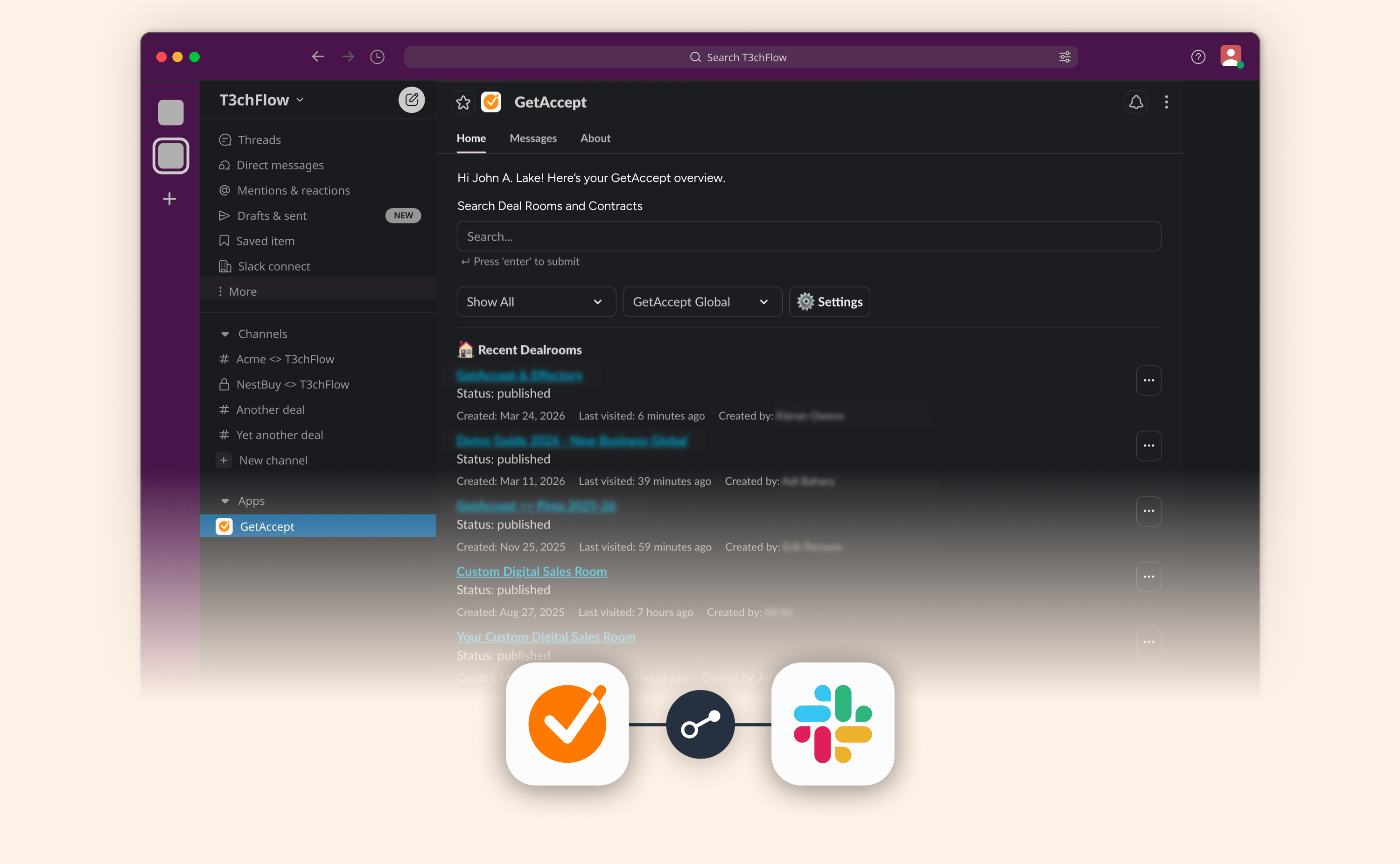
Slack has become the operating layer for many organizations. The GetAccept integration for Slack builds on that reality.
By connecting GetAccept to your Slack workspace, you can:
- Get a clear overview of your active Deal Rooms and Contracts
- Receive real-time notifications when buyers engage
- Link specific Deal Rooms or Contracts to dedicated Slack channels
- Keep account teams and leadership aligned without manual updates
- Jump directly into GetAccept with one click
Instead of refreshing dashboards or scanning inboxes, deal activity becomes part of the daily Slack flow.
And because the integration works independently of any CRM, it supports both CRM-driven teams and those that rely more heavily on Slack for coordination.
4 practical ways to use Slack for better deal management
Here’s how experienced sales teams are using Slack and GetAccept to take back control of their revenue process.
1. Create dedicated deal channels for strategic accounts
For complex or high-value opportunities, create a dedicated Slack channel and link the corresponding Deal Room and Contract.
Every time the buyer
- visits the Deal Room
- completes a Mutual Action Plan task
- leaves a comment
- signs the agreement
the update appears in the channel automatically.
This reduces the need for status meetings and manual check-ins. The deal timeline becomes visible to everyone involved.
2. React while buyer interest is high
Buyer engagement is a signal of intent, but only if you see it.
When activity appears instantly in Slack, reps can follow up while the buyer is still reviewing the material. A well-timed message or call can move a deal forward faster than a generic follow-up sent hours later.
Instead of checking tools periodically, reps can respond in real time, which helps maintain momentum throughout the sales cycle
3. Give managers visibility without extra reporting
Managers often rely on pipeline reports and rep updates to understand deal progress.
By linking Deal Rooms or Contracts to a channel visible to sales leadership, key milestones (such as engagement spikes or signed agreements) become visible automatically.
This reduces the reporting burden on reps and gives leadership a clearer, more immediate view of revenue movement.
4. Reduce manual status updates in Slack
Many teams already post updates manually:
“Customer A opened the contract.”
“Customer B asked a question in the Deal Room.”
“Customer C signed the contract.”
Automating these updates ensures nothing is missed and removes small administrative tasks that add up over time.
It also improves consistency. Every key event is captured and shared without relying on someone remembering to post it.
Less swivel chairing, more focus
Sales productivity is often lost in small, repeated actions: switching tabs, checking inboxes, searching for updates.
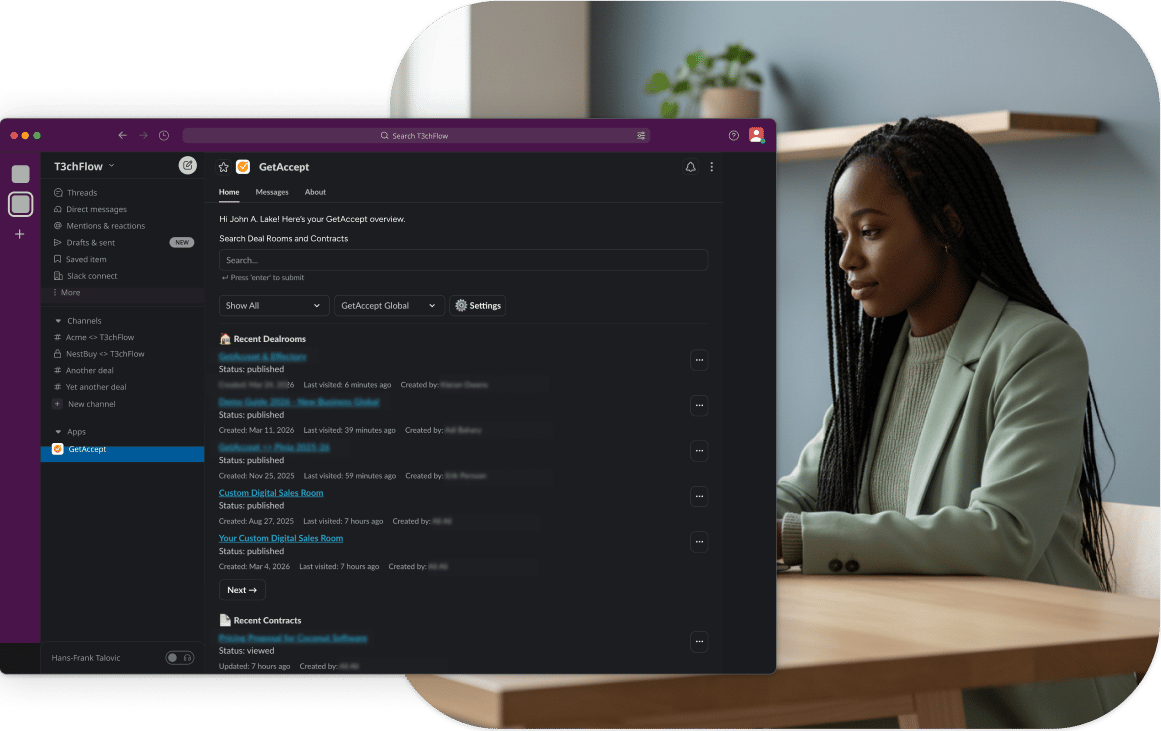
When Deal Room and Contract activity flows into Slack, those actions are reduced. The team stays aligned in one place, and deal signals are easier to act on.
This isn’t about adding another channel of noise. It’s about aligning your tools with how modern revenue teams already operate.
What this means for digital sales in 2026
As digital sales continues to evolve, the boundary between collaboration tools and revenue tools is disappearing.
The teams that grow fastest are the ones that:
- Spot buyer signals early
- Align internally without friction
- Remove unnecessary administrative work
- Keep deal momentum visible across stakeholders
Bringing Deal Rooms and Contracts into Slack is a practical step toward that model.
If your team already lives in Slack, it makes sense for your deals to live there too.
-1.jpg)