What does a Digital Sales Room look like?
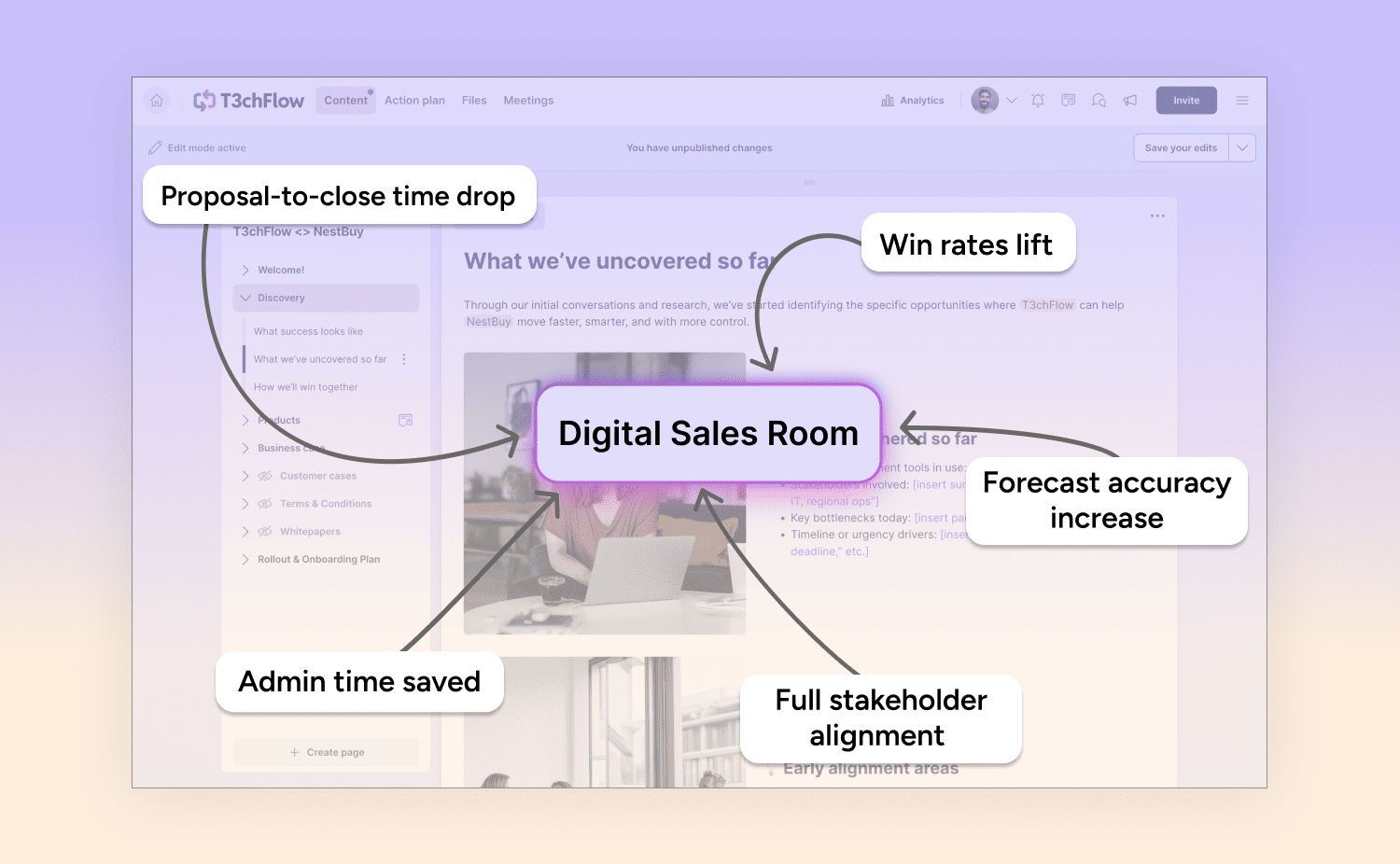
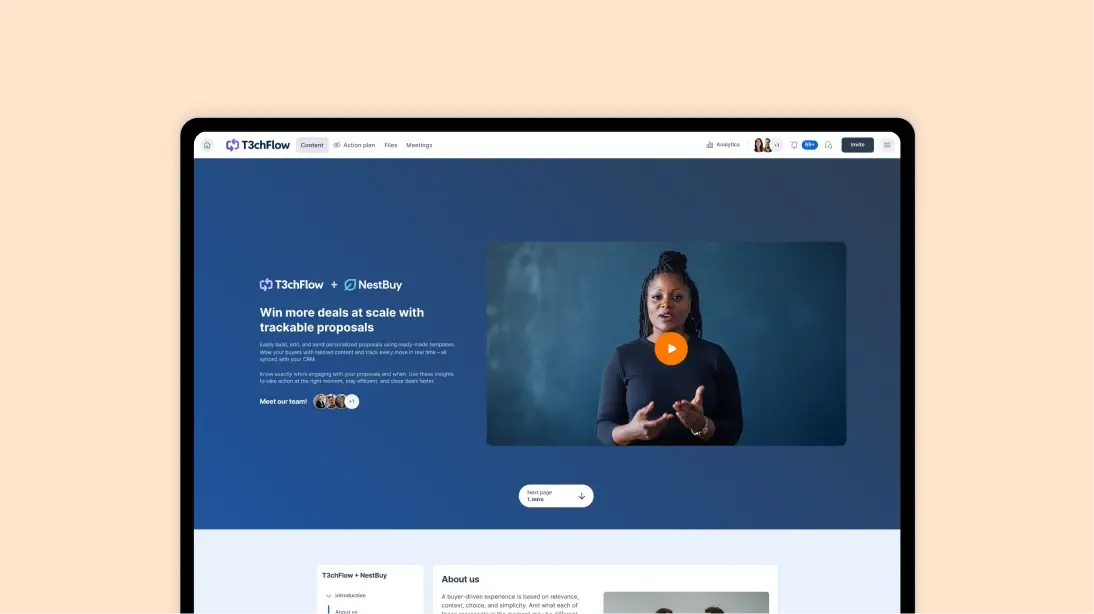
A Digital Sales Room looks like a clean, branded microsite. It contains all the content the buyer needs to make a decision, usually clearly divided into user-friendly sections that include slide decks, meeting summaries, videos, pricing tables, interactive demos, mutual action plans, and more.
From the seller's perspective: Your deal command center
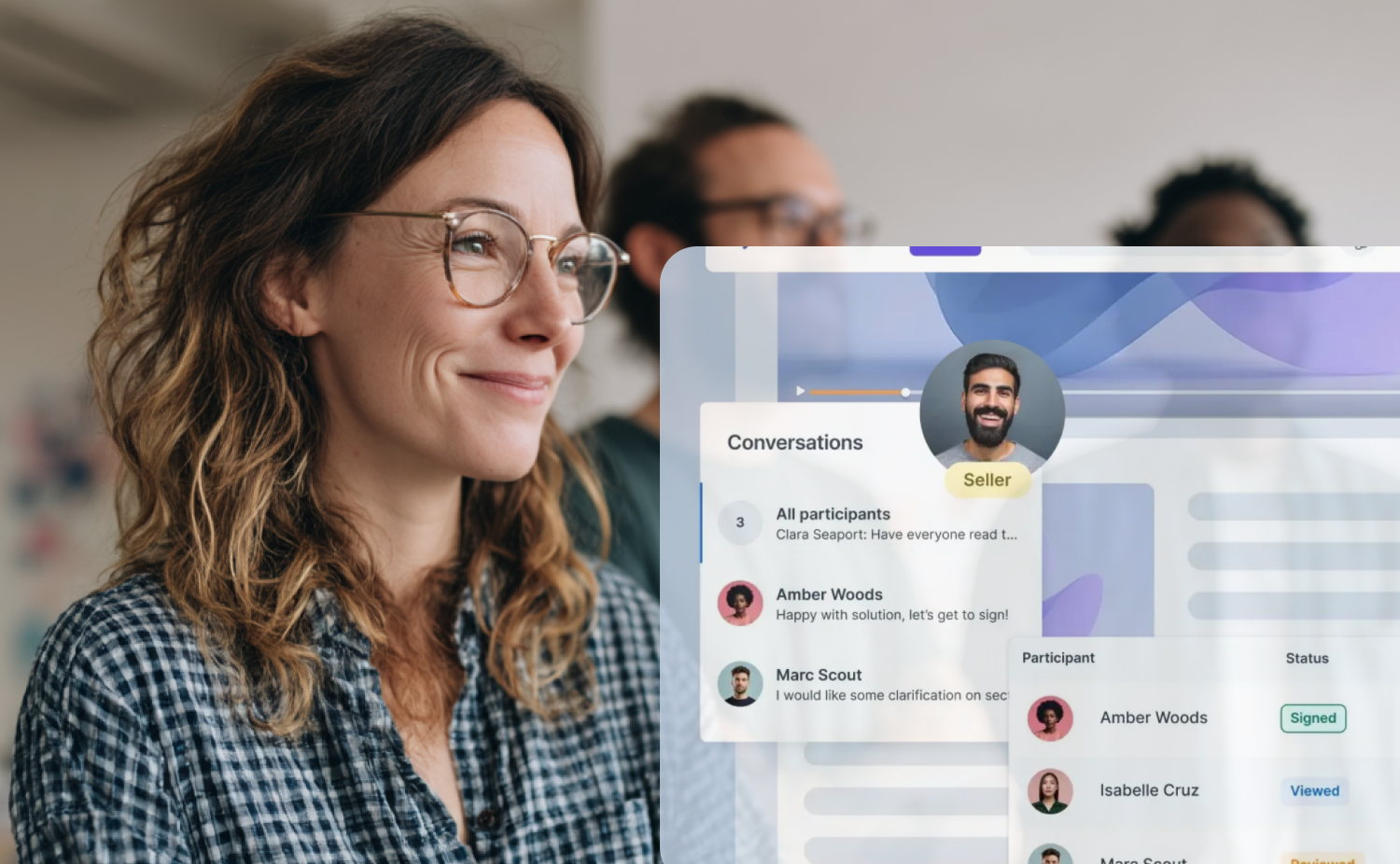
As the seller, you will usually have two views when you look at your Digital Sales Room.
The front-end is the canvas that replaces sales collateral scattered over email threads, meetings, and Teams channels. This is where you collect everything the buyer needs to make an educated decision.
Then you have the back-end. This is where you manage stakeholders, track activity and engagement, and get real-time buyer insights:
- How many stakeholders are active?
- Which content sections do they spend time on?
- Is the deal moving along as expected, or is momentum slowing down?
Buyer view: Self-service decision hub
From the buyer's perspective, a Digital Sales Room looks nothing like the PDF-attached-to-email experience they're used to. They land on a personalized microsite with their company logo, a clear navigation structure, and immediate access to everything they need to make a decision.
Instead of forwarding an email thread to add a colleague or sending a slide deck without the right context, they click "invite stakeholder," and that person gets immediate access.
This self-service access addresses a fundamental shift in B2B buying behavior: Gartner research suggests that 75% of buyers prefer seller-free experiences where they can research, evaluate, and decide on their own timeline. Digital Sales Rooms give them the autonomy they need while providing the engagement visibility you need to sell effectively.
How Digital Sales Rooms help both buyers and sellers
Digital Sales Rooms work because they solve problems for both sides of the table. For sellers, you finally see who's reading your materials, which stakeholders are engaged, and where deals are actually stuck. For buyers, DSRs provide a single workspace where every stakeholder can access pricing, technical specs, case studies, and implementation timelines without hunting through inboxes.
The dual benefit compounds throughout the sales cycle:
- When buyers can share your content with the proper context, your deal reaches more stakeholders faster.
- When they can chat with you throughout the whole process, and everyone can see the questions and answers, objections get handled before they become a problem.
- When implementation timelines are transparent through Mutual Action Plans, both sides stay aligned on next steps, preventing deals from going dark.
That's why DSR adoption is accelerating. Melissa Hilbert, Vice President at Gartner in the Gartner Sales Technologies Group, projects 30% of B2B sales cycles will be managed through DSRs by 2026.
Examples of Digital Sales Rooms (with results)
What we use at GetAccept
Of course. We dogfood our own product (or whatever you want to call it). We use GetAccept’s Digital Sales Rooms in every sales process run by our Account Executives.
For context, we use Glyphic for call recordings, and our GetAccept instance is integrated with HubSpot (our CRM). This helps us automatically pull in data from the CRM and our meetings into the Digital Sales Room. Thanks to our AI, we can automatically create personalized rooms at scale, tailored to the context of each deal.
The rooms usually follow a structure, though. Here are some examples of what it looks like from our end.
The Digital Sales Room that cut sales cycle length by 67%
When Dealfront's sales team faced 150-day sales cycles and zero visibility into stalled deals, they implemented a Digital Sales Room that cut cycles to 50 days, a 67% reduction. The breakthrough wasn't faster follow-ups or better proposals. It was surfacing which deals were genuinely warm versus stuck in committee limbo, then intervening before they died.
What does a great Digital Sales Room look like?
After having seen thousands of Digital Sales Rooms deployed through GetAccept, we got curious. What do the best Digital Sales Rooms look like? Which type of content does it contain? How is it designed? Which layout does it use?
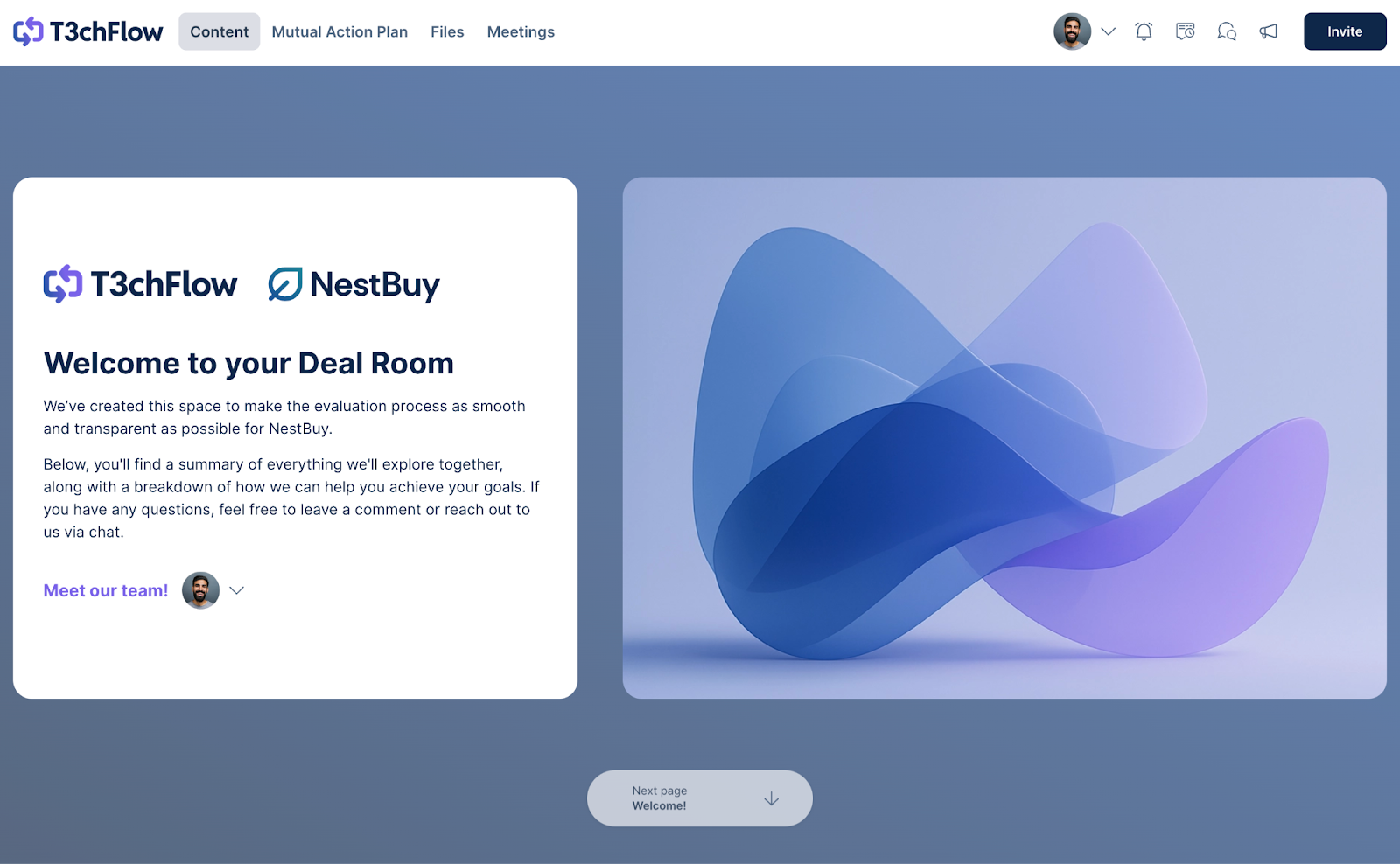
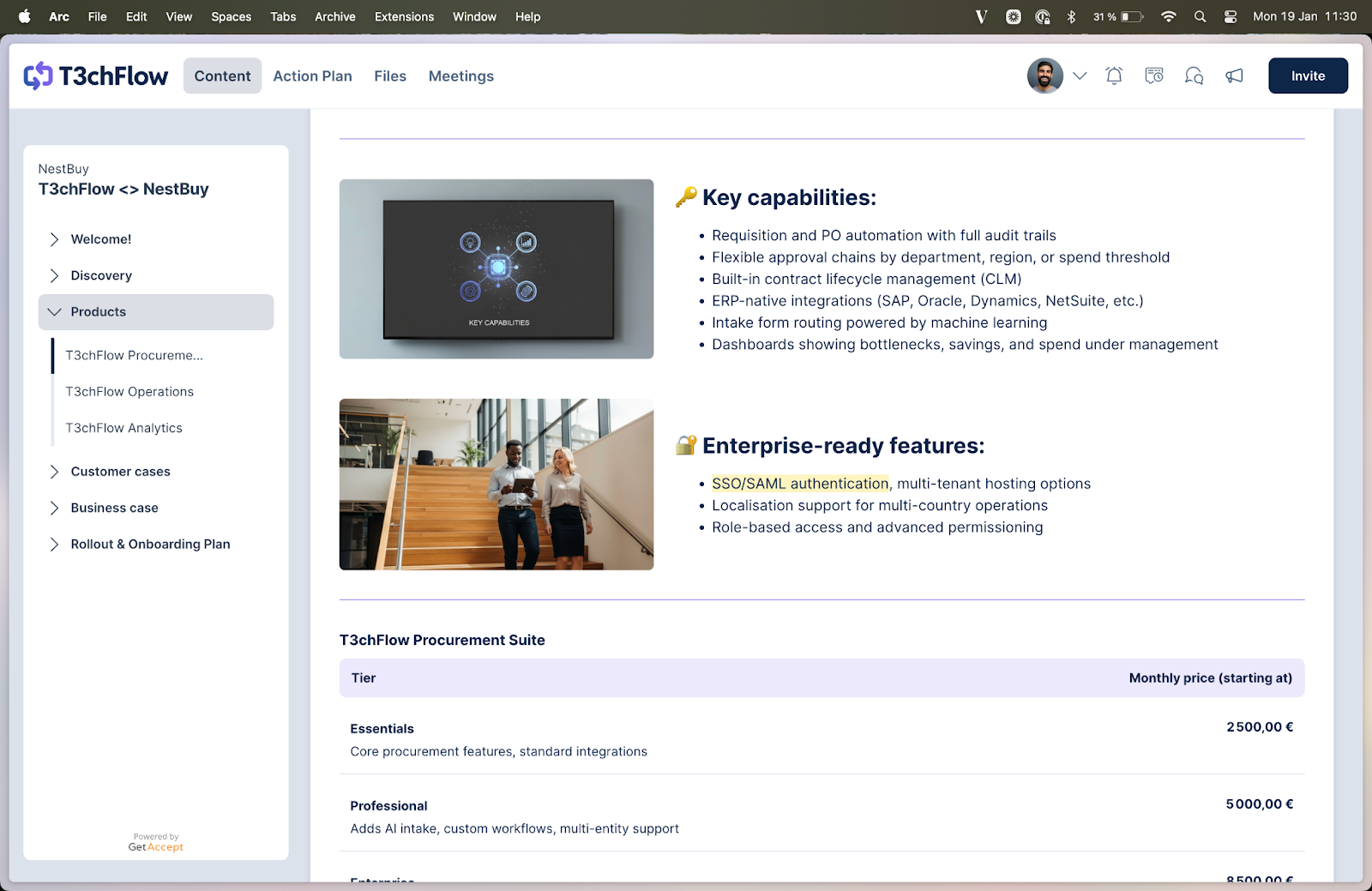
After researching a lot of rooms, we created TechFlow - an imaginary company created to showcase what a great digital sales room looks like.
TechFlow’s Digital Sales Room contains:
- Sleek design that promotes the brand and creates a professional impression
- Clearly defined content sections make it easier for buyers to navigate
- Content blocks that get continuously updated as the sales process goes along, and more context is added
Bonus: Using Digital Sales Rooms for internal purposes
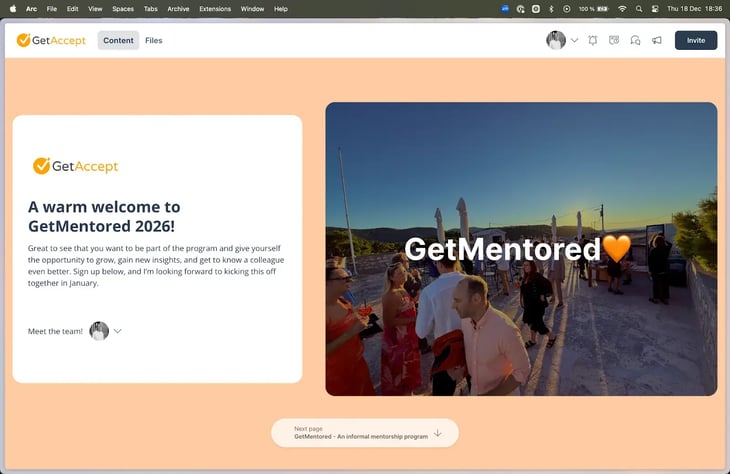
One of the most common questions we get is whether other teams can use GetAccept internally as well. And the answer is: of course!
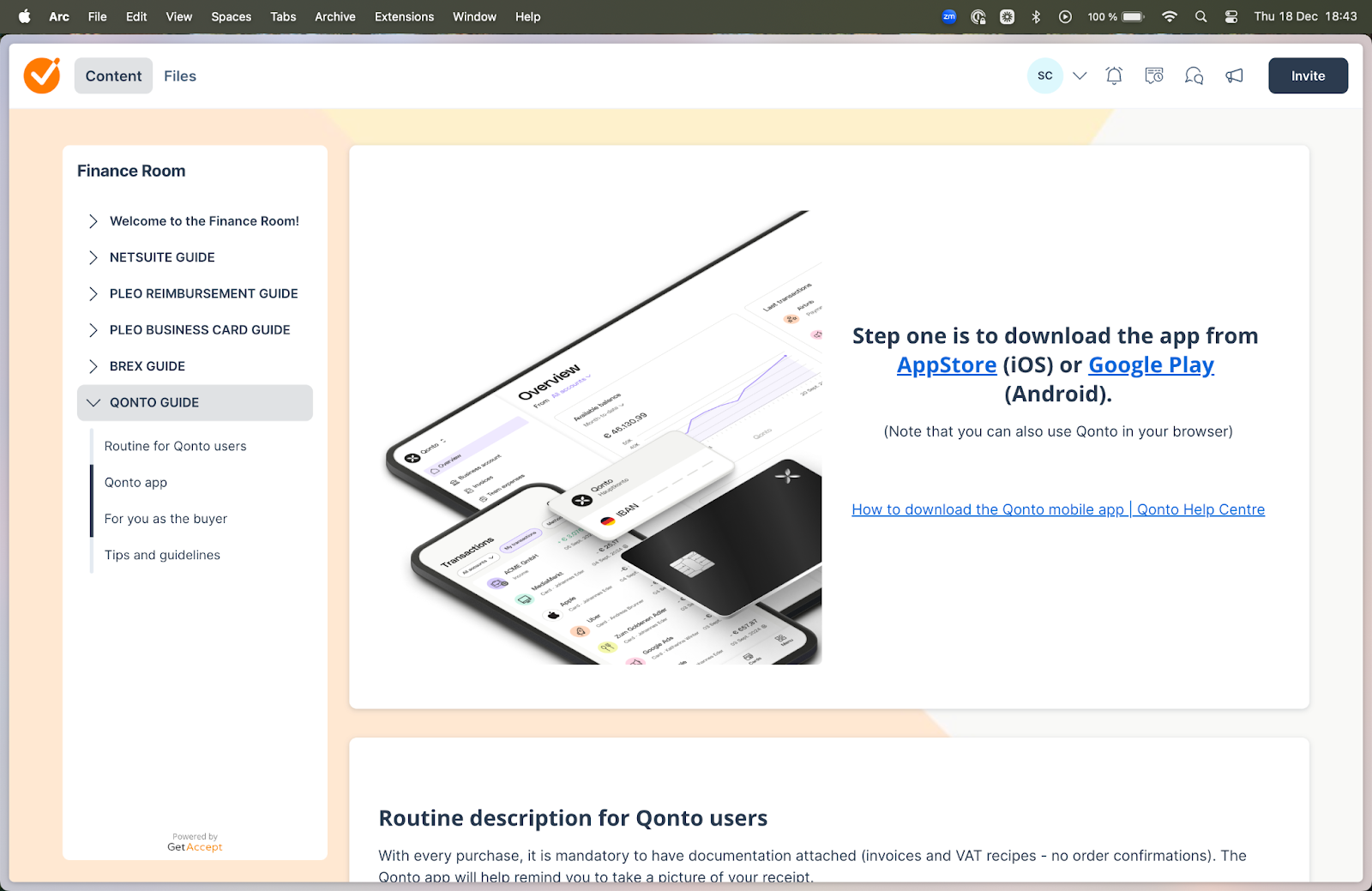
While GetAccept is designed for sales reps and sales leaders, it’s flexible enough to deliver value to other teams too. For example, our People & Culture team uses GetAccept to send out employment agreements and share onboarding materials. And our Finance team uses it to share clear rules and guidelines that apply to the whole company.
Why 2026 is the critical adoption year for Digital Sales Rooms
Firstly, buying committees have exploded in size and complexity. What used to be a three-person decision (economic buyer, technical evaluator, end user) now involves many more stakeholders across finance, legal, IT security, procurement, and multiple business units. Gartner research suggests it might be 5 to 16 people across 4 functions. Still, the old-school way of managing the sales process, stakeholders, and all of the content makes systematic multi-threading very difficult.
Secondly, buyers have fundamentally changed how they want to purchase. According to Gartner, 75% of buyers now prefer seller-free experiences where they can explore solutions at their own pace, compare options independently, and involve colleagues without scheduling another demo. Static content sent via email doesn't meet this self-service expectation. It’s a one-way broadcast that leaves buyers stranded when they have questions or need to share materials internally.
Thirdly, sales leaders face mounting pressure for forecast accuracy and predictable revenue. Traditional CRM forecasting relies on rep sentiment and stage progression, achieving only 50-70% accuracy. McKinsey research documents that AI-powered revenue intelligence systems achieve 40% forecast accuracy improvements by incorporating behavioral engagement data, exactly what Digital Sales Rooms capture automatically.
These are operational realities that sales leaders experience daily. Digital Sales Rooms as a product and category are now mature enough to make a real difference in mitigating those problems.
Want to learn more?
If you're curious about what a Digital Sales Room could look like for your business, book a demo with us or start a free trial (no credit card required). Or just chat with us! We're always happy to help.